

Sporting Horse Painting
When you encounter a sporting horse painting, you are looking at a record of equine form and rural pursuit, most often found in nineteenth-century oil on canvas.
Sporting Horse Painting
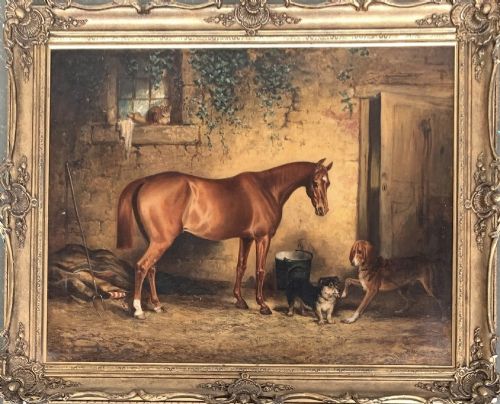
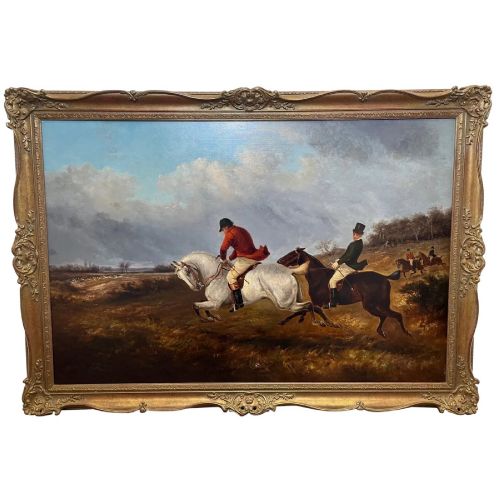
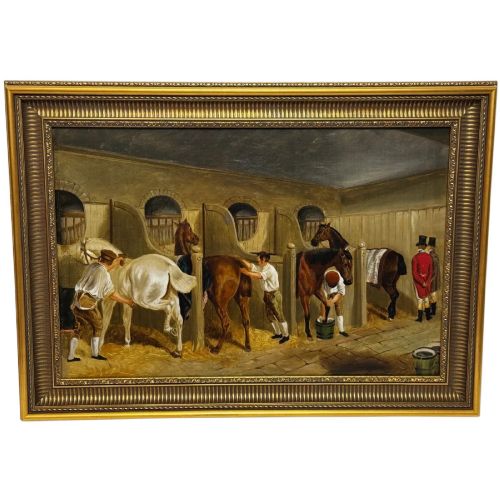
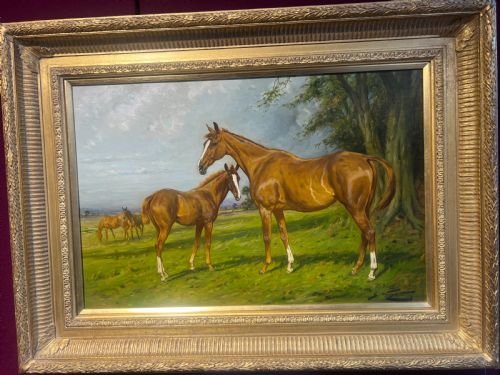
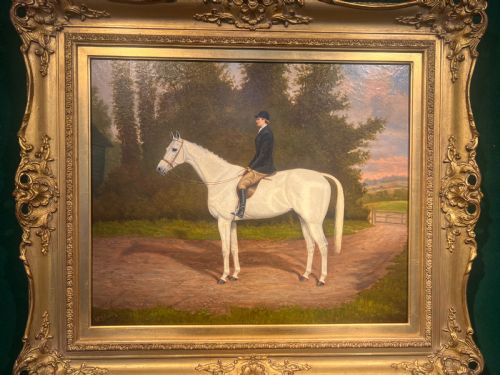
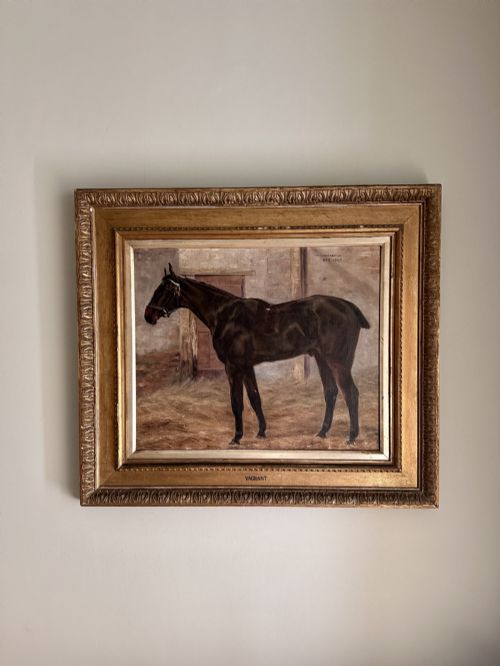
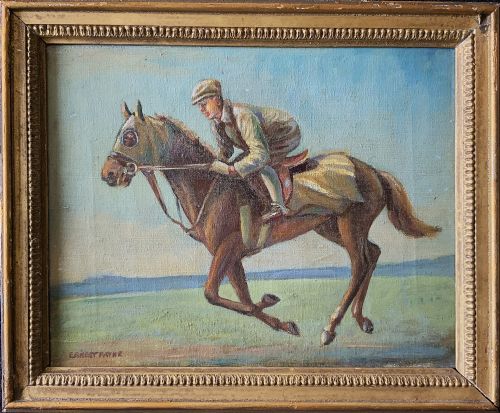
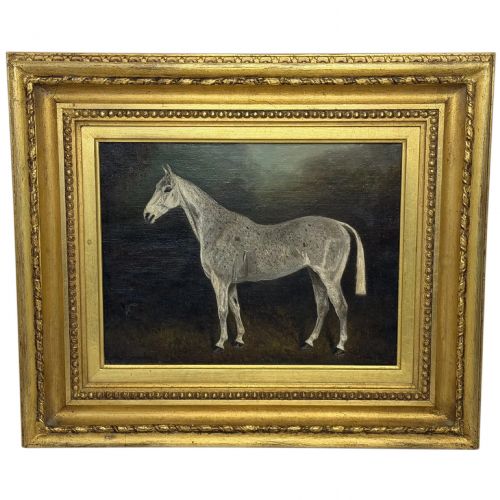
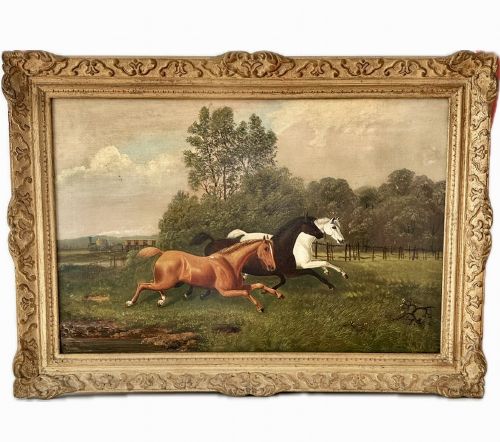
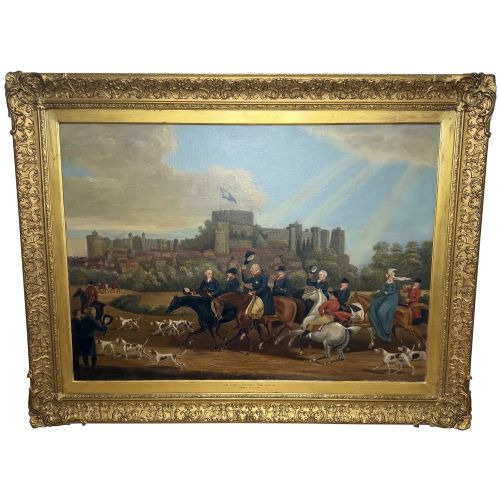
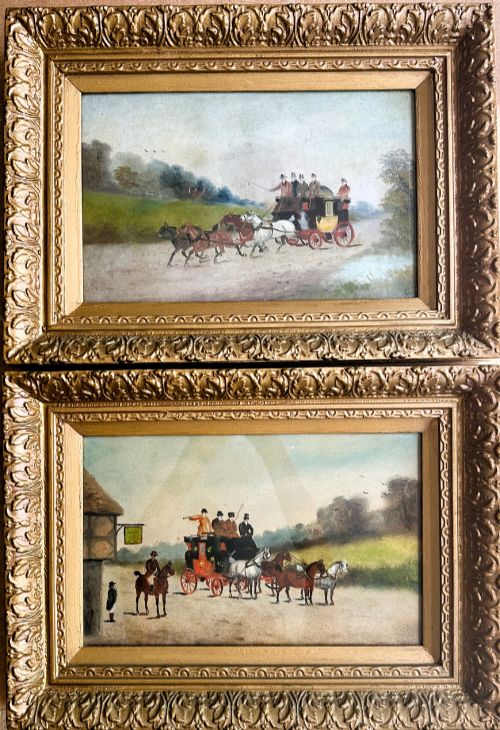
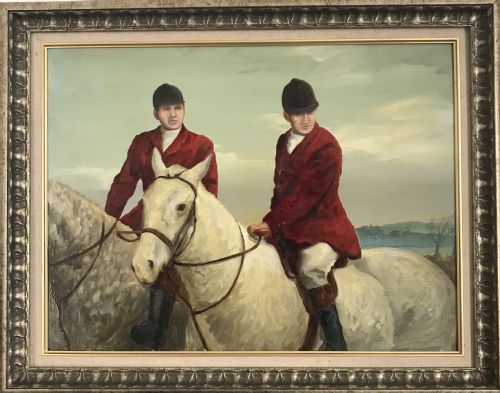
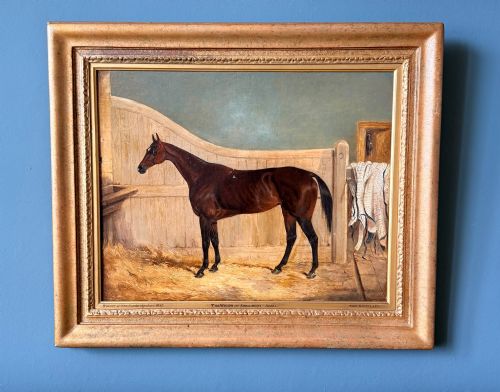
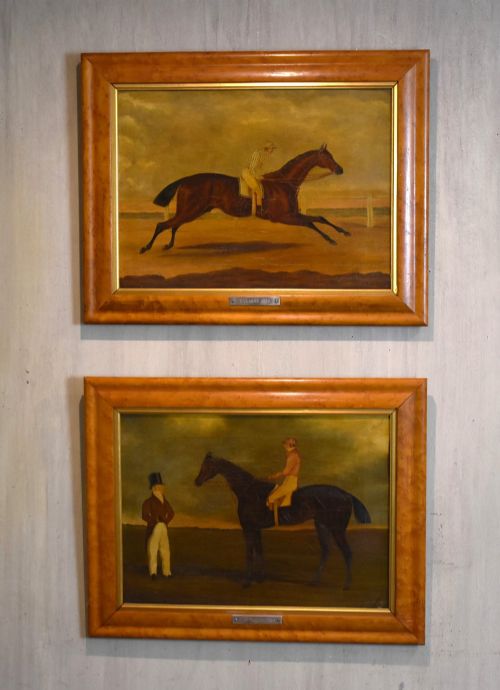
A sporting horse painting captures the animal in various pursuits, from fox hunting and coaching scenes to racehorse portraits and stable studies. These works range from intimate individual portraits of named thoroughbreds to expansive landscape views involving hounds and riders.
The version you are most likely to meet on this page is a nineteenth-century oil painting on canvas, frequently framed in giltwood. These pieces often record specific animals, notable races, or regional hunts across British countryside settings.
How they were made
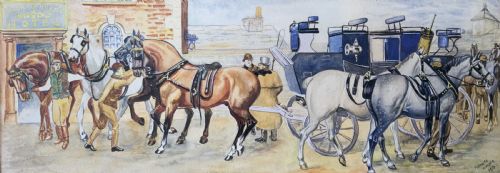
Artists typically applied oil paint to stretched canvas or wooden panels, building up layers to render the musculature of the horse and the texture of its coat. Watercolour and gouache on paper also appear, often finished with ink for sharper detail in coaching and racing scenes.
Frames play a structural and aesthetic role, constructed from wood and finished with gilt to complement the dark, rich tones of the pigments used in traditional British sporting art.
Listings feature oil on canvas alongside works on paper, wood panels, and glass.
What varies in quality
Anatomical accuracy and the rendering of movement separate the finest examples from standard commercial work. Master painters capture the tension in a gallop or the calm stance of a stable portrait with precise proportion and light.
The handling of the surrounding landscape and background figures also dictates the standard of the piece. Superior works integrate the horse seamlessly into a convincing pastoral or racing environment rather than placing a stiff figure against a generic backdrop.
Henry Barraud·Thomas Smythe·George Wright·William Albert Clarke·Fred Fitzpatrick·Ernest Payne·C R Breytle·Philip Rideout·Thomas Walker Bretland·John Frederick Herring Snr·John Ferneley Senior·Alfred Munnings·John Rattenbury Skeaping·Albert Clark·George E Sharpe·Samuel Spode·Abraham Cooper·Edward Lloyd of Ellesmere·Basil Nightingale·William Williams
The Sporting Horse Painting Glossary
- Giltwood
- Wood carved and covered with a thin layer of gold leaf or gilt powder. This finish is standard for traditional nineteenth-century picture frames.
- Provenance
- The documented history of ownership of an artwork. A clear provenance connects a painting to specific estates, galleries, or collections.
- Eglomise
- A technique where design and gilding are applied to the reverse face of glass. This process creates a reflective, decorative surface.
- Grisette
- A term used in nineteenth-century titles to denote a grey mare. It frequently appears alongside the specific location of the horse's owner or stable.
Sporting Horse Painting: Frequently Asked Questions
What subjects do these paintings show?
These works depict equines in various settings, including racecourses, hunting fields, coaching routes, and stable interiors.
Many pieces record named animals and specific historical events, paired with riders, handlers, or hounds.
How do I identify the period?
Dates are often established through the artist's working lifespan, recorded inscriptions on the canvas reverse, or specific historical subjects like named nineteenth-century race winners.
Framing materials and stretcher construction methods also offer reliable clues to the age of the piece.
Are these works signed?
Signatures appear on many pieces, sometimes accompanied by dates or titles written directly onto the canvas or frame.
Unsigned works are attributed through style, brushwork conventions, and comparison with documented pieces from the same era.
How should I display them?
These paintings suit traditional interior settings, particularly spaces that complement the dark wooden frames and gilt accents.
Keep them away from direct sunlight and excessive moisture to protect the oil paint and canvas over time.