


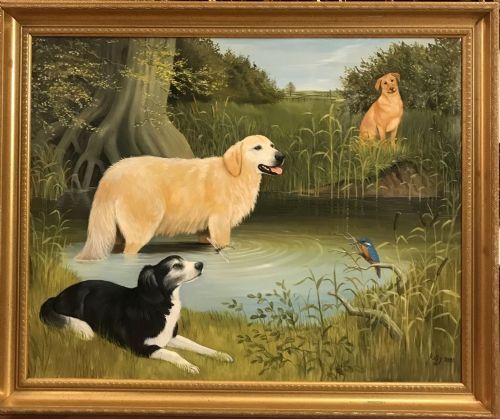


Sporting Dog Artwork
Sporting dog artwork captures hounds, spaniels and terriers in oil or watercolour, bringing centuries of field sports straight to the wall.
Sporting Dog Artwork
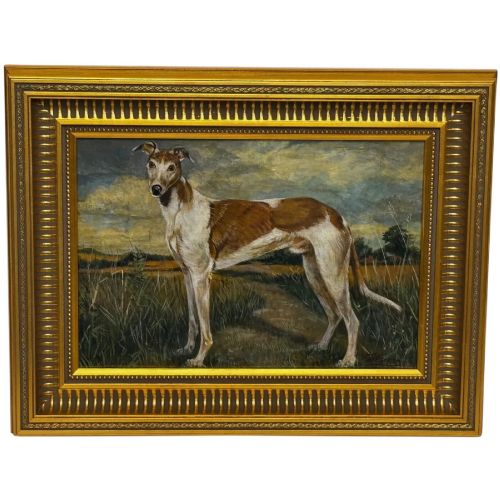
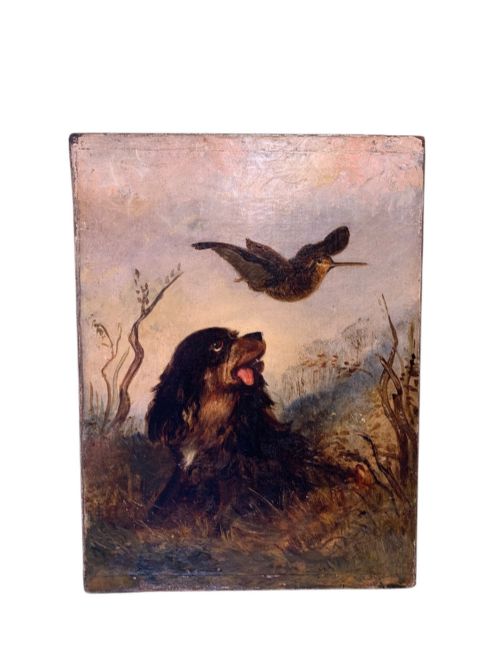
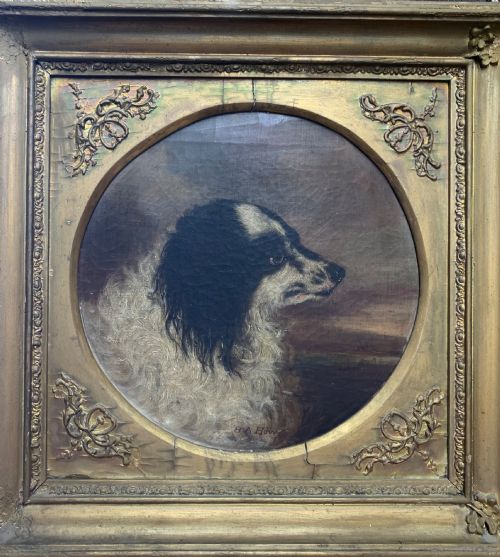
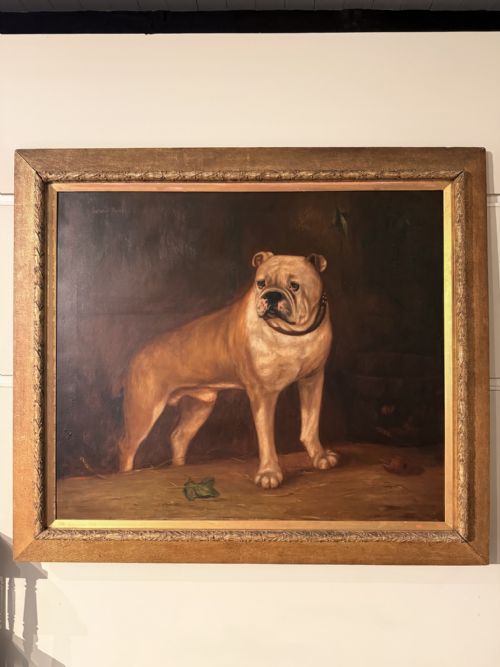
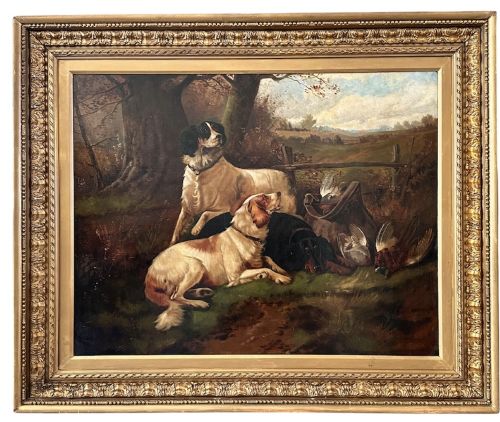
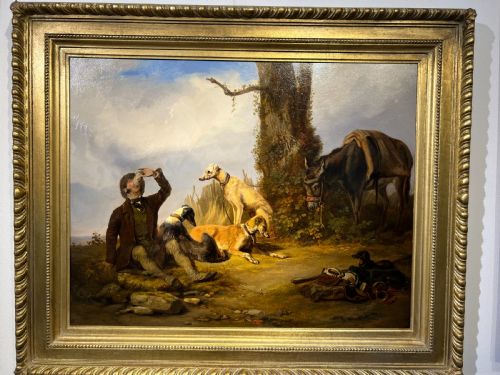
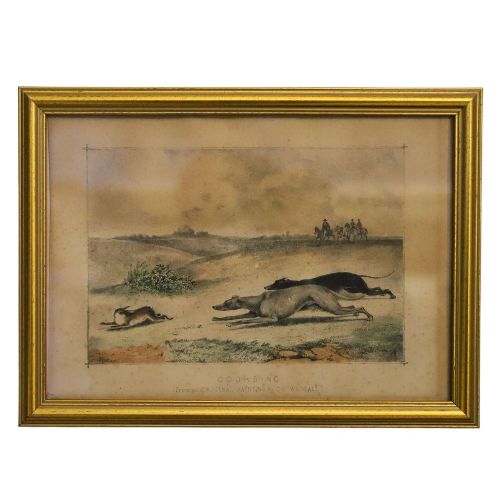
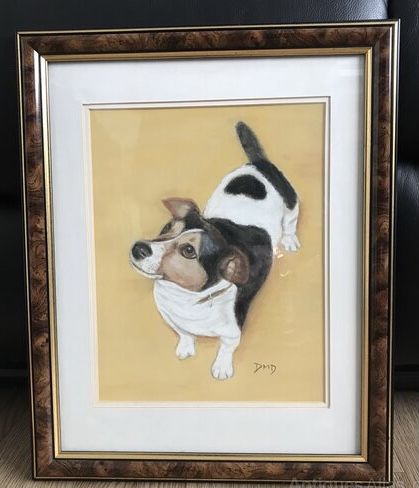
Sporting dog artwork encompasses oil paintings, watercolours, etchings and lithographs depicting hounds, retrievers, spaniels and terriers. When searching for sporting dog artwork, buyers encounter pieces ranging from naive early nineteenth-century portrayals to detailed Victorian and mid-twentieth-century canvases. These works often place the animals within landscapes, moorland scenes or alongside the day's bag and hunting equipment.
The selection on this page relies heavily on nineteenth-century and Victorian pieces, alongside select works from the early and mid-twentieth century. Hounds, spaniels and working terriers dominate the subjects, rendered either as individual character portraits or within active field sports contexts. British sporting art traditions anchor the majority of these depictions, reflecting a long history of canine portraiture in country houses.
Materials and Technique
Painters utilised oil on canvas and oil on board to build rich textures in animal coats and surrounding landscapes. Watercolours and pastels on paper also appear frequently, often protected under glass alongside detailed pencil sketches and etchings. Giltwood frames frequently house these works, providing a traditional border that complements the period aesthetic.
Artists applied varying brushwork techniques, from the smooth, precise portraiture of established animal painters to looser, more immediate touches found in naive works. Lithographs and signed engravings offer print-based alternatives, capturing the same sporting subjects through inked impressions on paper.
Materials recorded across the inventory include oil on canvas, board, paper, giltwood and gold leaf.
Evaluating Quality
Anatomical accuracy and the expressive rendering of the animal's coat separate finer pieces from simpler works. Master painters capture the distinct bone structure and alertness of working hounds, whereas lesser hands produce stiffer, less convincing forms.
The integration of the subject within its landscape background determines compositional success. Stronger works balance the dog with atmospheric lighting and coherent spatial depth, while simpler pieces treat the animal and scenery as separate elements.
Henry Barraud·John Sargent Noble·Sir Edwin Henry Landseer·C H Weigall·C R Breytle·John Emms·Arthur Wardle·William Barraud·Samuel Raven·J F Marie Huet Villiers·George E Sharpe·Colin Graeme Roe·Valentine Thomas Garland·John Trivett Nettleship·Fannie Moody·Edwin Frederic Holt·Alfred Duke·Henri Schouten
The Sporting Dog Artwork Glossary
- Lithograph
- A print made from a design drawn on limestone or metal plate. This technique allows for faithful reproductions of original drawings.
- Giltwood
- Wood carved and coated with a thin layer of gold leaf or metallic paint. It provides a bright, reflective border common in traditional framing.
- Etching
- An intaglio printmaking process where acid cuts lines into a metal plate to hold ink. Artists use this method to achieve fine, sharp detail.
- Naive art
- Art produced by a self-taught creator working outside academic traditions. These pieces often feature charming perspective quirks and direct stylistic choices.
- Provenance
- The documented history of ownership associated with an artwork. Clear records help confirm authenticity and past exhibitions.
Sporting Dog Artwork: Frequently Asked Questions
What periods do these artworks cover?
The listings span from the early nineteenth century through the Victorian era and into the mid-twentieth century. Georgian works and later twentieth-century pieces also feature among the selection.
Most items originate from the Victorian period, reflecting a peak in British sporting art and animal portraiture.
How were these pieces framed originally?
Many works are housed in period giltwood frames that match the age of the painting or print. These frames often show traditional moulding and corner ornamentation.
Some pieces retain their original framing under glass, particularly watercolours, pastels and paper engravings.
Are these paintings signed by the artists?
Several pieces feature artist signatures, inscriptions or documentation pointing to known nineteenth-century animal painters. Other works remain unsigned or are attributed to specific schools and followers of major artists.
Attributions rely on stylistic analysis, subject matter and historical records matching the depicted animals and kennels.
How do I care for antique dog paintings?
Keep oil paintings and works on paper away from direct sunlight and damp environments to protect the canvas and pigments. Consistent indoor temperatures prevent warping in wooden boards and giltwood frames.
Dust surfaces gently with a soft, dry brush and avoid chemical cleaners on both the canvas and the protective glass.