

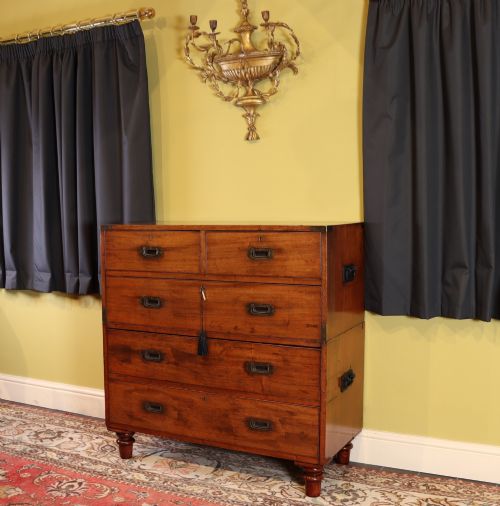

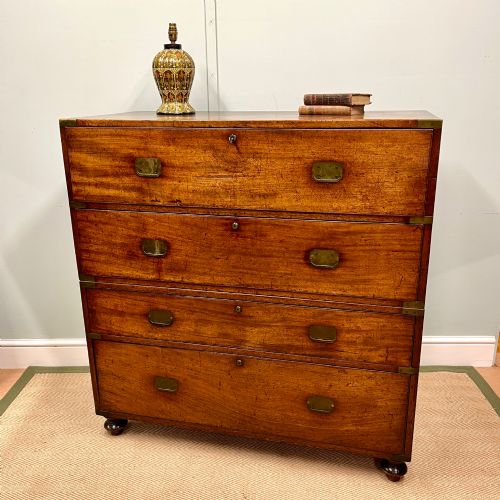
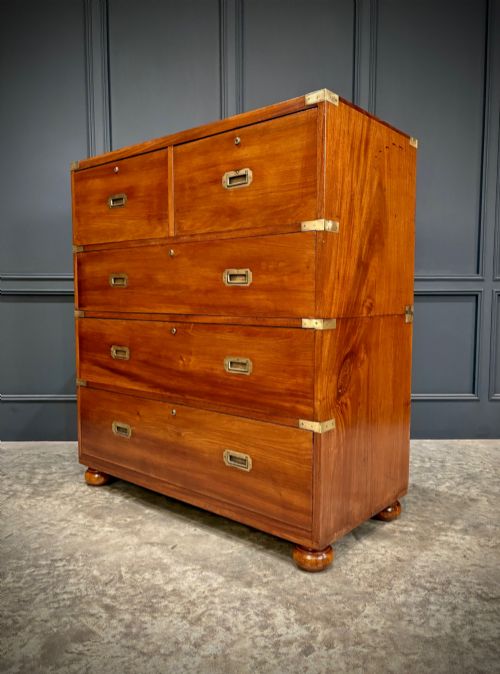


Split Mahogany Chest
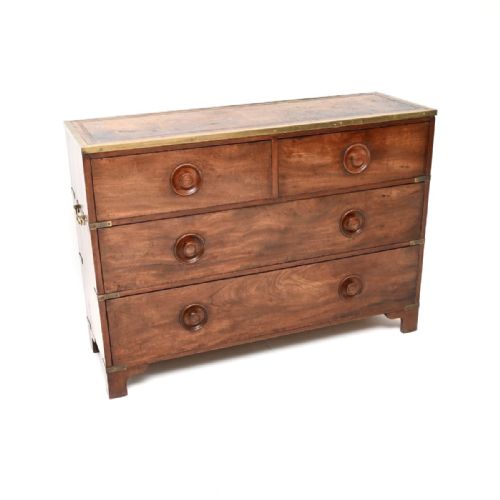
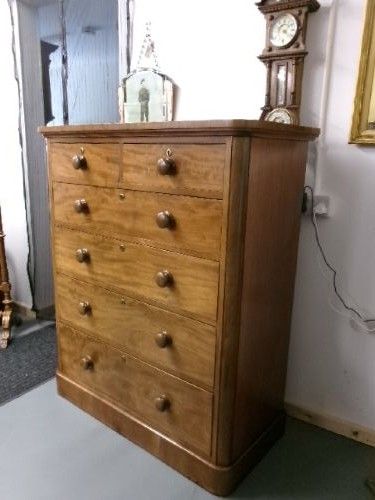
A split mahogany chest divides in two for transport, giving you sturdy timber storage built for life on the move.
Split Mahogany Chest
When you search for a split mahogany chest, you encounter sturdy modular furniture built in sections for easy travel. These pieces divide neatly into a top and bottom half, making them remarkably practical for moving between rooms or properties.
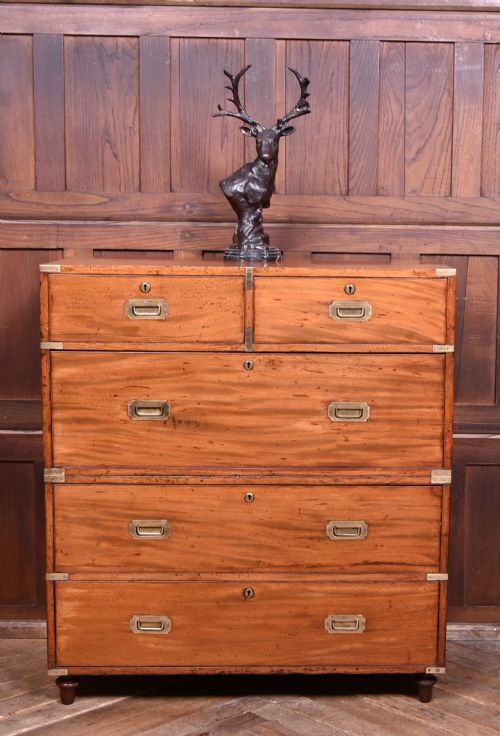
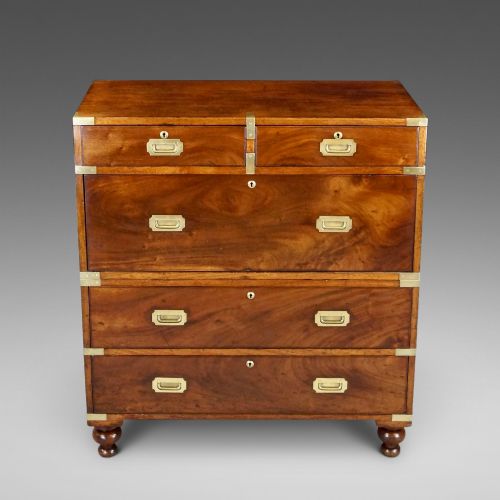
The versions you meet most frequently on this page date from the nineteenth century, including Victorian and Regency eras. Many follow military campaign styles, equipped with brass corners and inset carrying handles designed for officers on duty.
Beyond standard chests of drawers, you also find tallboy formats and secretaire variants featuring fitted writing drawers. These modular timber items combine robust utility with traditional craftsmanship.
Materials and construction
Cabinet makers relied primarily on dense mahogany timber for its strength and rich grain. Solid wood construction ensured the carcasses could withstand frequent dismantling and assembly during transit.
Brass bound edges, flush carrying handles, and reinforced corner brackets protected the vulnerable sections from heavy knocks. Leather inserts occasionally lined the writing surfaces of secretaire drawers.
The defining feature remains the split carcase design, held securely together by internal brass pins or side brackets. This split construction allowed heavy tallboy or chest formats to travel safely in two manageable parts.
Listings feature mahogany, brass, teak, and leather across Victorian, Regency, and early twentieth-century periods.
Quality and craftsmanship
The standard of timber selection and drawer construction dictates the grade of a split mahogany chest. Superior examples feature straight-grained mahogany boards carefully matched across the drawer fronts.
Hardware quality also separates basic pieces from finer items. Heavy cast brass recessed handles, original flush drawer pulls, and well-fitted locking mechanisms indicate higher workshop standards.
The precision of the dividing joint determines how cleanly the two sections lock together. Tighter tolerances in the carcase separation point reflect superior period joinery.
S. W. Silver & Co. London & Liverpool
The Split Mahogany Chest Glossary
- Split chest
- A chest of drawers built in two separate modular sections that stack vertically. This design originated to facilitate transport by ship or carriage.
- Campaign chest
- Portable furniture constructed for military officers on active service. These items typically feature recessed brass hardware and carrying handles.
- Secretaire drawer
- A pull-out drawer fitted with a drop-front writing desk and internal pigeonholes. It often conceals smaller compartments for stationery and documents.
- Tallboy
- A tall chest of drawers formed by stacking one cabinet section on top of another. They provide maximum storage capacity while retaining a compact floor footprint.
Split Mahogany Chest: Frequently Asked Questions
How do I separate a split mahogany chest?
Unfasten any internal securing hooks or side brackets joining the upper and lower halves together. Lift the top section straight up off the lower carcase.
Keep the sections level during separation to avoid damaging the alignment pins. Two people make the process safe and straightforward.
Why were these chests built in two parts?
Modular construction allowed officers and travellers to pack heavy storage into manageable loads for tents, ships, and carriages. Narrow stairwells and tight cabins made single-piece furniture impractical.
Splitting the weight ensured easier handling during frequent relocations across the British Empire.
How should I clean a mahogany surface?
Dust the timber regularly with a soft, dry cloth to prevent grit accumulation. Apply a quality beeswax periodically to nourish the grain and maintain the natural lustre.
Avoid silicone-based sprays and keep the wood away from direct heat sources and strong sunlight to prevent warping.
Are all campaign chests split chests?
Not every campaign chest splits into two sections, though the feature appears regularly in larger formats. Many standard chests of drawers and secretaire units retained the two-part design for practicality.
Smaller cabinets and washstands often remained as single solid pieces.