
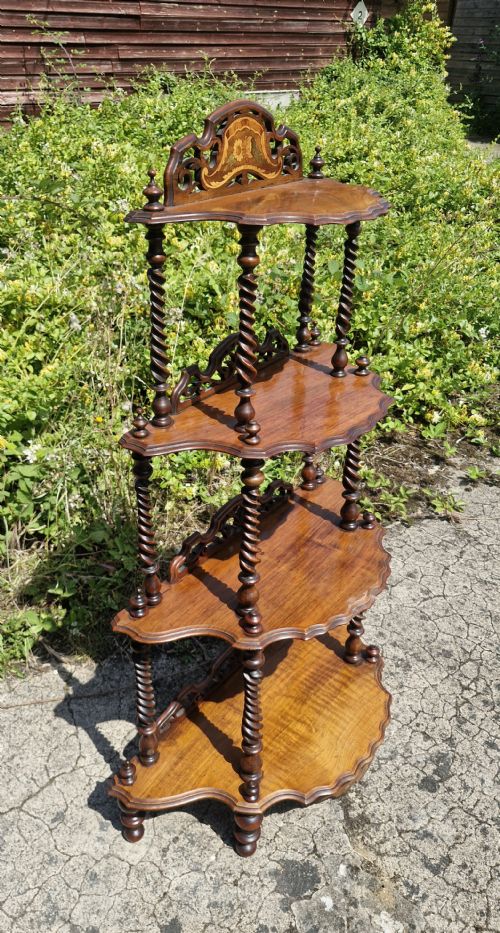


Spiral Twist Stand
A spiral twist stand brings sculptural movement into a room, supporting lamps, plants or display objects on turned wooden or cast metal columns.
Spiral Twist Stand
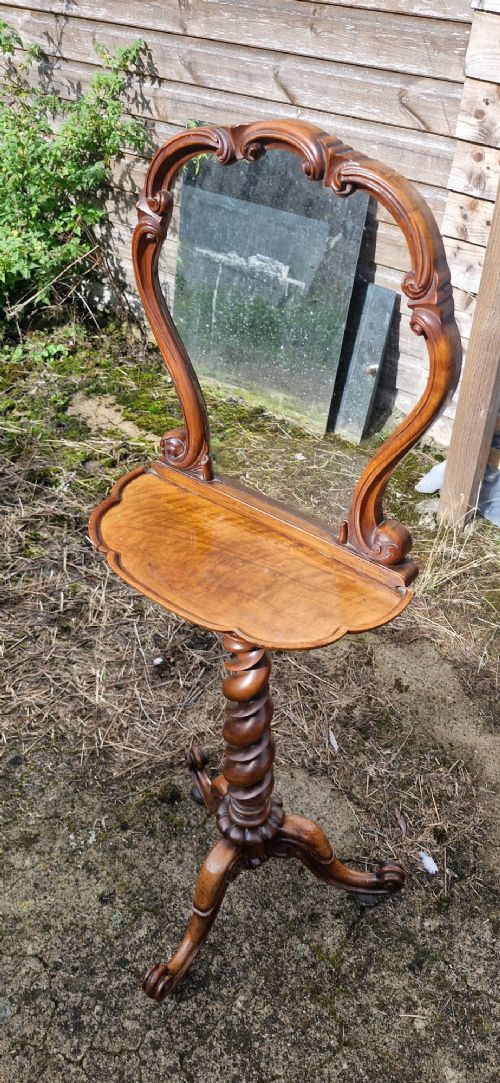
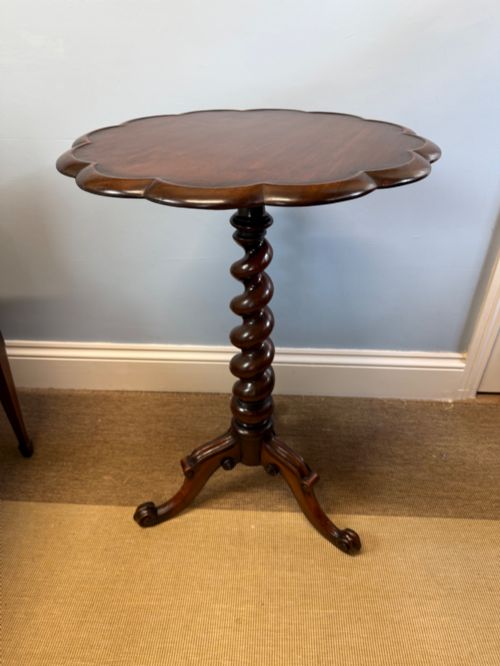
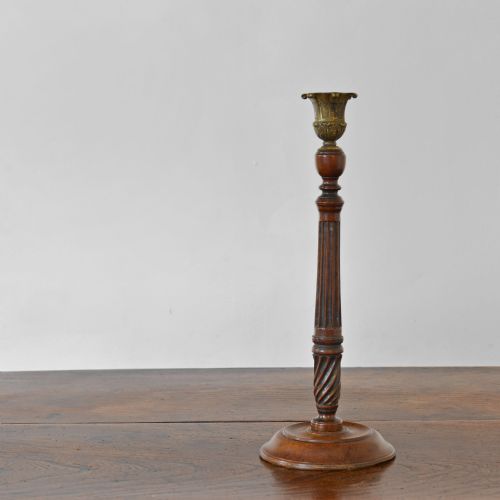
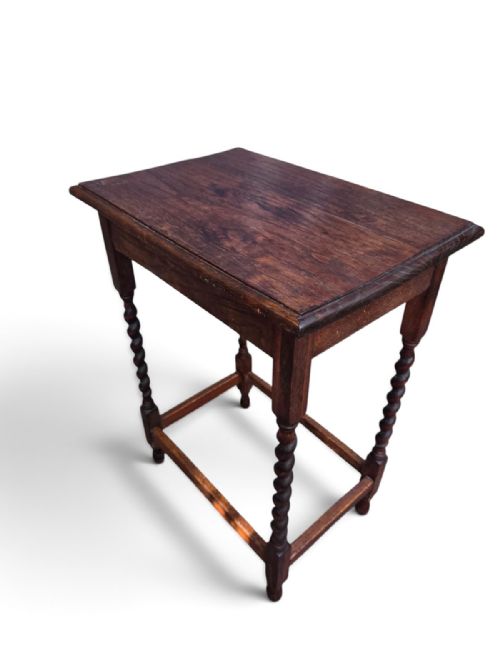
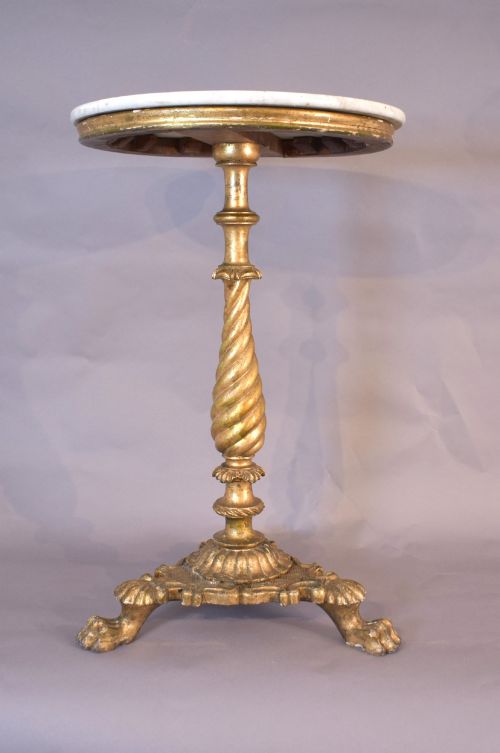
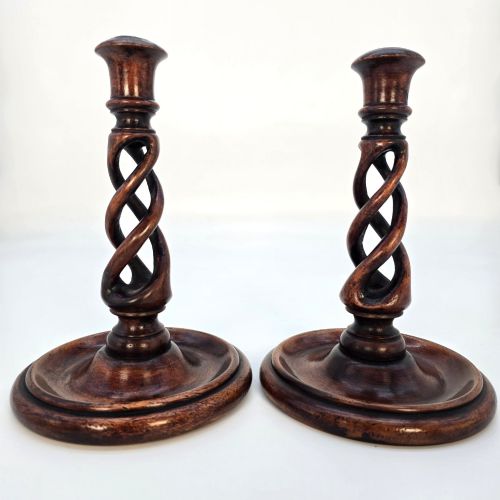
A spiral twist stand encompasses a diverse group of elevated supports, ranging from compact occasional tables and lamp tables to tall candlesticks, torchères and architectural columns. When searching for a spiral twist stand, buyers frequently encounter Victorian and Edwardian examples featuring characteristic barley twist legs, alongside earlier Georgian and eighteenth-century oak or mahogany pieces.
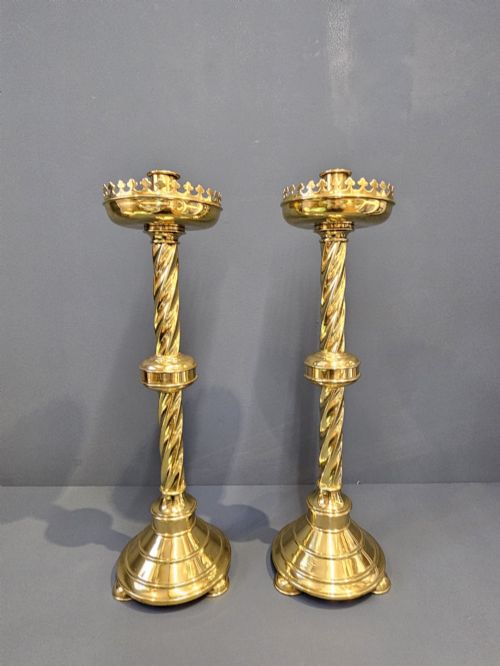
The domestic function of these pieces has varied widely across centuries, serving as surfaces for wine decanters, kettles, reading materials and decorative ceramics. Alongside small side tables and plant stands, the selection includes heavy brass altar candlesticks and marble columns designed to elevate sculptural works.
Materials and construction
Cabinetmakers and metalworkers produced these pieces using native and exotic timbers such as mahogany, walnut, oak, fruitwood and rosewood, as well as cast brass, copper, marble and crystal glass. Wooden shafts and table legs were shaped on lathes to create continuous helical turns, requiring precise hand-finishing to maintain uniform depth and symmetry along the twist.
Joinery techniques varied according to the form, utilising pegged mortise and tenon joints for structural stability in tables and heavy pedestals, while turned candlesticks often relied on threaded central spindles or secure socket mountings to join the base, stem and drip pan.
Listings feature turned supports spanning the seventeenth through the early twentieth centuries, constructed in mahogany, oak, walnut, brass and variegated marble.
Distinctions in craftsmanship
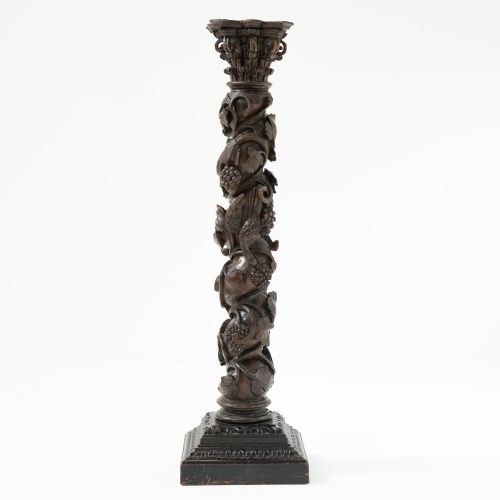
Superior examples display crispness and regularity in the carved or turned helical threads, where the artisan maintained exact proportions along the entire length of the column. Softer or coarser definitions in the twist indicate hurried production or later recutting, whereas hand-carved Solomonic columns reveal individual tool marks and deliberate asymmetry.
The choice of materials and timber selection heavily influence the standing of a piece, with figured mahogany, burr veneers and heavy-gauge cast brass distinguishing finer works from standard utility items. Structural integrity also dictates worth, as tall torchères and pedestals require substantial weighted bases to prevent tipping.
The Spiral Twist Stand Glossary
- Barley twist
- A type of turning resembling the spiral form of a barley sugar stick, popular in seventeenth-century furniture and revived during the Victorian and Edwardian periods. It creates strong diagonal shadows along furniture legs and candlesticks.
- Torchere
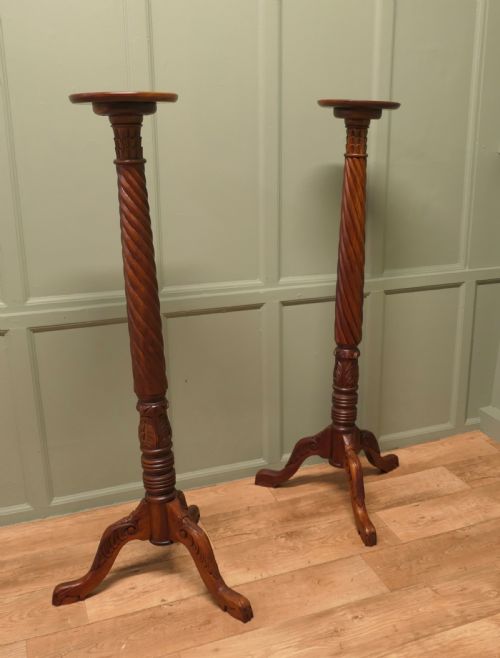
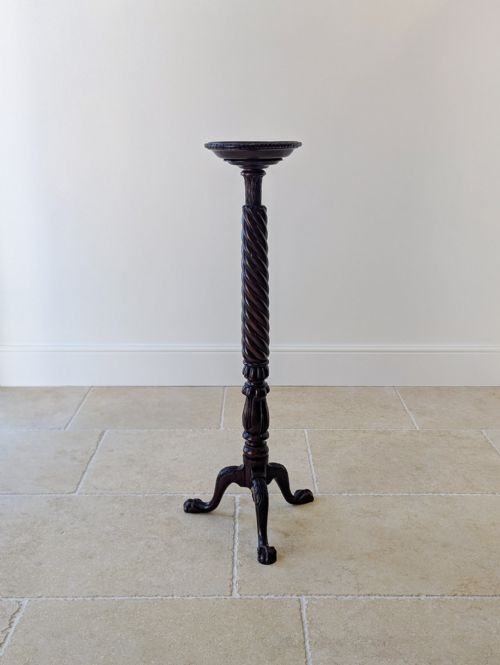
- A tall, slender stand designed specifically to support a single candle, lamp or decorative urn. These freestanding pieces often feature tripod bases for stability.
- Solomonic column
- A spiral-columnar shaft characterised by a winding, helical twist derived from ancient architectural forms. Eighteenth-century examples in carved oak demonstrate this classic classical revival design.
- Whatnot
- A multi-shelved open stand intended for displaying ornaments, books or tea wares. They appear in walnut and mahogany across the Victorian era.
- Teapoy
- A small occasional table or caddy box on a central pillar designed to hold tea canisters and serving equipment. William IV and Georgian examples often incorporate turned columns.
Spiral Twist Stand: Frequently Asked Questions
What is a barley twist?
A barley twist is a helical turning carved or shaped into wood or metal to resemble a spiralling rope or sugar stick. This decorative form adds visual energy and texture to furniture legs, table supports and candlestick stems.
The style originated in seventeenth-century furniture design and saw a major revival during the Victorian and Edwardian periods, appearing frequently on tables, stands and architectural pillars.
How do I use a torchère?
A torchère serves as a tall display pedestal for holding table lamps, trailing plants, bronzes or ceramic vases. Because of their elevated height and slender profiles, they draw the eye upward and utilise vertical space in corners or empty room divides.
When living with these pieces, ensure they stand on level flooring and avoid placing excessively heavy items on tall, narrow tripod bases to maintain proper balance.
How do I date a twist stand?
Dating relies on examining the timber species, construction joints, turning profile and surface finish. Earlier pieces from the seventeenth and eighteenth centuries often feature hand-carved solid oak or fruitwood with pegged joints, while Victorian and Edwardian versions utilise machine lathes on mahogany, walnut or brass.
Secondary woods, fastening methods such as hand-cut screws, and overall wear patterns provide additional clues regarding the period of manufacture.
Were these stands used for candles?
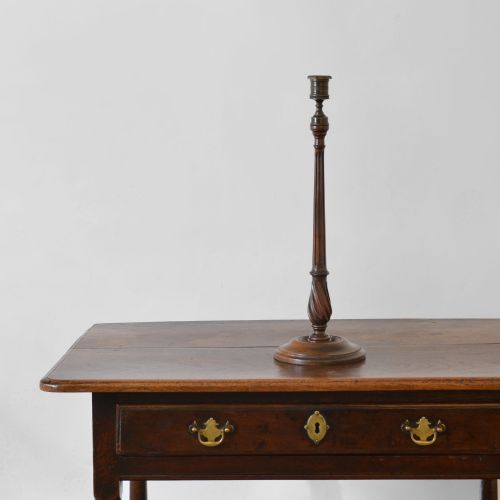
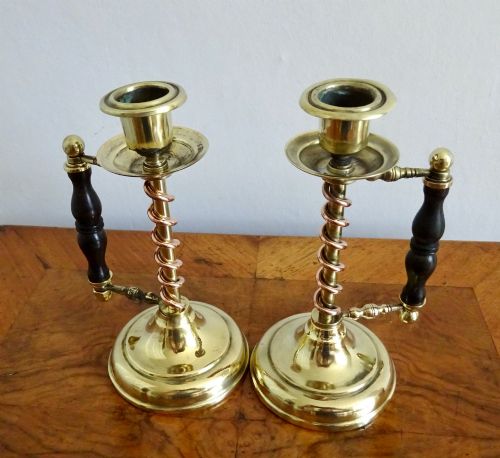
Many of the tall turned shafts listed under this category were specifically produced as candlesticks for churches and large domestic interiors, utilising heavy brass, copper or timber to support heavy candles. Smaller table variants were built to hold portable lighting or tea equipment.
Over time, many surviving candlestick stands have been converted to support electric table lamps while retaining their original turned stems and weighted bases.