


Spiral Turned Wooden Candlesticks
Spiral turned wooden candlesticks bring tactile warmth and centuries of domestic craftsmanship straight to the table.
Spiral Turned Wooden Candlesticks
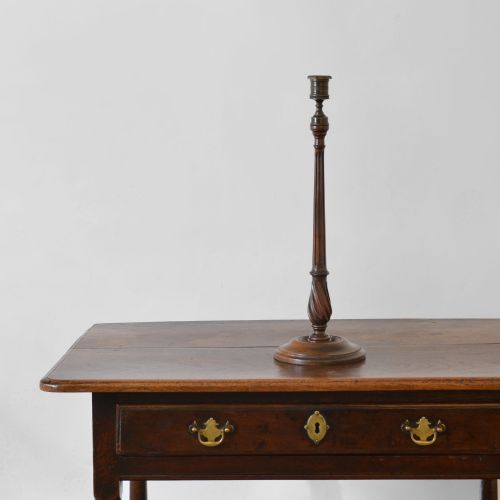
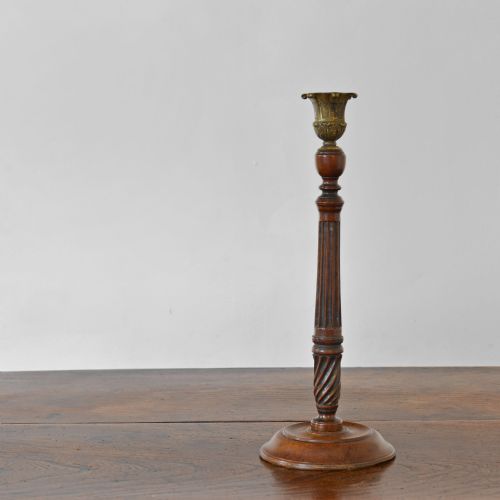
Spiral turned wooden candlesticks are domestic lighting accessories shaped with characteristic helical turning along the shaft. These pieces appear in forms ranging from compact table models to tall exhibition examples.
The selections available here span several centuries of production, featuring periods such as Georgian, Victorian, Edwardian, and the early twentieth century. Oak, mahogany, walnut, and fruitwood dominate the material record.
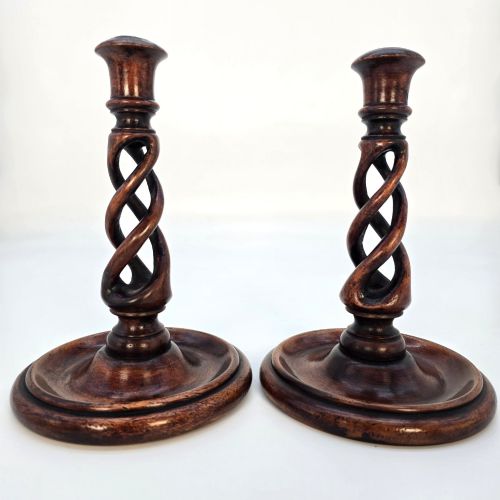
Buyers frequently encounter pairs matched in timber and twist, alongside single examples displaying distinct regional character. The vernacular folk art tradition also contributes simpler, charmingly irregular interpretations to the selection.
How they were made
Turned wooden shafts rely on lathe work to achieve precise helical cuts, often complemented by hand carving and smoothing. Artisans manipulated dense hardwoods such as oak and fruitwood to create deep, continuous twists without compromising structural integrity.
Many examples incorporate fitted brass elements, such as socket tops or bobeches, secured to the turned timber bodies to hold candles safely. The combination of warm timber and polished metal reflects traditional multi-material construction methods.
Current listings demonstrate a strong representation of oak and mahogany materials spanning from the Georgian era through to the early twentieth century.
What varies in quality
Quality in these pieces rests upon the precision and depth of the twist, alongside the selection of well-figured timber such as richly patinated mahogany or dense walnut. Crisp carving lines on the turned shaft distinguish superior work from softer, more utilitarian production.
Proportion and scale also dictate distinction, with taller or exceptionally matched pairs demonstrating greater ambition from the maker. The integration of original brass components further elevates the standing of an individual piece.
The Spiral Turned Wooden Candlesticks Glossary
- Barley twist
- A cylindrical column carved or turned in a helical screw pattern resembling barley sugar. This form became particularly popular during the seventeenth century and saw revivals in later periods.
- Fruitwood
- A generic term for timber harvested from fruit-bearing trees such as pear, apple, or cherry. Artisans favoured these dense woods for fine turning because they held crisp detail.
- Bobeche
- A removable collar or drip pan fitted to the top of a candlestick to catch wax. They are frequently cast in brass on wooden sticks.
- Folk art
- Objects created by self-taught or provincial makers outside formal guild traditions. These pieces often display idiosyncratic proportions and charming individuality.
Spiral Turned Wooden Candlesticks: Frequently Asked Questions
Are these candlesticks safe to use with real candles?
Most antique turned wooden sticks accommodate standard taper candles securely, particularly those fitted with original metal sockets. Care should be taken to extinguish flames well before they reach the timber or brass top.
Using snug-fitting candles prevents dripping wax onto the polished wood surface. Modern wax drip protectors can also be employed discreetly for preservation.
How do I date a spiral turned wooden candlestick?
Dating relies on timber choice, turning style, and secondary materials like brass fittings. Georgian and eighteenth-century examples often feature dense fruitwoods or mahogany with hand-tooled execution.
Later Victorian and Edwardian revivals frequently utilise oak or walnut with machine-assisted precision. Comparing the wear patterns around the base and socket also helps determine age.
How should I clean and maintain wooden candlesticks?
Maintenance requires only a soft, dry cloth to remove dust and preserve the natural wax patina. Avoid liquid polishes or harsh chemical cleaners that can strip the historic finish.
Brass components can be polished gently with a dry cloth, taking care not to stain the surrounding wood. Keeping wooden items away from direct heat sources prevents timber splitting.
Did these candlesticks originally come in pairs?
Many of these pieces were manufactured and sold as matched pairs for mantelpieces or dining tables. Single survivals are equally common due to separation over centuries of domestic use.
Collectors often seek out matched pairs, though individual sticks possess strong decorative presence on their own. Variations in grain and height highlight their hand-turned origins.