




Brass Top Candle Stands
Brass top candle stands are practical lighting pieces that bring period warmth and subtle metallic reflection to traditional interiors.
Brass Top Candle Stands
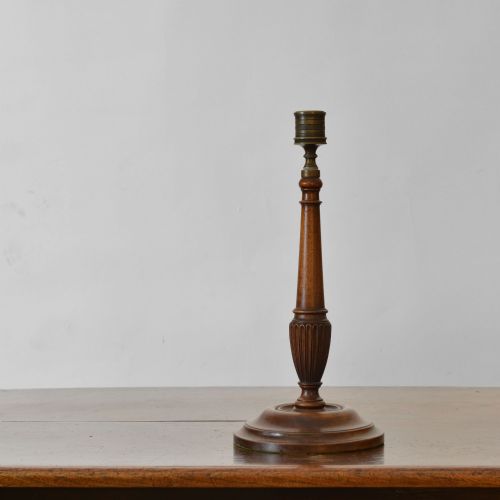
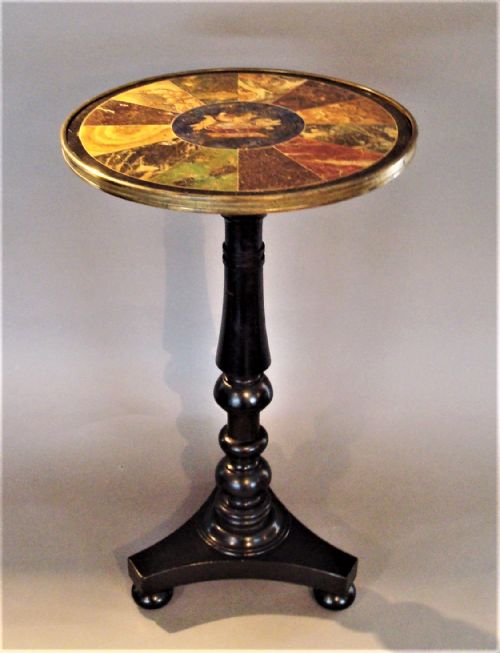
Brass top candle stands combine turned wooden shafts with metal mounts, appearing across periods from the eighteenth century through to the early twentieth century. These pieces function primarily as elevated supports for illumination, though related occasional forms like tripod tables and gueridons also appear in the selection.
The materials span mahogany, oak, rosewood, ebonised wood, and coromandel wood, frequently paired with brass mounts or inlaid details. You will encounter forms ranging from simple Georgian candlesticks to barley twist designs and French-influenced occasional tables.
Dating ranges from the Georgian era and Regency period through the Victorian age and into nineteen twenty. The selection balances functional candlesticks with small display surfaces that incorporate brass elements into their construction.
How they were made
Construction relies heavily on dense timbers such as mahogany, oak, and rosewood turned on a lathe to create slender columns or twist patterns. Craftsmen incorporated brass components either as functional top sections, drop-in candle holders, or as intricate inlay across the wooden surfaces.
Finishing techniques draw upon traditional French polishing for rosewood and mahogany, alongside ebonising for darker decorative effects. Simulated marble finishes also appear on occasional tables, mimicking luxury stone using painted or prepared substrates.
Even when the candles are gone, the twisted oak remembers every turn of the Victorian lathe.
What varies in quality
Quality rests upon the choice of timber and the crispness of the turning, particularly evident in the execution of barley twist columns or tripod bases. Richness of grain in rosewood and mahogany elevates certain examples above simpler oak or ebonised pieces.
The integration of brass elements defines the refinement of each stand, where precision in inlay and casting separates standard production from finer cabinetmaking. Proportion and balance across the shaft and base determine the overall visual success of the piece.
The Brass Top Candle Stands Glossary
- Barley twist
- A decorative turning style resembling a spiralling rope column. This technique became popular in seventeenth-century furniture and saw revival periods later.
- Tripod table
- A small freestanding table supported by three legs radiating from a central pillar. These forms provide stable surfaces for small rooms and candle lighting.
- Gueridon
- A small French occasional table or stand, often round and supported by a central column. Originating in the seventeenth century, these pieces frequently utilise exotic woods.
- Ebonised wood
- Timber treated with a dark stain or finish to imitate ebony. This process was common in Victorian furniture to achieve a formal, high-contrast appearance.
- Coromandel
- A dense, heavily figured exotic hardwood from Asia used in fine cabinetmaking. Its rich dark brown colour and striking black grain make it highly decorative.
Brass Top Candle Stands: Frequently Asked Questions
What periods do these stands cover?
The selection spans several centuries, starting from the eighteenth century and moving through Georgian, Regency, and Victorian eras. Later examples extend into nineteen hundred and nineteen twenty.
Cabinetmaking styles shift across these decades from simple mahogany pillars to elaborate French-influenced gueridons and oak barley twist designs.
Are these pieces strictly for candles?
Many items function directly as candlesticks designed to hold wax lights safely on a raised platform. Other forms include occasional tables and tripod stands that incorporate brass elements in their tops or framing.
Buyers often utilise these smaller stands beside seating areas or as display ledges for decorative objects rather than active illumination.
How do I identify a Regency table?
Regency pieces often feature classical proportions, exotic woods like rosewood, and precise brass inlay work. Tripod bases and simulated marble finishes are also characteristic of this period.
Compare the turned elements and timber selection against standard Georgian or Victorian items to spot the cleaner neoclassical lines typical of the early nineteenth century.
What woods were commonly used?
Cabinetmakers employed durable timbers including mahogany, oak, and rosewood for structural stability and rich grain patterns. Ebonised wood and coromandel wood also appear for more decorative or exotic results.
Secondary materials include simulated marble surfaces and cast brass components used for mounts, trays, and candlestick tops.