






Spiral Brass Candlesticks
Spiral brass candlesticks bring tactile warmth and structured movement to a room, turning practical lighting into sculptural form.
Spiral Brass Candlesticks
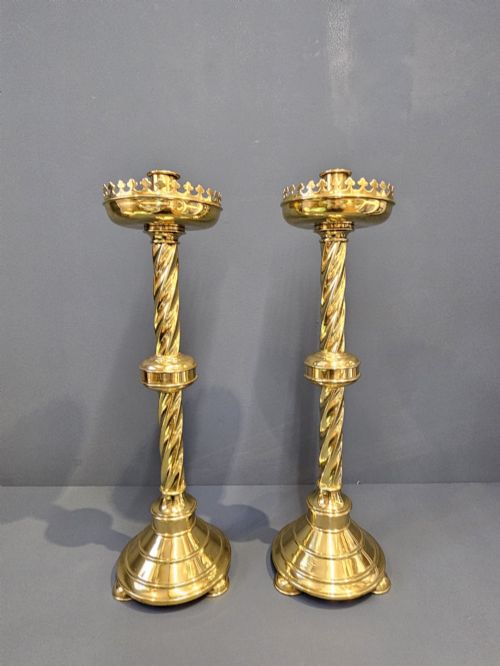
Spiral brass candlesticks combine utilitarian purpose with dynamic twisted shafts, appearing across domestic and ecclesiastical settings. When searching for spiral brass candlesticks, buyers encounter varied forms spanning the Victorian, Edwardian, and Georgian periods, alongside pieces from the late nineteenth and early twentieth centuries.
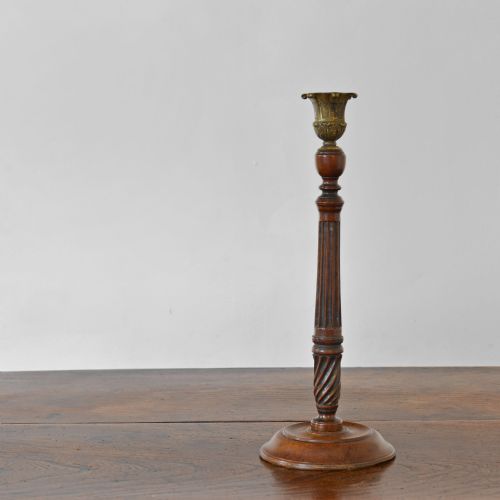
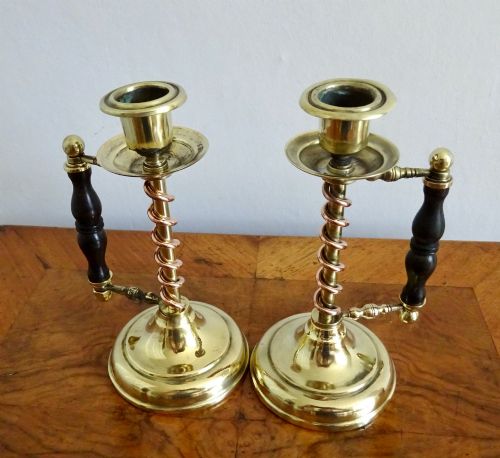
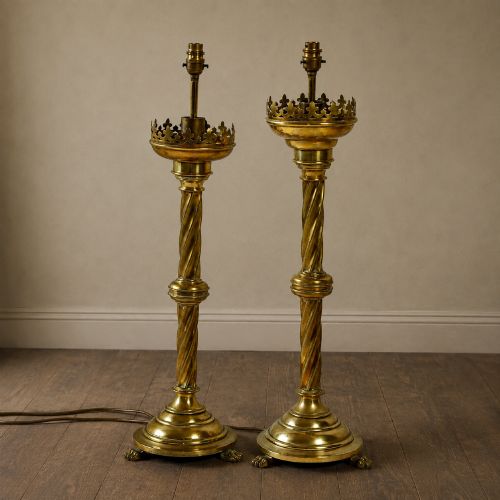
The selection ranges from tall church and altar candlesticks to domestic table lamps and pairs set into fitted trays with handles. Alongside solid metal examples, hybrid forms combine brass tops or bases with oak, mahogany, copper, and enamel.
Design vocabulary shifts from Gothic Revival and Arts and Crafts styles to George III style and Jacobean Revival influences. These pieces function equally well as standalone decorative objects or as functional holders for taper candles.
Materials and construction methods
Makers shaped metal through casting, turning, and twisting techniques to achieve the characteristic spiral or barley twist shaft. Brass provides the primary reflective surface, often paired with copper highlights or rich timber components like oak and mahogany.
Structural elements frequently include fitted bases for stability, particularly on taller designs, while ecclesiastical examples may incorporate heavier weighted bases to support altar use. Mixed media construction unites timber stems with cast brass sconces and drip pans.
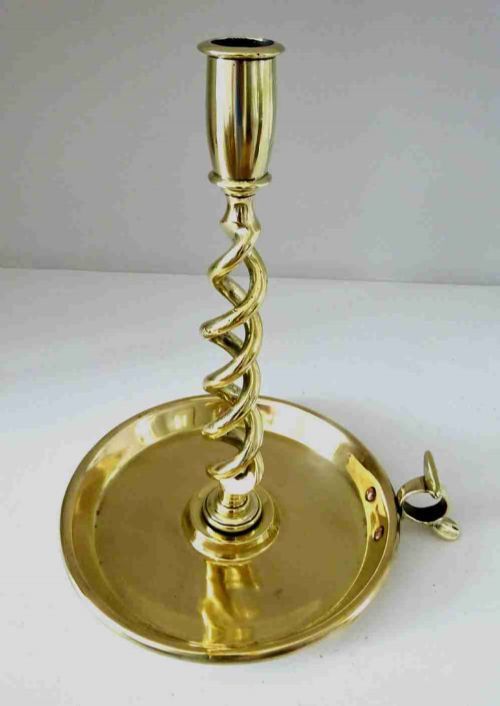
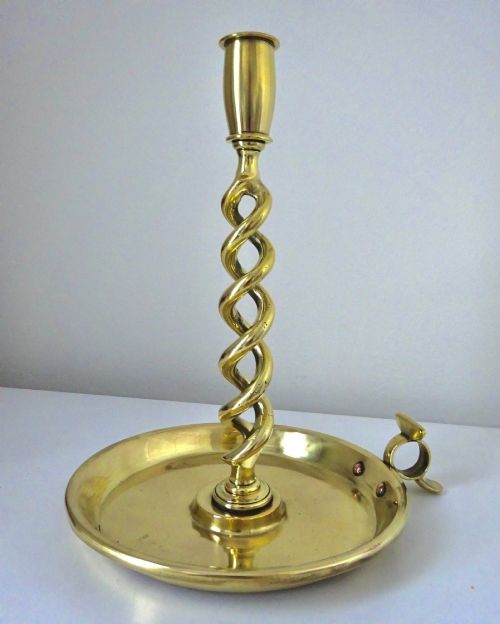
Some Victorian brass candlesticks come with built-in trays and handles for midnight hallway journeys.
Judging quality and proportion
Quality rests in the crispness of the twist and the harmony of the proportions between base, stem, and sconce. Superior examples display deliberate weight and balanced construction, whether executed in solid brass or combined with turned hardwoods.
The integration of fitted trays, well-matched pairs, and secondary materials like copper or enamel distinguishes exceptional workshop production from standard domesticware. Surface finish and the integrity of joints further separate ordinary output from finer survivals.
T Thomason & Co
The Spiral Brass Candlesticks Glossary
- Barley twist
- A carved or turned column resembling a spiral stalk of barley. This form creates dynamic diagonal movement along the candlestick shaft.
- Altar candlestick
- A tall, substantial candle holder designed for ecclesiastical use. These pieces often feature heavy bases and Gothic Revival or Victorian styling.
- Sconce
- The upper cup or nozzle of a candlestick designed to catch dripping wax and hold the candle secure. It represents a primary point of contact between metal and flame.
- Drip tray
- A flat circular plate positioned beneath the sconce to catch melting wax. Fitted versions sometimes incorporate carrying handles for room-to-room transit.
Spiral Brass Candlesticks: Frequently Asked Questions
How do I clean brass candlesticks?
Use a soft cloth to remove dust and surface debris without disturbing the aged patina. Avoid harsh chemical polishes that strip historical character from the metal.
Gentle maintenance preserves the surface finish earned over decades of use. Test any cleaning method on an inconspicuous area first.
Are these suitable for modern dining tables?
These pieces integrate easily into contemporary table settings, offering height and sculptural contrast against minimalist tableware. Their domestic forms were originally designed for everyday interior illumination.
Ensure appropriate candle diameters are selected for the sconces to maintain stability during use. Taper candles work best in traditional sockets.
How do I date an antique candlestick?
Dating relies on observing stylistic markers, construction methods, and material combinations recorded across different production periods. Gothic Revival and Arts and Crafts indicators help narrow the timeframe alongside recorded design periods.
Examining assembly marks and base construction provides additional clues regarding the era of manufacture. Comparing proportions with known period examples confirms the timeline.
Why are some paired with wooden bases?
Makers combined turned timber such as oak and mahogany with brass to achieve textural contrast and added weight. These mixed material pieces reflect Arts and Crafts and revivalist interior tastes.
The juxtaposition of warm wood grain against polished metal was a favoured technique in late nineteenth and early twentieth century workshops.