


Spindle Headboard Bed
A spindle headboard bed brings enduring metal and timber structure to a bedroom, combining functional support with traditional design.
Spindle Headboard Bed
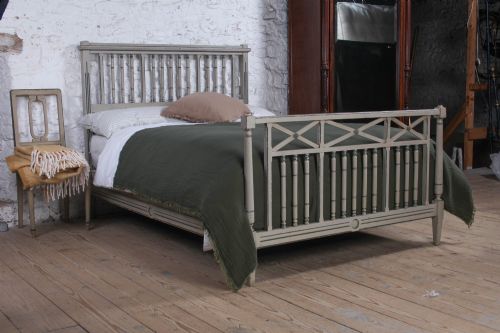
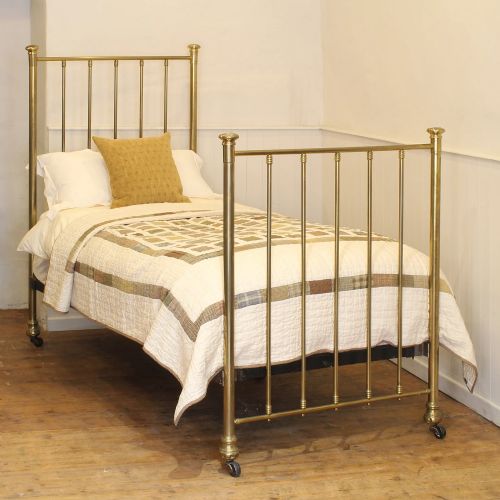
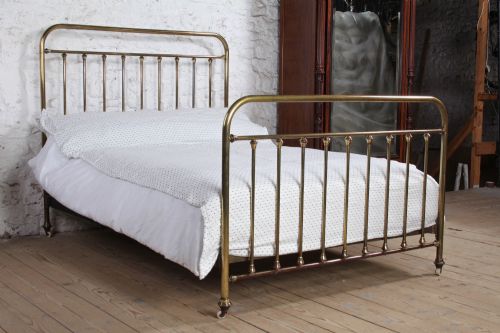
A spindle headboard bed draws together frameworks created across the nineteenth and early twentieth centuries, featuring upright vertical supports arranged within the framing. These pieces appear in single, double, and king sizes, reflecting the sleeping arrangements of their respective eras from the Victorian and Edwardian periods onward.
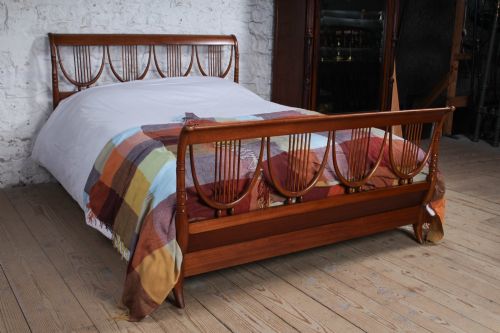
The material palette ranges from polished brass and cast iron to rich timbers such as cherry wood, mahogany, and tiger maple. Stylistic influences span from simple domestic forms to French provincial interpretations and American Federal designs, incorporating marquetry inlay on selected wooden examples.
Buyers encounter bedsteads and bed frames that vary from traditional high-end footboards to no-end configurations designed for a more open visual footprint. Each piece maintains the structural integrity required for modern mattress placement while retaining its original period character.
How they were made
Metal bedsteads rely on brass components and cast iron frames, shaped and joined to support substantial proportions including king size dimensions. Wood versions utilise cherry, mahogany, and tiger maple, frequently enhanced by decorative marquetry inlay applied to the headboard panels.
Construction techniques combine metal casting and tubular framing with traditional cabinetmaking methods for timber elements. Structural joints are engineered to withstand daily use while preserving the slender profile of the vertical spindles.
Current listings demonstrate a diverse material range, spanning polished brass and iron alongside cherry wood, mahogany, and tiger maple from the Victorian to the mid-century period.
What varies in quality
Quality rests upon the weight and gauge of the brass and iron used in the frame, alongside the selection of timber figures in wooden models. Superior examples display crisp casting details on metal joints or precise marquetry work on timber surfaces.
Proportion and balance dictate the visual success of the piece, particularly in larger king size formats where maintaining a refined spindle arrangement prevents a heavy appearance. The integration of decorative elements like brass detail against dark wood indicates careful design consideration.
The Spindle Headboard Bed Glossary
- Spindle
- A turned vertical pillar or rod of wood or metal that forms part of the headboard screen.
- Marquetry
- Decorative patterns formed by the insertion of pieces of veneer into a wood structure.
- Bedstead
- A framework of a bed, including the headboard, footboard, and side rails.
- Tiger Maple
- North American timber characterised by a distinct wavy grain pattern resembling tiger stripes.
Spindle Headboard Bed: Frequently Asked Questions
What is a spindle headboard bed?
A spindle headboard bed is a sleeping frame featuring vertical turned rods or metal bars integrated into the main headboard panel. These designs offer an open, airy appearance compared to solid wood panels.
Such pieces date from the nineteenth and early twentieth centuries, encompassing Victorian, Edwardian, and American Federal periods in various metal and timber constructions.
How do I choose the right size?
Check the internal dimensions of the bedstead to confirm compatibility with standard modern mattress sizes, noting that older frames can vary slightly from contemporary standards. Consider the overall height and width in relation to your bedroom proportions.
Take into account whether the piece includes a footboard or uses a no-end configuration, as lower profiles suit smaller rooms better.
Are these beds structurally stable?
Period bed frames are constructed from robust materials like cast iron, heavy brass, and dense hardwoods such as mahogany and cherry. They are built to support regular use when properly assembled.
Ensure that all original corner brackets and side rail fixings are secure to maintain rigidity across the entire structure.
How do I care for brass and iron?
Metal components benefit from dusting with a soft cloth and gentle cleaning to preserve their surface finish over time. Avoid abrasive cleaning agents that can strip protective lacquers or vintage patinas.
Timber parts require standard wood care, including occasional polishing and protection from direct sunlight and extreme humidity changes.