

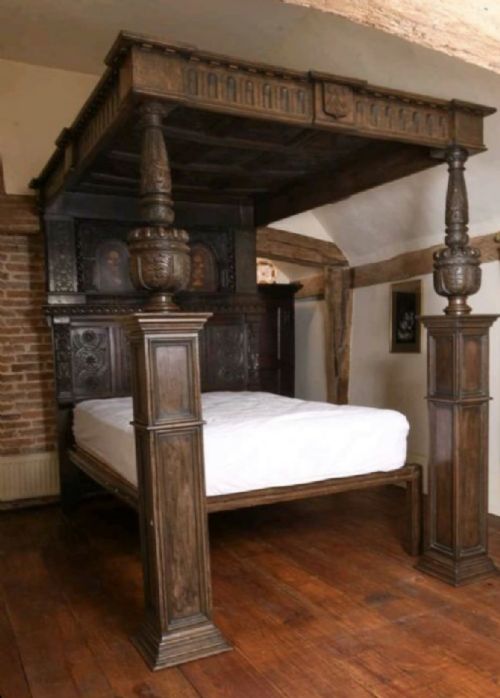


Traditional Wood Four Poster
A traditional wood four poster brings immediate architectural weight and heritage to a bedroom, anchoring the space with centuries of cabinet-making skill.
Traditional Wood Four Poster
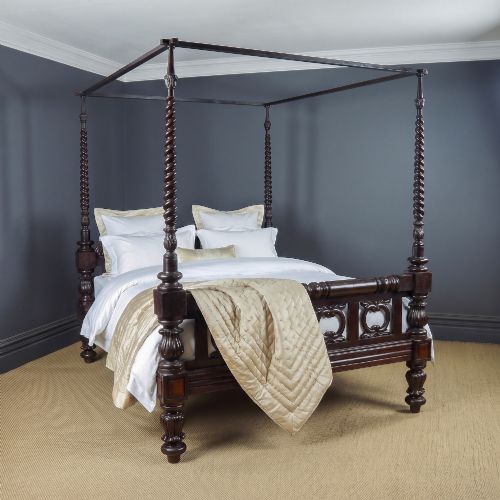
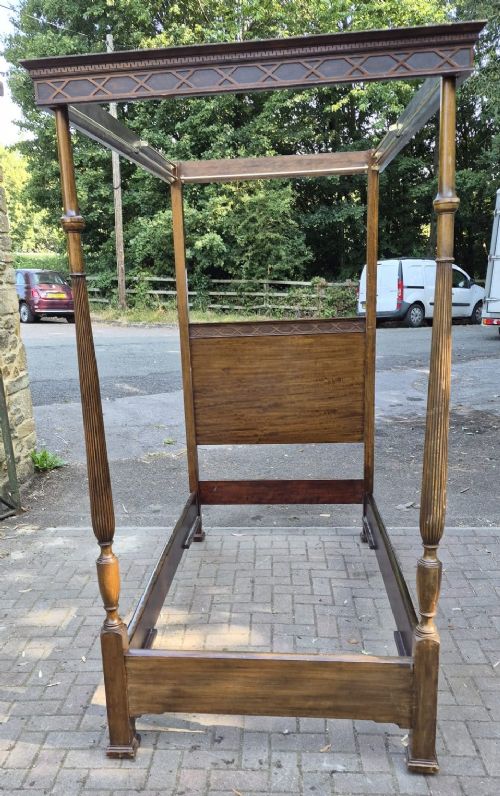
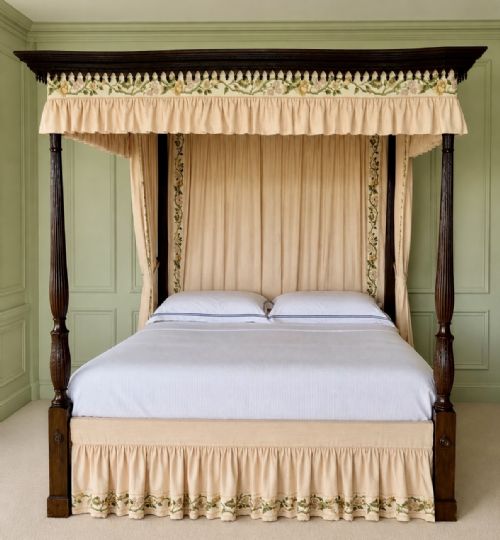
A traditional wood four poster bed is a substantial sleeping structure defined by four vertical posts supporting an overhead tester or canopy frame. These pieces span several centuries of design, appearing in robust oak from the seventeenth century and refined mahogany during the Georgian and Regency eras.
The selection on this page ranges from compact single beds and pairs to grand double, queen, and super king sizes. Buyers frequently encounter nineteenth-century interpretations alongside earlier seventeenth-century survivals and revival pieces from the Edwardian period.
Materials and construction methods
Construction relies heavily on dense timbers such as oak, mahogany, and tiger maple, chosen for their structural strength and capacity to hold elaborate carved details. Joinery techniques connect heavy posts to headboards and footboards, often utilising traditional pegged mortise and tenon joints.
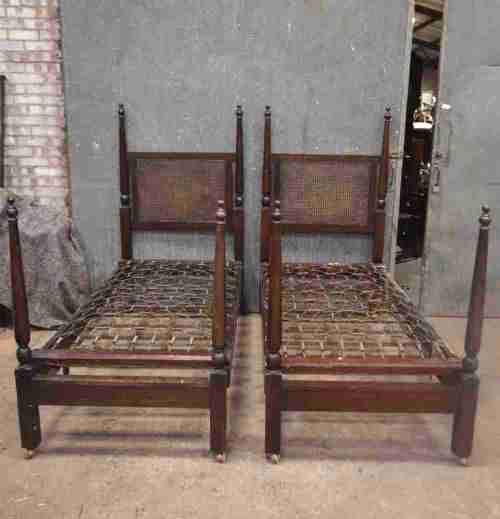
Secondary elements incorporate woven cane, rattan, and upholstered fabric testers, adding texture to the wooden framework. Brass hardware occasionally appears in fixings and tension systems across Regency and nineteenth-century examples.
Period styles represented on this page stretch from the seventeenth century through Georgian, Regency, and Victorian eras into early twentieth-century revivals.
Distinctions in quality
Quality rests upon the depth and crispness of the hand carving on the posts and headboards, where confident chisel work separates master pieces from simpler production. The choice of timber grain, particularly matched mahogany flames or figured tiger maple, determines the visual harmony of the finished bedstead.
Structural integrity also defines the tier, with original posts and authentic period timber frames holding higher regard than heavily restored or later married elements. Proportion and balance in the turning of the columns dictate the overall elegance of the silhouette.
Howard and Sons
The Traditional Wood Four Poster Glossary
- Tester
- The canopy frame suspended above a four poster bed. It often holds fabric draperies or displays exposed panel woodwork.
- Bergere
- A type of upholstered armchair, though in this context it describes beds featuring woven cane or rattan panels. This French seating influence migrated into twentieth-century frame designs.
- Mortise and tenon
- A fundamental woodworking joint where a projecting tenon fits tightly into a corresponding mortise hole. This method provides the robust skeleton required for large bed frames.
- Tiger maple
- A hardwood variety displaying a distinctive wavy figure resembling tiger stripes. It is prized in American Federal furniture for its striking natural pattern.
Traditional Wood Four Poster: Frequently Asked Questions
Will a traditional wood four poster fit standard modern mattresses?
Many antique four poster beds were built before modern sizing standards existed, meaning older frames often require custom or modified mattress dimensions.
Sellers regularly note whether a bed accommodates standard UK or international sizes such as king or super king, so checking the internal measurements is essential before purchase.
How do I distinguish a seventeenth-century bed from a nineteenth-century revival?
Seventeenth-century pieces typically feature heavy oak construction with deep hand-carved panels, pegged joints, and patination developed over centuries of use.
Revival pieces from the Victorian or Edwardian periods often utilise machine-assisted techniques, cleaner interior timber surfaces, and styling that mimics earlier eras without genuine period wear.
Can these beds be easily dismantled for transport?
Most four poster beds were designed to be taken apart using bolts and slot joints, allowing them to be moved between rooms and properties.
Professional installation is often recommended due to the heavy weight of solid mahogany, oak, and the overhead tester frame.
What is the best way to care for antique wood finishes?
Maintaining the timber involves keeping the bed away from direct heat sources and strong sunlight, which can dry out and fade the antique polish.
Regular dusting with a soft, dry cloth preserves the wax or shellac finish without introducing moisture that could harm the historic wood.