
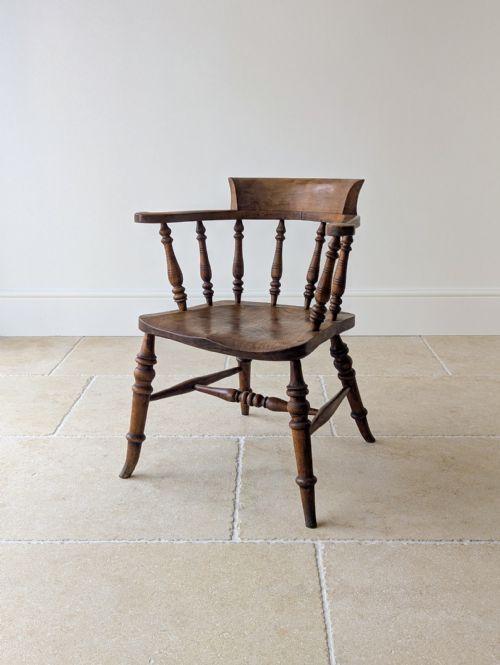
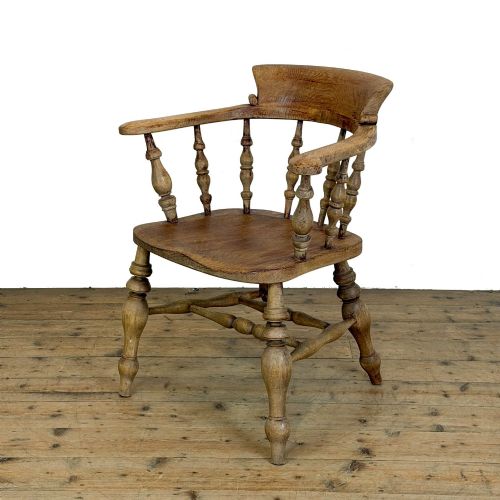


Spindle Back Tub Chair
A spindle back tub chair offers solid traditional seating, combining sturdy vernacular forms with supportive curved frames.
Spindle Back Tub Chair
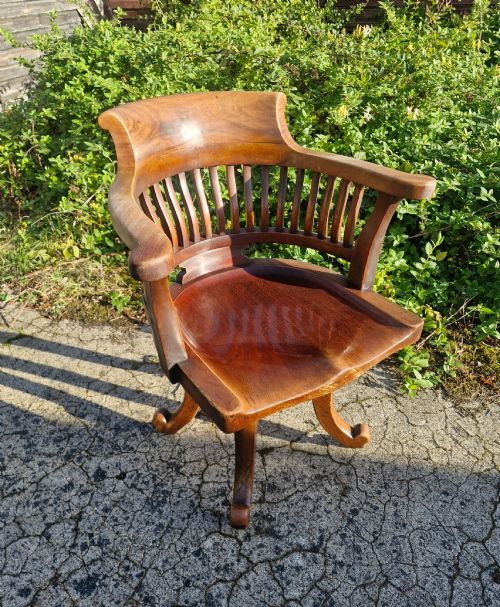
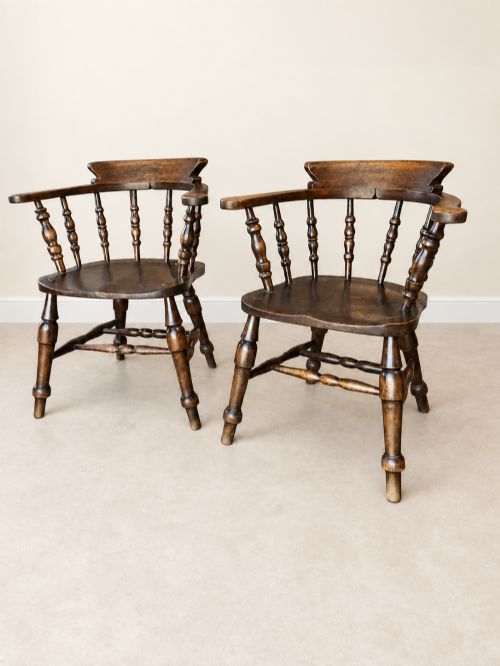
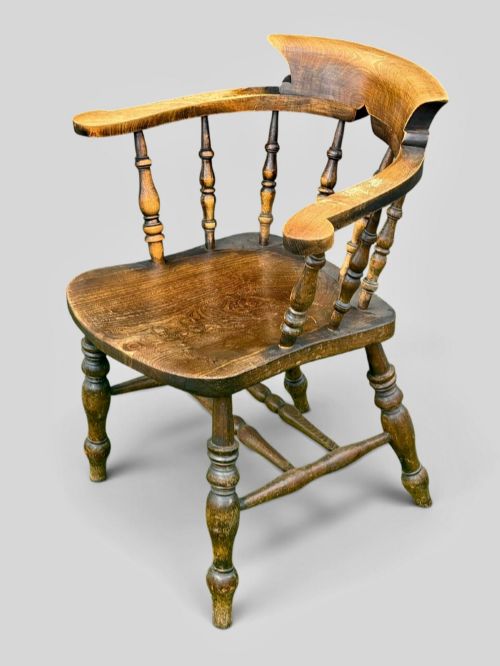
When you search for a spindle back tub chair, you encounter a robust tradition of English country and Victorian seating designed for comfort and utility. These armchairs and desk chairs feature characteristic curved backs enclosing the sitter, often integrated with spindle supports.
The selections available range from sturdy elm and beech captain chairs to upholstered Victorian desk models and Edwardian variations. You find pieces spanning the nineteenth and early twentieth centuries, reflecting vernacular craftsmanship alongside formal office seating.
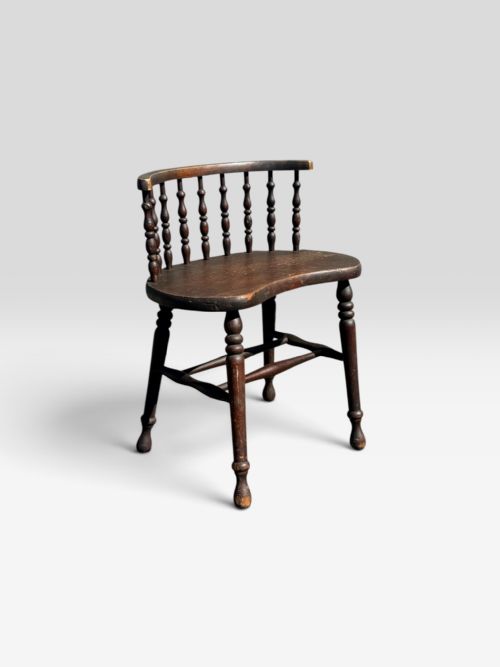
Regional variations and functional adaptations define the pieces, incorporating swivel mechanisms, children's seating, and low desk variants. The forms prioritize ergonomic support through shaped wooden seats and disciplined arrangements of turned spindles.
Assessing Quality and Character
The distinction between ordinary and superior examples rests on the choice of timber and the depth of the sculpted seat. A thicker, well-figured elm seat combined with cleanly turned spindles indicates a higher standard of regional workmanship.
Proportion and structural integrity separate robust functional seating from lesser items. Refined joinery, balanced arm bows, and well-preserved surface patination across woods like mahogany, walnut, or satin birch elevate the standing of a piece.
Listings feature regional variations from the nineteenth and early twentieth centuries, incorporating elm, beech, oak, and mahogany.
The Spindle Back Tub Chair Glossary
- Spindle back
- A chair back constructed from vertical turned wooden rods, known as spindles, providing open support. This construction lightens the visual weight of the frame while maintaining structural rigidity.
- Tub chair
- An armchair featuring a continuous curved back and armrest rail enclosing the occupant like a tub. It offers a protective and enclosed seating posture.
- Smokers bow
- A sturdy, low-backed Windsor-style armchair commonly used in smoking rooms, offices, and vernacular interiors. It typically combines a continuous arm bow with turned spindle supports.
- Vernacular
- Everyday utilitarian objects made by regional craftsmen using local materials rather than following high-style academic designs. This tradition emphasises practicality and regional timber availability.
- Windsor chair
- A chair built with a solid wooden seat into which the legs, back spindles, and arm supports are driven directly. This method creates a resilient, unified structure.
Spindle Back Tub Chair: Frequently Asked Questions
What is a spindle back tub chair?
A spindle back tub chair is an armchair featuring a curved, enclosing backrest supported by vertical turned spindles. These chairs combine vernacular Windsor framing principles with comfortable, rounded seating proportions.
They appear across nineteenth and early twentieth-century periods in woods like beech, elm, and oak, serving as practical seating for desks, libraries, and parlours.
How do I date an antique wooden chair?
Dating relies on examining timber species, tool marks, joinery methods, and wear patterns accumulated on the seat and footings. Nineteenth-century pieces often display hand-turned spindles and regional joinery traits distinct from later factory production.
Styles shifted from robust country vernacular forms towards more refined Edwardian mahogany or oak office variants by the turn of the twentieth century.
Where were these chairs used historically?
These armchairs served multiple domestic and commercial functions, frequently placed in offices, libraries, smoking rooms, and studies. Their sturdy construction made them suitable for daily workspace use.
Variants adapted to specific tasks, including desk chairs with swivel mechanisms, children's seating, and lower Captain's chairs designed for writing tables.
How do I care for antique wooden seating?
Maintain the timber by avoiding extreme temperature fluctuations and direct heat sources that can dry out historic wood and cause joints to loosen. Regular dusting with a soft cloth preserves the surface finish.
Applying a light, appropriate wax periodically nourishes the grain and protects the natural patinated surface without building up excessive residue.