
Specimen Drawer Chest
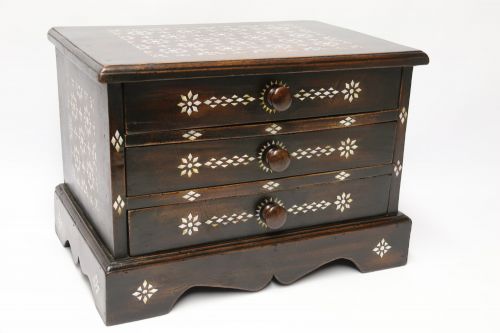
When a collector hunts for a specimen drawer chest, they seek a functional miniature cabinet designed to house natural history objects, coins, or small artefacts.
Specimen Drawer Chest
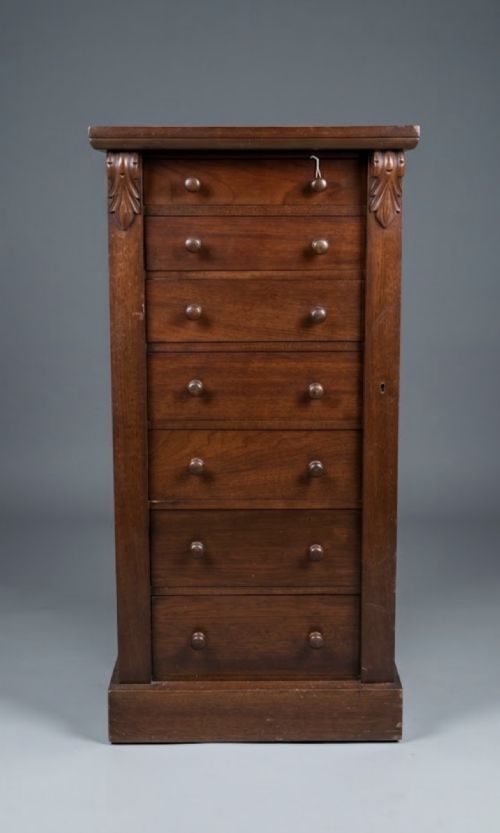
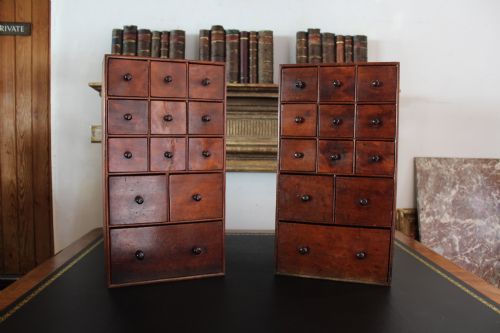
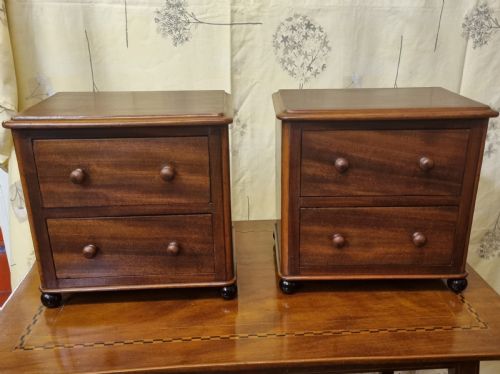
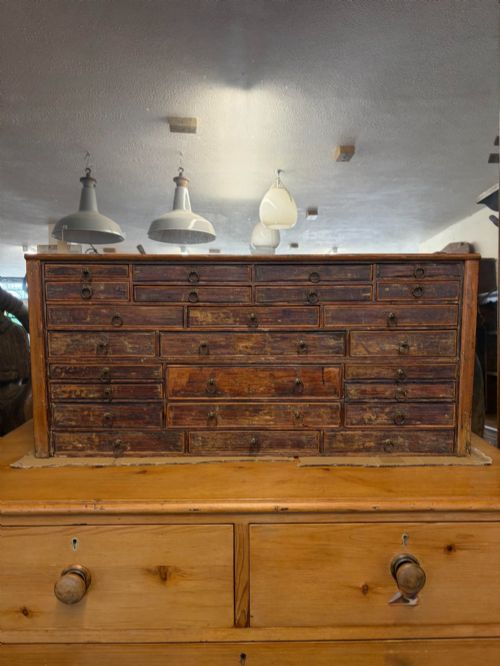
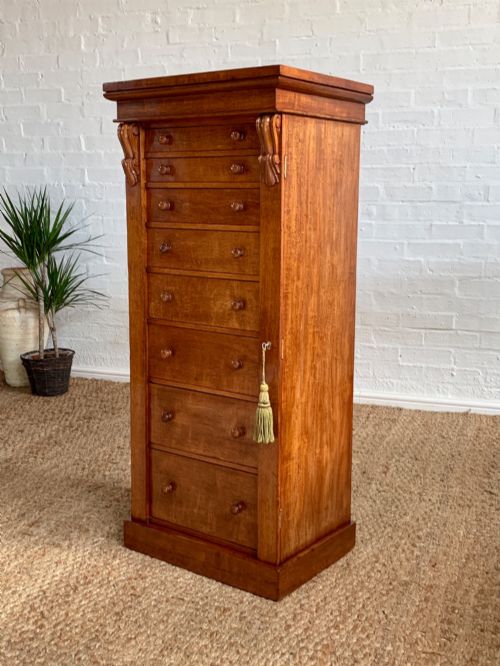
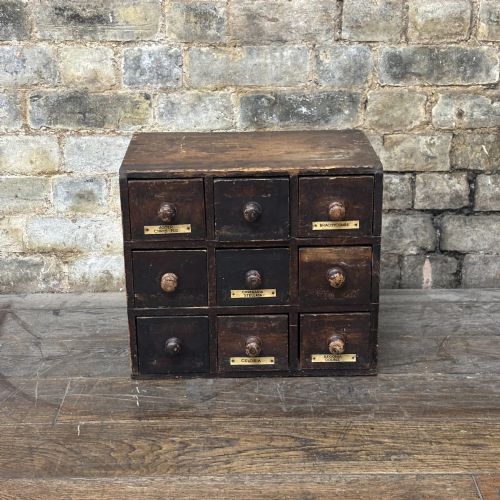
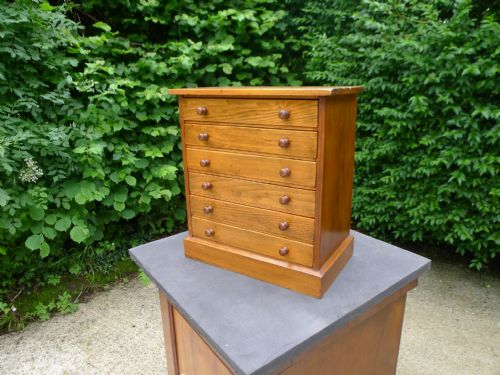
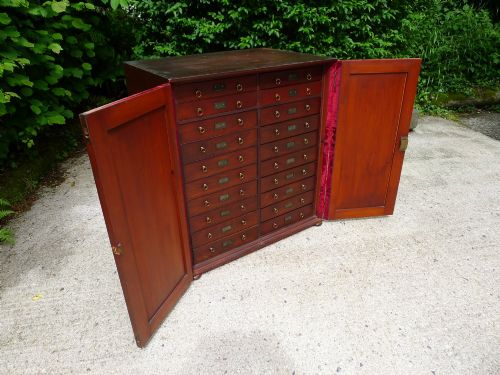
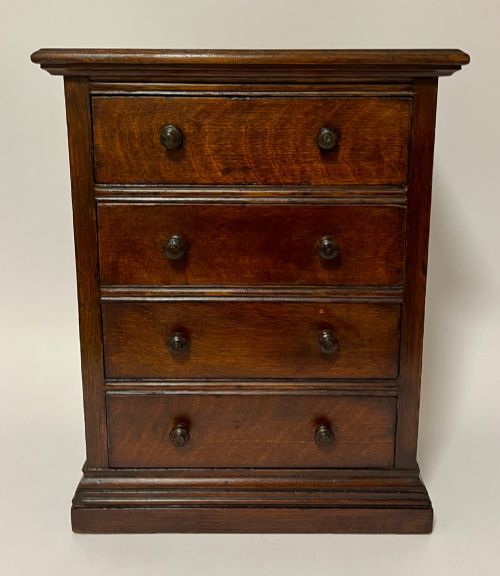
A specimen drawer chest encompasses multi-drawer configurations intended for organised storage, ranging from tabletop miniature chests to large banks of drawers originating from laboratories, apothecaries, and collector studies. These pieces appear primarily across the nineteenth and early twentieth centuries, spanning Georgian, Victorian, and Edwardian periods.
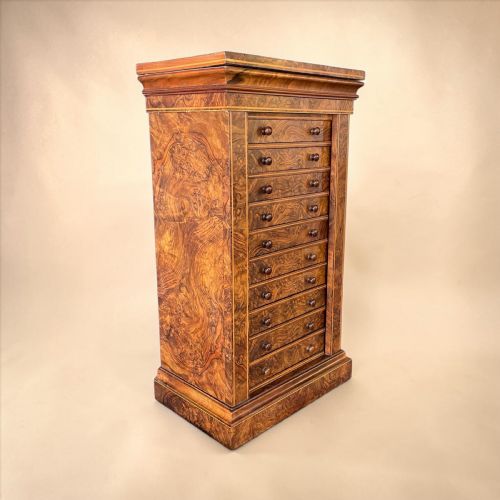
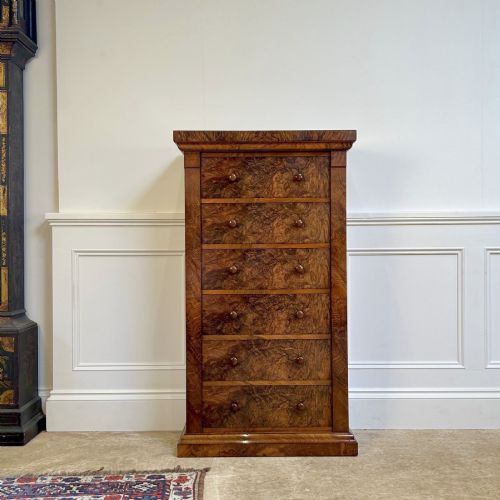
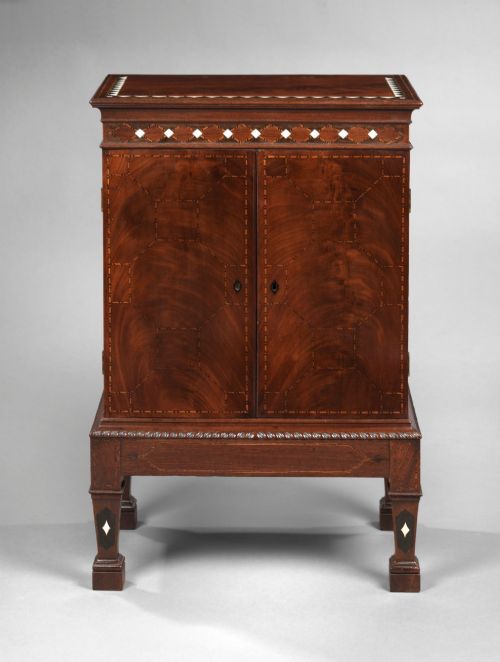
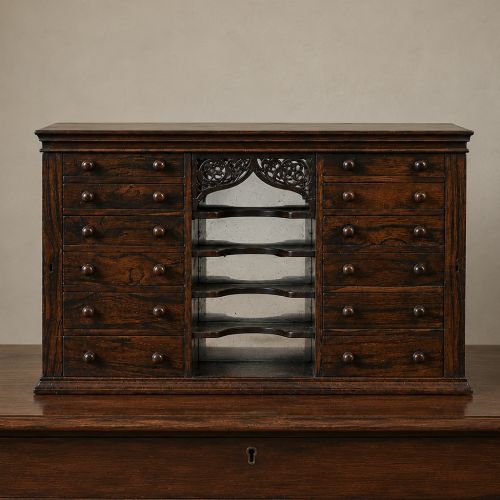
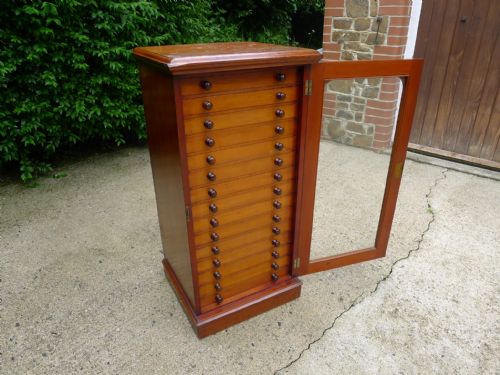
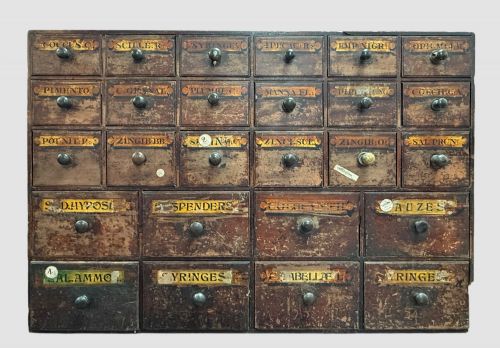
The format covers purpose-built insect cabinets, apothecary banks, tabletop chests, and apprentice pieces executed in various scales. Buyers frequently encounter compact Wellington chests, multi-drawer filing units, and dedicated botanical or geological storage cabinets.
How they were made
Construction relies heavily upon dense hardwoods like mahogany, walnut, and oak, alongside utility timbers such as pine and deal for internal framing or secondary sections. Cabinetmakers utilised brass for drawer pulls, locking mechanisms, and carrying handles, while glass frequently appears on panelled doors protecting sensitive contents.
Surfaces exhibit traditional finishes including French polish, staining, or natural wax applied to figured veneers and solid boards. Joinery techniques prioritise tight tolerances within the banks of drawers to protect delicate contents from dust and atmospheric changes.
Several miniature chests originally served as travelling apothecary kits for nineteenth-century doctors treating patients on the move.
What varies in quality
Quality rests upon the selection of timbers, such as figured mahogany or burr walnut veneers, matched against simpler stained pine carcasses. Internal execution distinguishes utilitarian medical storage from exhibition pieces built for naturalists and private scholars.
The sophistication of the locking mechanisms, the presence of original turned knobs or brass hardware, and the precision fit of numerous small drawers elevate specific examples above standard utility furniture.
Luxmore's of Ilfracombe·Watkins & Doncaster·Brady of Edmonton·D Napier & Sons
The Specimen Drawer Chest Glossary
- Wellington chest
- A tall, slender chest of drawers featuring a hinged locking stile on one side that secures all drawers simultaneously with a key. This form became popular during the nineteenth century for compact storage.
- Apothecary chest
- A multi-drawer cabinet originally utilised by chemists and pharmacists for storing medical ingredients, herbs, or small instruments. These pieces often feature numerous small compartments and original apothecary labelling.
- Specimen cabinet
- A purpose-built piece of furniture designed to house collections of insects, botanical samples, minerals, or coins. The internal drawers are typically shallow and numerous to maximise storage space for small objects.
- Apprentice piece
- A small-scale model of a full-sized furniture item demonstrated by a craftsman to prove proficiency. They replicate standard cabinetmaking styles in miniature proportions.
- Bank of drawers
- An industrial or commercial multi-drawer unit containing many uniform rows of shallow storage. These originate from workshops, seedsmen, and offices.
Specimen Drawer Chest: Frequently Asked Questions
What were specimen drawer chests used for?
These cabinets stored delicate natural history items including insect collections, geological specimens, seeds, and botanical samples.
Collectors also utilised them for sorting coins, microscope slides, and small crafting tools securely.
How do I date a wooden chest?
Dating relies on timber choices, construction methods, hardware styles, and period characteristics.
Nineteenth-century examples frequently employ solid mahogany or walnut with hand-cut dovetails, while later pieces introduce alternative woods and machine-made fittings.
Are Wellington chests different from standard chests?
Wellington chests feature a distinctive locking pilaster or hinged side flap that fastens over the drawer edges.
This vertical locking bar requires a key to release, securing the entire column of shallow drawers at once.
How should I clean the wood surface?
Maintain polished hardwood surfaces using a quality microcrystalline wax applied sparingly with a soft cloth.
Avoid abrasive cleaners or excessive moisture that can damage aged French polish and delicate veneers.