



Spanish Walnut Trestle Table
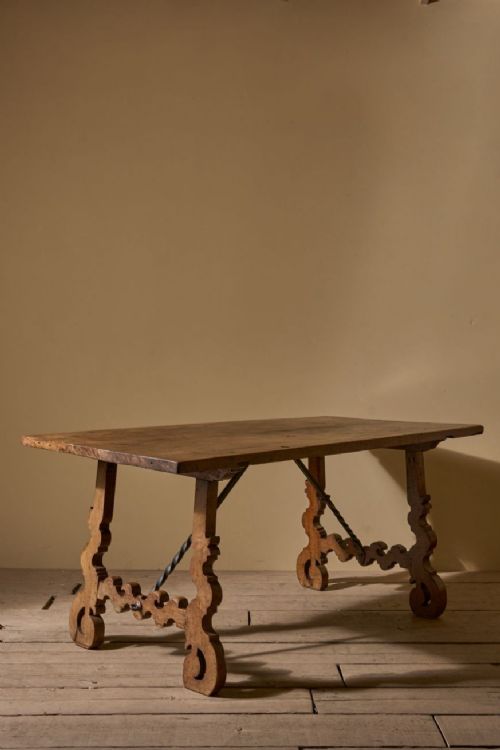
A Spanish walnut trestle table brings heavy timber, wrought iron stretchers, and centuries of domestic history straight into a room.
Spanish Walnut Trestle Table
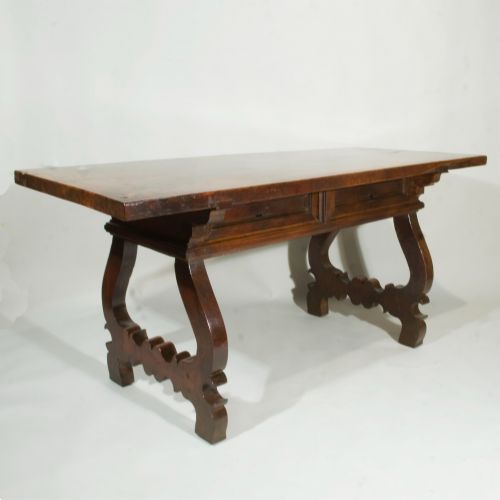
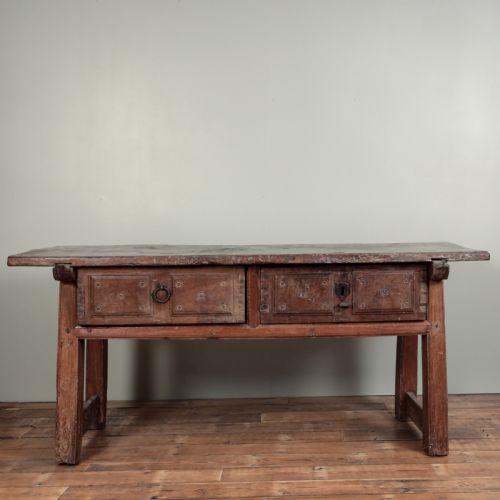
A Spanish walnut trestle table is a substantial piece of furniture designed for dining, display, or central placement in a room. These forms appear primarily in seventeenth, eighteenth, and nineteenth century formats, alongside later revival pieces from the early twentieth century. Listings include dining tables, refectory tables, console tables, side tables, desks, and coffee tables.
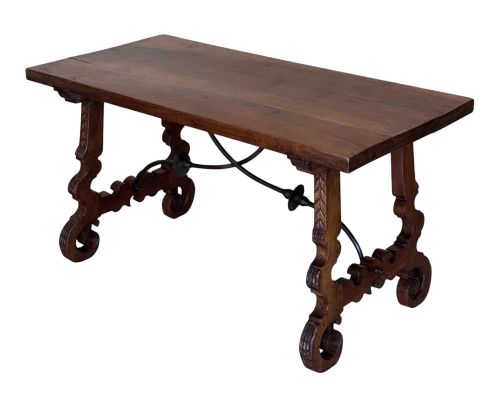
The seventeenth century examples represent the core of the tradition, constructed with solid walnut and supported by distinctive trestle bases and wrought iron bracing. Later nineteenth century pieces and 1920s Spanish revival interpretations continue this heavy timber tradition. Buyers encounter both provincial dining formats and smaller centre or side tables sharing the same vocabulary of materials.
How they were made
Makers constructed these pieces using solid walnut, fruitwood, and occasionally oak, combined with hand-forged wrought iron and iron stretchers. Carpenters shaped thick timber tops and secured them to sturdy trestle underframes designed to bear heavy daily use.
Joinery relied on traditional pegging and framing techniques suited to dense timbers like walnut and fruitwood. Wrought iron bracing rods run beneath the tops or between the legs on many examples to provide structural rigidity.
Spanish Walnut Trestle Table Retail Price Guide 2026
Typical asking prices for spanish walnut trestle table among the pieces listed under this phrase on Sellingantiques today, from the lower quarter to the upper quarter. They describe what is for sale here now, not the wider market.
Materials recorded across the inventory include walnut, wrought iron, oak, fruitwood, and timber.
What varies in quality
Quality depends upon the depth of the original patina and the integrity of the timber surfaces. Pieces retaining genuine seventeenth or eighteenth century timber surfaces show a warmth and tactile quality absent in later revivals.
The weight and finish of the wrought iron work also distinguish standard production from finer craftsmanship. Heavier, hand-forged iron supports and clean, unforced joinery mark the upper tier of these tables.
The Spanish Walnut Trestle Table Glossary
- Trestle table
- A table consisting of two or more supports connected by a beam that holds a horizontal top. This form distributes weight efficiently and allows unhindered legroom along the length.
- Wrought iron
- Iron beaten into shape by hand while hot, creating durable structural stretchers and braces. It provides essential lateral support beneath heavy wooden tops.
- Refectory table
- A long dining table traditionally used in communal dining halls. The Spanish variants utilise robust walnut planks and heavy trestle bases.
- Patina
- The surface sheen and colour developed by timber through age, handling, and wear. Good original patina indicates decades of uninterrupted exposure and care.
- Fruitwood
- Dense timber harvested from fruit-bearing trees such as pear or apple, utilised alongside walnut in provincial furniture. It offers a tight grain and distinctive pale warmth.
Spanish Walnut Trestle Table: Frequently Asked Questions
How do I clean the timber top?
Dust the surface regularly with a dry, soft cloth to prevent particulate buildup in the grain.
Avoid chemical polishes and water, using only natural beeswax sparingly when the walnut appears dry.
Can I use a console table for dining?
Console tables are built narrower and shorter than dining formats to sit against walls or in hallways.
Attempting to use one for seating would leave insufficient knee clearance and inadequate surface area for dining.
How do I spot a revival piece?
Revival pieces often date from the early twentieth century, showing mechanical tool marks and lighter construction.
Seventeenth and eighteenth century examples display hand-cut joinery and deeper, unforced timber ageing.
What rooms suit a refectory table?
Refectory tables require large open spaces with substantial floor clearance to accommodate their length and width.
They function best as central dining surfaces in spacious rooms with high ceilings.