

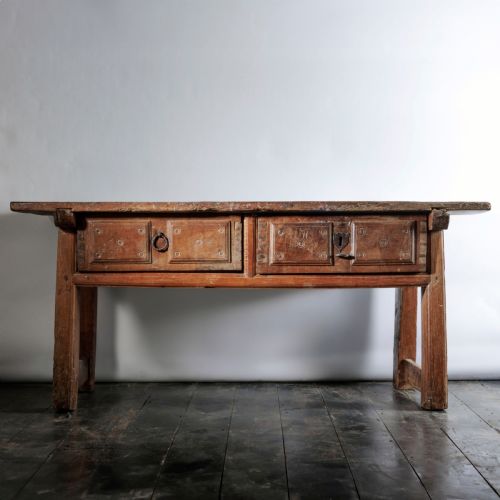
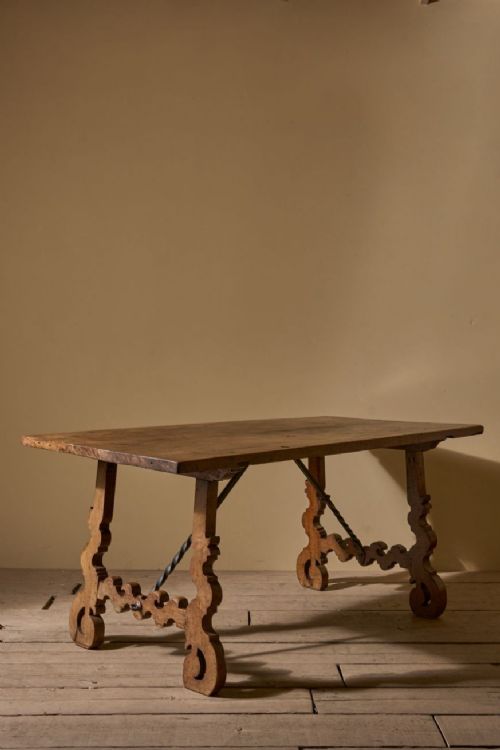
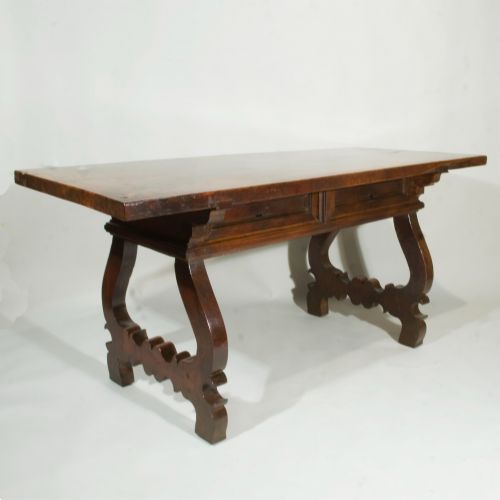
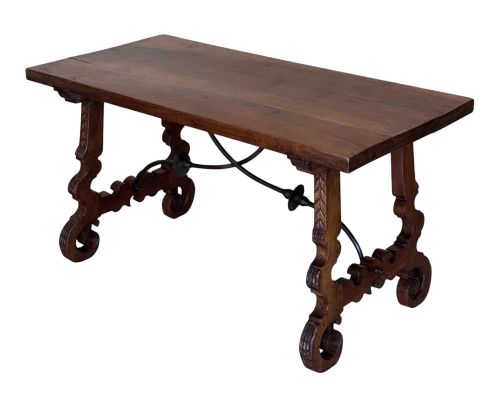


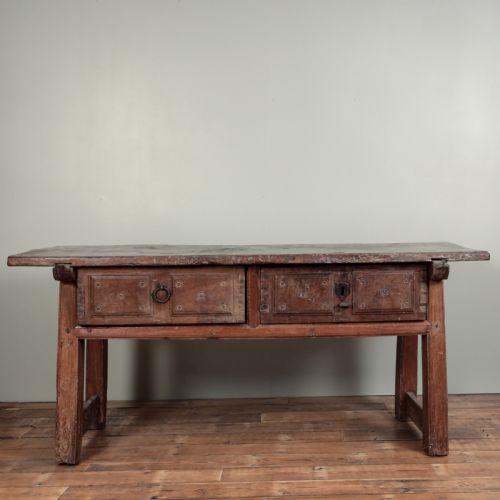
Spanish Baroque Trestle Table
A spanish baroque trestle table brings robust walnut timber and wrought iron braces to a room, offering both historical depth and a commanding surface.
Spanish Baroque Trestle Table
When you search for a spanish baroque trestle table, you are looking at substantial timber furniture designed for grand domestic spaces. The pieces listed on this page span from the seventeenth century through to later revivals, reflecting a lasting appreciation for heavy regional craftsmanship.
You are most likely to meet walnut examples among these listings, alongside occasional pieces in oak, fruitwood, and mixed timber. Forms range from dedicated dining tables and refectory formats to console tables, centre tables, and side tables.
The aesthetic leans heavily on Spanish Baroque and Continental Provincial traditions. These heavy tables often incorporate wrought iron stretchers or trestle supports that give the design its characteristic architectural silhouette.
How they were made
Makers relied on solid walnut and other sturdy timbers such as oak and fruitwood for the primary structure of these tables. Thick planks formed the tops, supported by heavy wooden legs joined by forged iron braces.
Construction techniques prioritized structural integrity to support heavy loads over long periods. Wrought iron stretchers were bolted or keyed into the timber framework to prevent the legs from spreading under pressure.
Spanish Baroque Trestle Table Retail Price Guide 2026
Typical asking prices for spanish baroque trestle table among the pieces listed under this phrase on Sellingantiques today, from the lower quarter to the upper quarter. They describe what is for sale here now, not the wider market.
Listings on this site feature walnut and wrought iron as the primary materials used across seventeenth and eighteenth-century Spanish tables.
What varies in quality
The grade of timber and the depth of the original patina set the better examples apart from standard or later revival pieces. Seventeenth-century walnut surfaces display a rich, weathered texture that develops organically over centuries of use.
Proportion and the quality of the ironwork influence the overall character of each piece. Finely forged stretcher bars and balanced trestle proportions indicate a higher level of workshop skill than plain or replacement iron braces.
The Spanish Baroque Trestle Table Glossary
- Trestle table
- A table consisting of two or more supports connected by a beam or stretcher that holds a horizontal top. This form distributes weight evenly across the structure without requiring corner legs.
- Wrought iron
- Iron that is heated and worked with tools by a smith rather than cast in a mould. It provides the tensile strength needed for the structural braces on these heavy tables.
- Patina
- The surface sheen and colour acquired by materials like walnut and fruitwood through age, wear, and polishing. A good surface shows the history of the timber.
- Refectory table
- A long, narrow dining table traditionally used in monastic refectories and large halls. They are built for communal dining and heavy daily use.
- Continental Provincial
- A style category describing furniture made in regional areas away from capital cities. These pieces often combine local timber choices with traditional rustic construction methods.
Spanish Baroque Trestle Table: Frequently Asked Questions
What defines a spanish baroque trestle table?
These tables are defined by their heavy timber construction, typically in solid walnut, paired with architectural trestle supports and wrought iron stretchers. The design emphasises solid mass and functional structural bracing over applied ornamentation.
Most examples seen here feature rectangular tops supported by heavy vertical legs or trestle ends linked by metal braces. This construction provides exceptional stability for dining and general surface use.
How do I date an antique spanish table?
Dating relies on examining the timber grain, tool marks, construction joints, and the wear patterns on the top and feet. Seventeenth-century pieces display hand-cut joinery and deep patination accumulated over generations of use.
Later revival pieces from the early twentieth century often use machine-sawn timber and lack the specific surface softening found on genuine early examples. Comparing the timber density and ironwork forging helps clarify the period.
Where were these tables used originally?
Historically, these heavy tables served in the great halls, dining rooms, and administrative spaces of large houses and monastic institutions. Their sturdy build suited spaces where furniture needed to withstand rigorous daily demands.
Today, buyers place them in dining rooms, large kitchens, or spacious hallways as functional central surfaces. Their robust proportions allow them to anchor large rooms effectively.
Are iron stretchers original to these tables?
Many seventeenth-century and eighteenth-century tables incorporate wrought iron stretchers to provide essential lateral support between the legs. Blacksmiths forged these bars to resist the outward pressure exerted by heavy wooden tops.
While some ironwork has been restored or replaced over the centuries, surviving original braces display hand-hammered textures and period-appropriate fixings. Checking the junction points reveals how the metal integrates with the timber.