



Spanish Colonial Religious Sculpture
Spanish colonial religious sculpture brings devotional figures into the home, uniting baroque movement with traditional woodworking.
Spanish Colonial Religious Sculpture
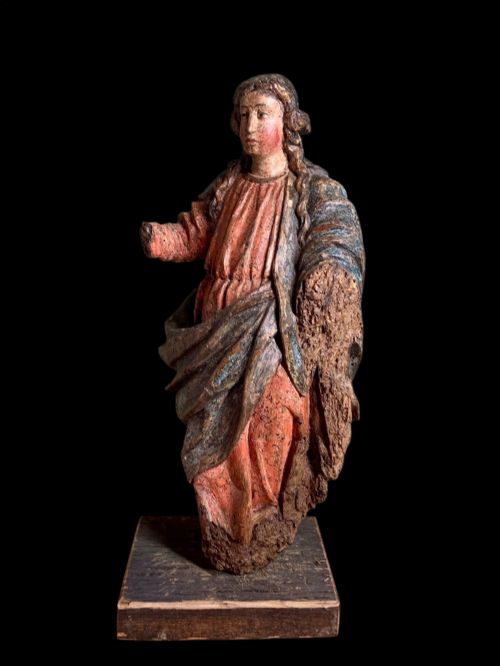
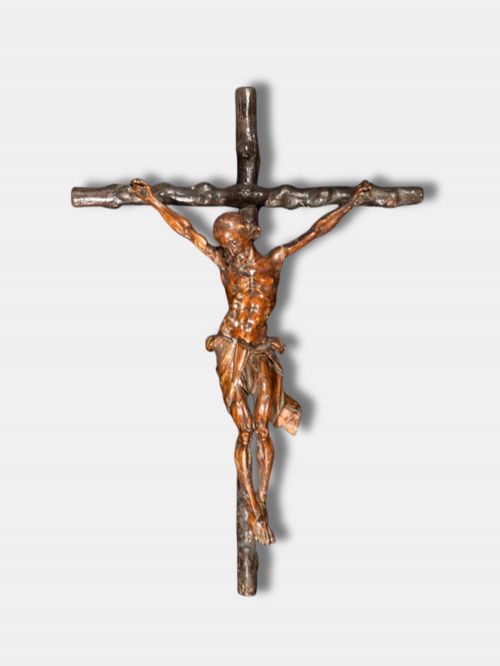
Spanish colonial religious sculpture encompasses carved wooden devotional figures, crucifixes, and saints originating from ecclesiastical contexts. These statues range from intimate character heads to life-size representations of Christ and figures of saints.
The versions most commonly met span the seventeenth and eighteenth centuries, reflecting Spanish Baroque and ecclesiastical traditions. Pieces often depict specific iconography, such as the Christ Child holding the orb or scenes including the Pieta.
Makers shaped these devotional works from hardwood and applied intricate surface decoration to aid worship. Buyers encounter both full-figure santos and expressive portrait busts designed for altars and private chapels.
How they were made
Carvers shaped solid hardwood blocks into expressive religious figures, often utilising separate sections for limbs and drapery. These wooden foundations required careful preparation before surface ornamentation could begin.
Artisans applied layers of gesso to the carved wood to create a smooth ground for subsequent decoration. Polychrome paint and gold leaf were then layered onto the gesso, bringing depth and colour to the vestments and flesh tones.
Spanish Colonial Religious Sculpture Retail Price Guide 2026
Typical asking prices for spanish colonial religious sculpture among the pieces listed under this phrase on Sellingantiques today, from the lower quarter to the upper quarter. They describe what is for sale here now, not the wider market.
One young Christ figure stubbornly holds an orb, reminding viewers that somebody had to carve tiny fingers around a sphere.
What varies in quality
The refinement of the carving dictates the distinction between standard workshop output and superior sculptural work. Master carvers captured anatomical nuance and emotional intensity in the facial expressions of saints and figures of Christ.
The preservation of the original polychrome paint and gold leaf significantly influences the integrity of each piece. Surviving surface layers display the intended brilliance of the baroque palette rather than later overpainting.
The Spanish Colonial Religious Sculpture Glossary
- Polychrome
- Painted in several colours. This surface treatment brings life to carved wooden religious figures.
- Gesso
- A plaster mixture applied as a paint base. It prepares the wooden surface for subsequent gilding and polychrome work.
- Corpus Christi
- The body of Christ on the cross. These wooden depictions emphasise the dramatic suffering associated with Spanish Baroque art.
- Santos
- Devotional figures of saints. These sculptures served central roles in private and communal worship during the colonial period.
- Gold Leaf
- Gold beaten into thin sheets for gilding. Artisans applied this material to highlight halos, vestments, and architectural elements.
Spanish Colonial Religious Sculpture: Frequently Asked Questions
How are wooden sculptures dated?
Dating relies on stylistic markers such as the theatricality of the Spanish Baroque and the treatment of carved drapery. Tool marks and the composition of underlying gesso layers also provide clues to the period of creation.
Comparing known ecclesiastical works helps specialists narrow down the century of manufacture for unsigned pieces.
Where were these sculptures kept?
These sculptures originally stood in churches, convents, and private chapels for liturgical use and personal prayer. Many were mounted on wooden crosses or placed upon altars as focal points for devotion.
Today, collectors house these pieces in domestic settings, appreciating their strong visual presence and history.
Why use gesso under paint?
Gesso provided a smooth, stable ground that prevented the underlying wood grain from disturbing the painted surface. This chalk and glue mixture allowed carvers to achieve crisp details before applying polychrome and gold leaf.
The durability of gesso helped surface decoration survive centuries of handling and environmental changes.