




Spanish Baroque Desk
A Spanish baroque desk brings heavy timber and intricate construction into a room, offering historic character and a commanding surface for writing.
Spanish Baroque Desk
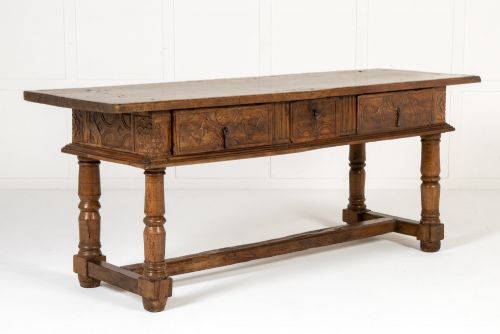
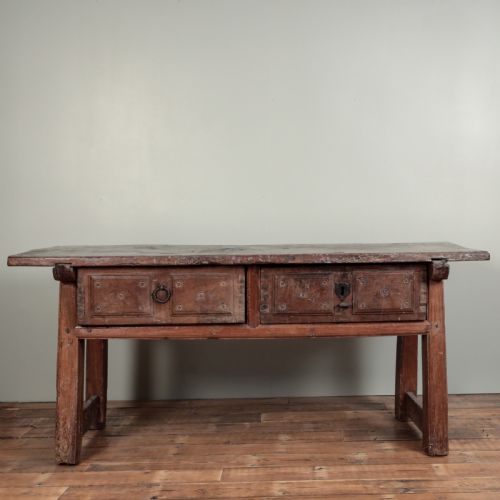
When buyers search for a spanish baroque desk, they encounter walnut and oak forms that originate primarily from the seventeenth and eighteenth centuries, alongside later revival pieces from the twentieth century. These items often manifest as drop-front writing cabinets or sturdy tables rather than modern office desks with multiple drawers.
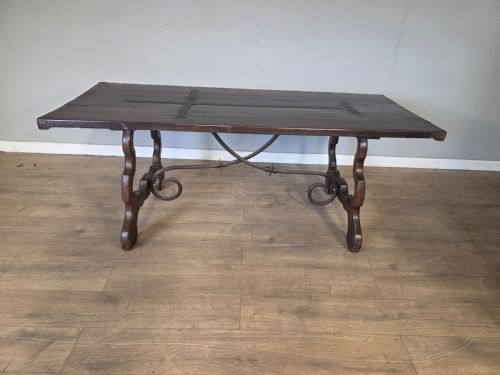
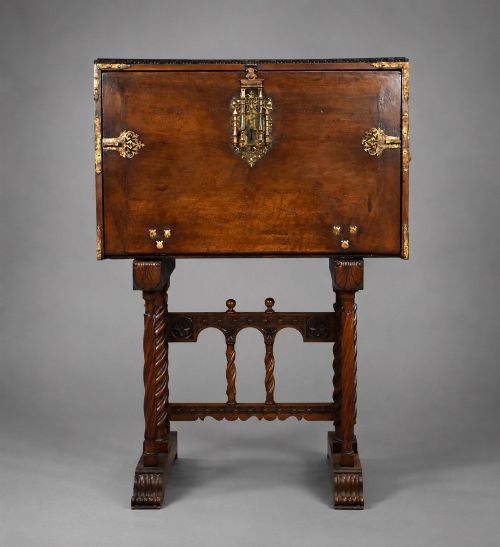
The most common form on this page is the bargueño or writing cabinet, frequently paired with a dedicated stand. Alongside these cabinets, robust walnut tables with trestle supports and simple side tables represent the primary domestic furniture surviving from these periods.
Constructed within the Spanish Baroque tradition, these pieces display regional variations from Catalonia and other Iberian centres. While seventeenth-century originals anchor the high end of the market, nineteenth- and twentieth-century revivals provide alternative entry points for collectors.
Materials and Construction Techniques
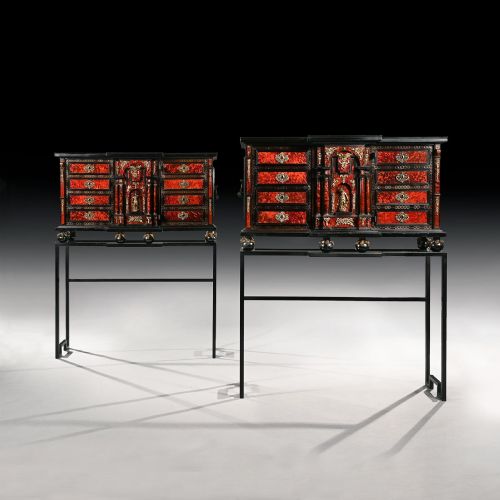
Makers relied heavily on solid walnut and oak for the primary framework of these desks and cabinets, often incorporating fruitwood and ebonised wood for contrast and decorative banding. Tortoiseshell veneers and gilt bronze mounts appear on the most elaborate seventeenth-century examples, adding texture and reflective detail to the dark timber surfaces.
Structural strength was achieved through heavy framing, pegged joints, and wrought iron bracing or stretchers, which secured the substantial wooden elements against warping. Tables utilise thick plank tops resting on trestle bases or sturdy legs, while cabinets employ meticulous joinery to house numerous internal drawers behind a drop-front lid.
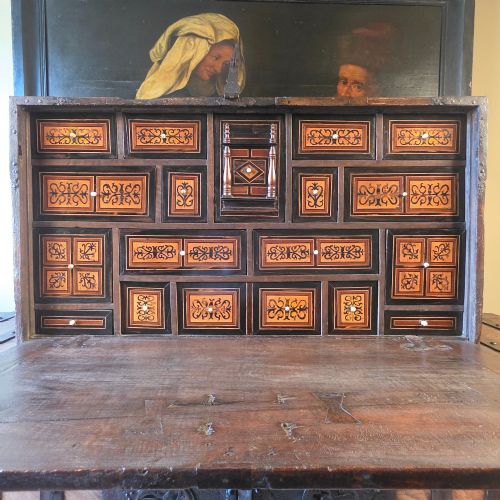
Secret compartments hidden behind miniature drawers within seventeenth-century cabinets allowed owners to conceal private correspondence and small valuables.
Distinguishing Quality in Construction and Materials
The division between ordinary and exceptional pieces rests upon the quality of the timber selection and the retention of original surface patina. Pieces fashioned from dense, figured walnut with intact ebonised details and original wrought iron hardware demonstrate superior craftsmanship compared to later revival items with replacement elements.
The intricacy of internal drawer arrangements and the precision of inlaid decoration dictate the standing of a cabinet. Examples featuring preserved gilt bronze mounts and tortoiseshell panels show a higher degree of artisan investment than plain utility tables.
The Spanish Baroque Desk Glossary
- Bargueño
- A traditional Spanish chest or writing cabinet featuring a drop-front lid that opens to reveal numerous small drawers and compartments. This form sits upon a sliding support or a dedicated wooden stand.
- Ebonised
- Wood treated with a dark finish to imitate expensive ebony. This technique created sharp visual contrast against lighter walnut panels on seventeenth-century cabinetry.
- Refectory table
- A long, narrow dining or working table characterised by sturdy wooden legs connected by low stretchers. These tables were built to withstand heavy daily use in large halls.
- Trestle table
- A table design where the top rests on two or more vertical supports connected by a horizontal beam. This construction provides maximum legroom and stability.
- Patina
- The surface sheen and softening of edges developed by timber over centuries of handling and polishing. Good patina indicates age and regular care.
Spanish Baroque Desk: Frequently Asked Questions
What is a bargueño cabinet?
A bargueño is a traditional Spanish drop-front writing cabinet designed to store documents and valuables. It typically rests on a separate stand or table base.
When opened, the fall-front reveals an architectural arrangement of small drawers and gilded or painted compartments.
How do I care for antique walnut furniture?
Keep wooden furniture away from direct sunlight and sources of heat to prevent the timber from drying out and cracking. Maintain a stable room temperature and humidity level.
Apply a traditional beeswax polish occasionally and buff gently with a soft cloth to nourish the surface and preserve the original patina.
Are twentieth-century revival desks authentic antiques?
Twentieth-century revival pieces are period reproductions or interpretations built in historical styles, often dating from the 1900s to the 1920s. While they lack seventeenth-century origins, they utilise traditional materials like solid walnut and oak.
Buyers choose these items for their decorative utility and robust construction at a different level of availability.
What metals were used on these desks?
Wrought iron appears frequently as structural bracing, decorative hinges, and sturdy stretchers on tables and cabinets. It provided essential reinforcement for heavy wooden furniture.
Gilt bronze mounts also occur on high-status seventeenth-century cabinets to accent the dark ebonised and tortoiseshell surfaces.