

Solid Wood Hall Seating
Solid wood hall seating brings architectural presence and robust utility to entranceways through centuries of timber craftsmanship.
Solid Wood Hall Seating
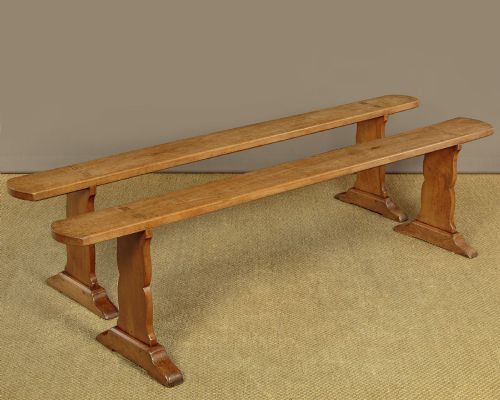
Solid wood hall seating encompasses robust furnishings designed for entrance spaces, vestibules and reception rooms. The selection includes individual hall chairs, benches, armchairs and side chairs constructed from dense timbers.
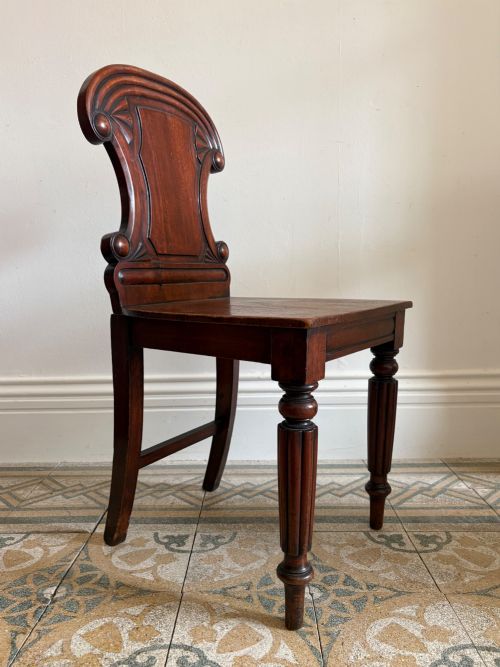
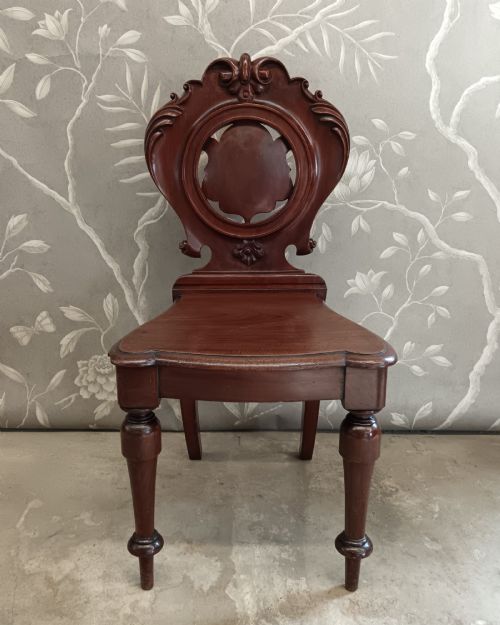
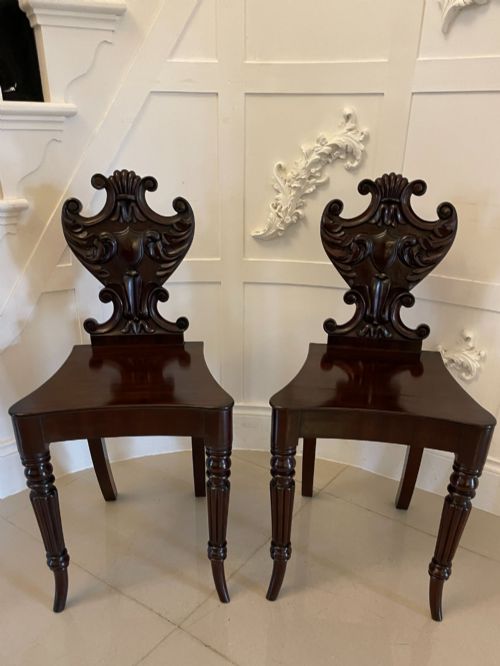
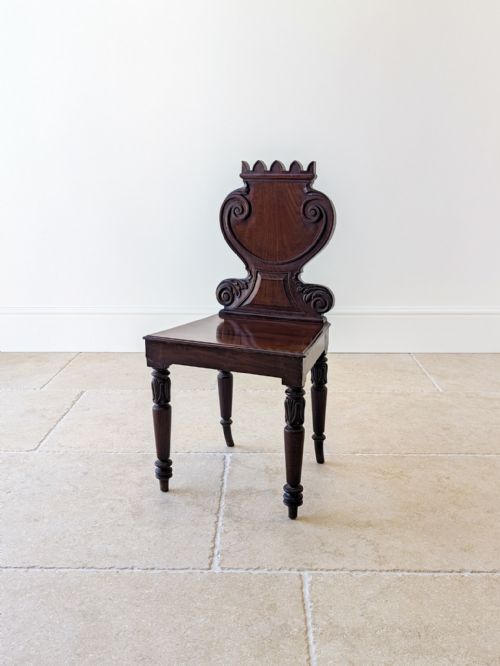
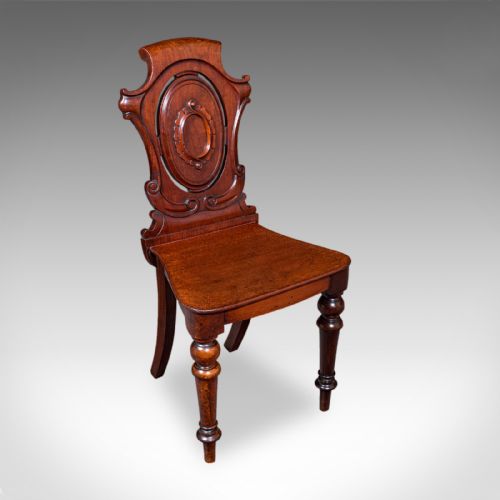
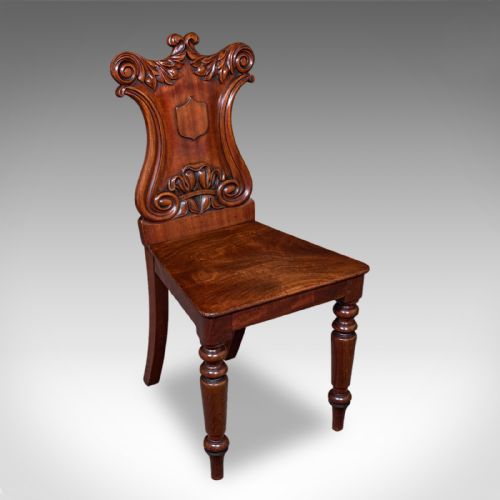
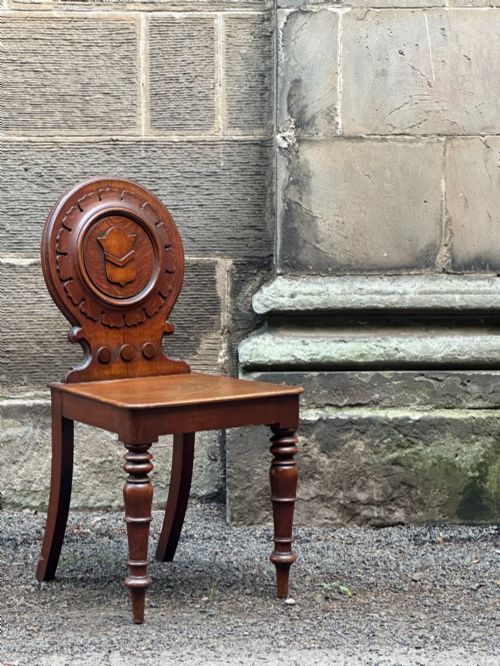
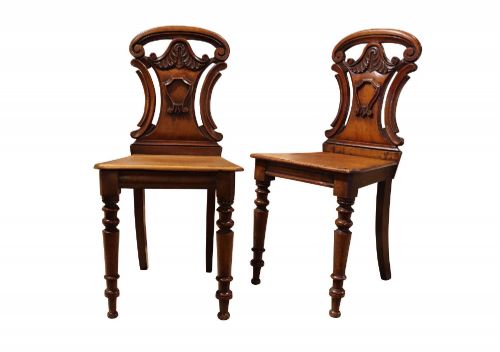
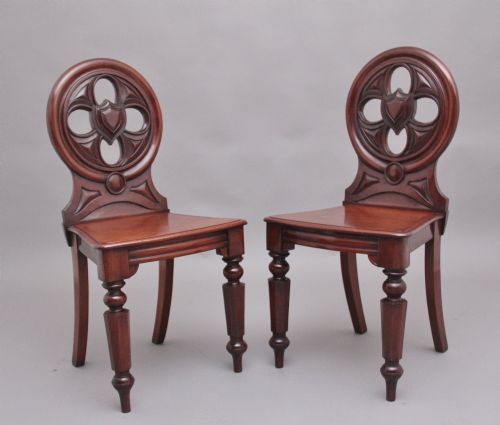
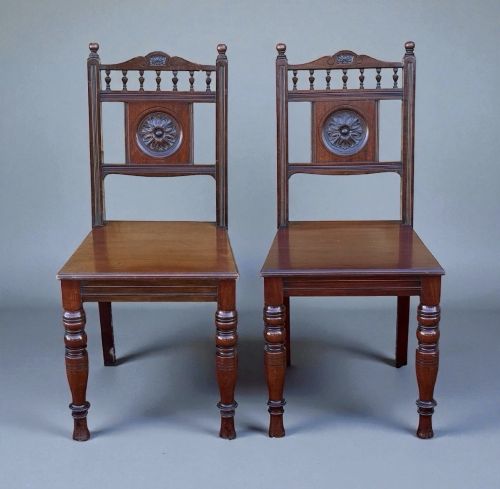
Buyers browsing solid wood hall seating will most frequently encounter nineteenth-century mahogany and oak examples. These pieces typically feature carved backs, solid timber seats and upright proportions suited for occasional use.
Origins range across English, Scottish, Irish and French workshops, spanning Georgian, Regency and Victorian periods. Stylistic variations incorporate shield backs, shell motifs, pelta designs and Gothic revival detailing.
Materials and construction
Carpenters utilised dense hardwoods such as mahogany, oak, walnut and cherrywood to withstand heavy daily use in entrance halls. Timber selection dictated the structural integrity and the depth of carving achievable on shield and shell backs.
Cabinetmakers employed traditional joinery techniques, combining solid wood panels with hand-carved ornamentation. Selected pieces integrate brass inlay or paint to accent the timber grain and architectural silhouettes.
Law chambers once required sturdy seating that discouraged lounging, ensuring clients maintained proper posture while waiting.
Assessing quality and execution
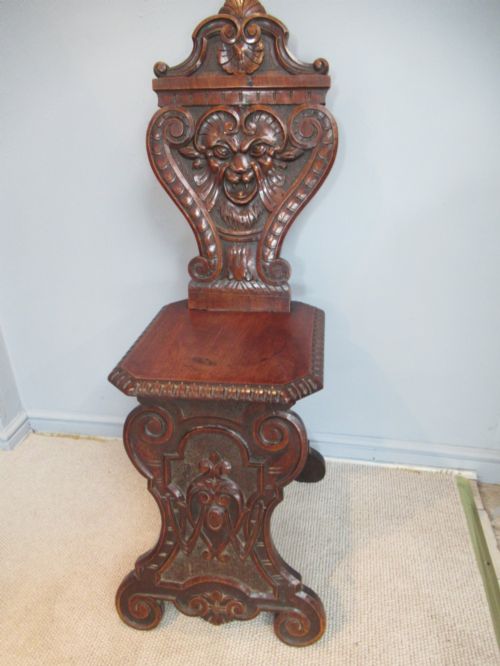
Distinction in solid wood hall seating rests upon the crispness of the carved ornamentation and the weight of the timber. Finely executed pieces display deep, sharp relief on shield or shell backs rather than shallow surface scoring.
Proportion and symmetry separate standard utility seating from refined reception pieces. Higher-grade examples exhibit balanced proportions, well-figured timber grain and integrated structural stability across legs and seats.
Gillows
The Solid Wood Hall Seating Glossary
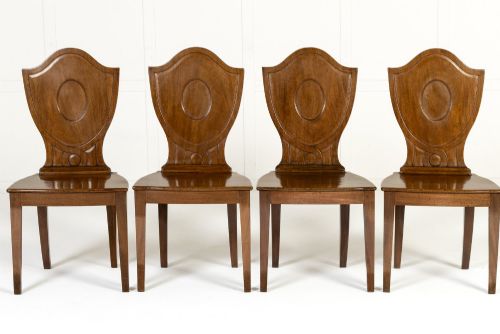
- Shield back
- A chair back shaped in the outline of a heraldic shield, frequently carved with foliage or crests. This form appeared prominently during the Georgian and Victorian periods.
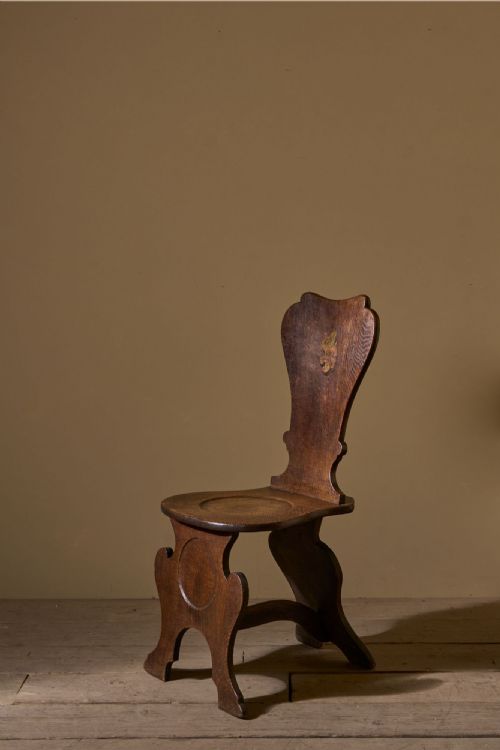
- Sgabello
- An early Renaissance-style chair form featuring a solid wooden seat and trestle supports, seen in oak examples. These seats often display characteristic carved panels.
- Pelta back
- A chair back designed in the ancient Greek pelta motif, resembling a crescent-shaped shield. Cabinetmakers utilised this form during the nineteenth century.
- Shell back
- A carved chair back incorporating scalloped shell motifs into the wooden panel. This decorative element appears frequently on mahogany hall seating from the Regency era onwards.
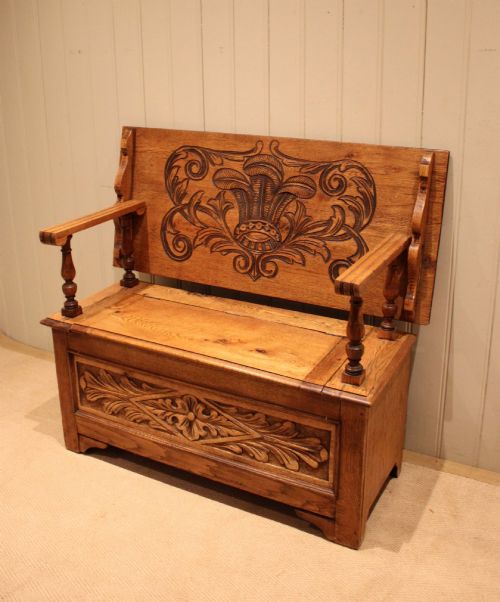
- Monks bench
- A convertible piece of furniture functioning as a bench with a hinged back that folds down to form a table. These solid oak items provide dual utility in domestic spaces.
Solid Wood Hall Seating: Frequently Asked Questions
What is solid wood hall seating used for?
These pieces served as formal seating in entrance halls, stairwells and reception rooms where visitors waited. Their upright posture and solid construction encouraged brief, formal sitting rather than extended lounging.
Today, they function as striking architectural statements in modern hallways and corridors. They offer practical surface utility while maintaining historical character.
How do I distinguish Georgian from Victorian hall chairs?
Georgian examples generally display restrained neoclassical elegance, refined mahogany figuring and lighter proportions. Carving is typically sharp, purposeful and integrated directly into the structural lines of the timber.
Victorian pieces often exhibit heavier proportions, darker finishes and bolder revival styles such as Gothic or Jacobean influences. The carving is frequently deeper and more profuse, reflecting industrial-era manufacturing capabilities.
Are these chairs comfortable for daily sitting?
Solid wood hall seats were designed primarily for formal reception spaces and short-term placement. Most feature unyielding timber seats without upholstery or padding.
They are best suited for occasional use, entryways or decorative placement rather than extended reading or dining.
What timbers were used for these pieces?
Mahogany and oak predominate across the inventory, selected for their durability and density. Cabinetmakers also utilised walnut, cherrywood, satinwood and painted finishes depending on regional workshop traditions.
Brass inlay occasionally appears on Regency examples to accent the primary timber grain.