


Solid Wood Entry Seats
Solid wood entry seats are practical reception pieces that offer a sturdy welcome in a hallway, drawing the eye with carved backs and timber grain.
Solid Wood Entry Seats
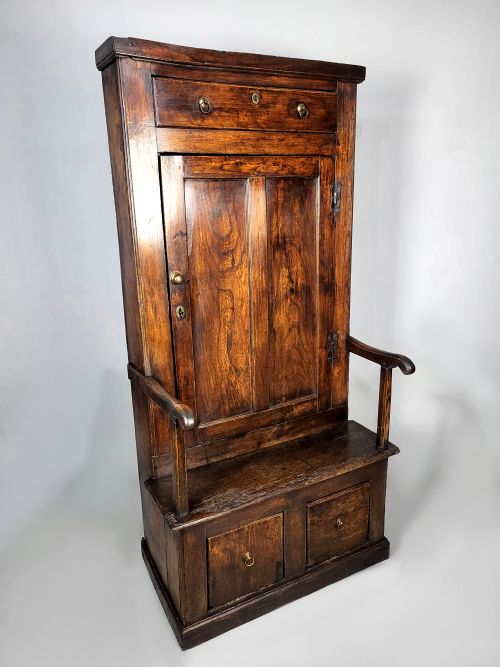
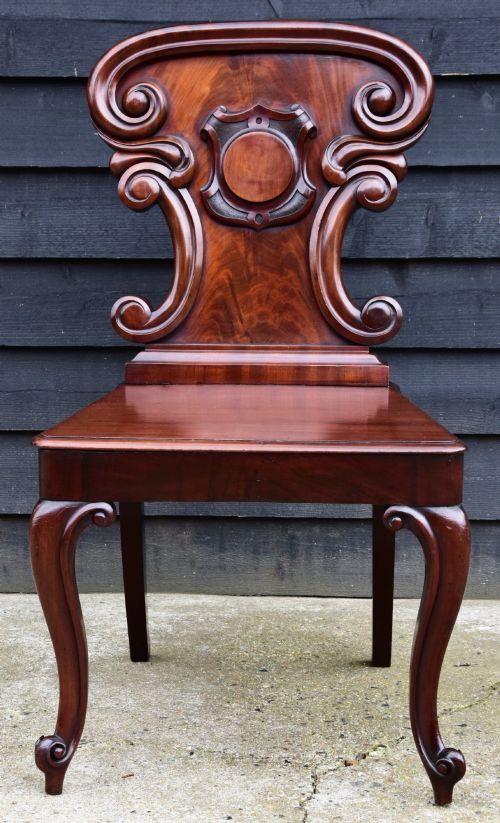
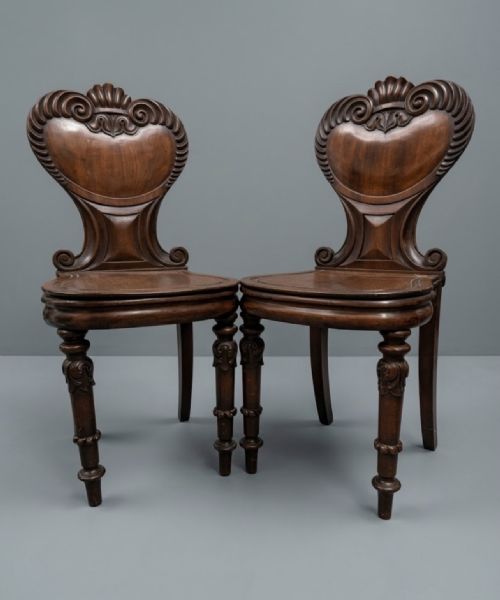
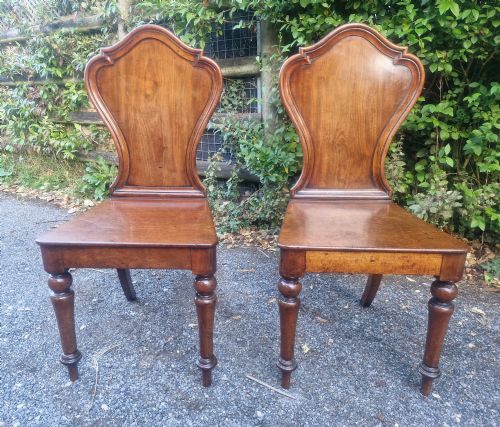
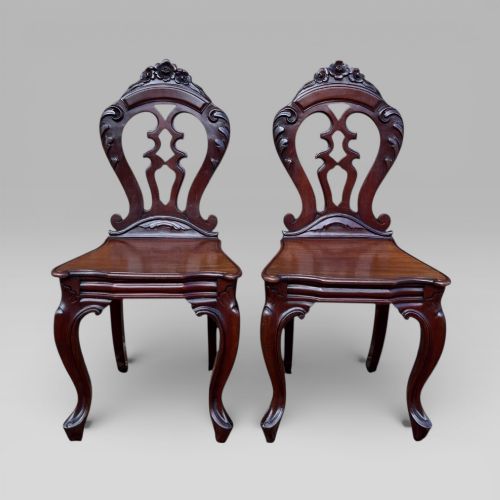
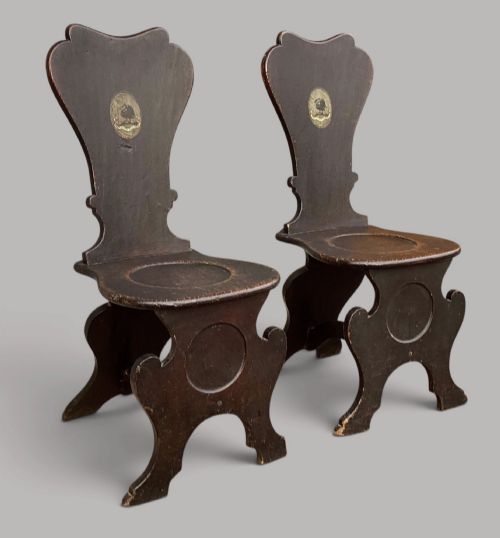
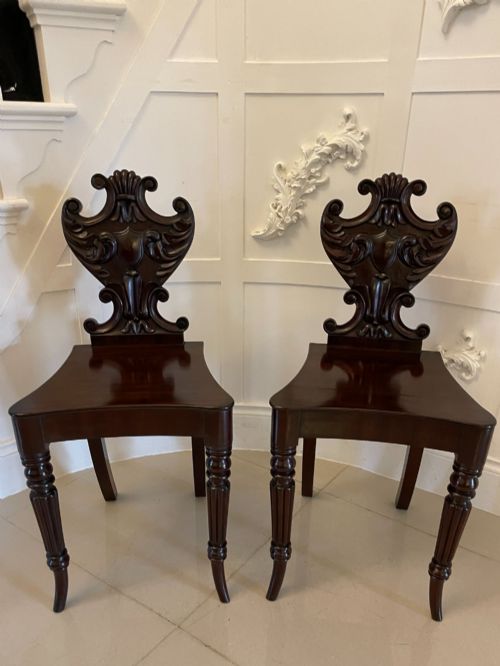
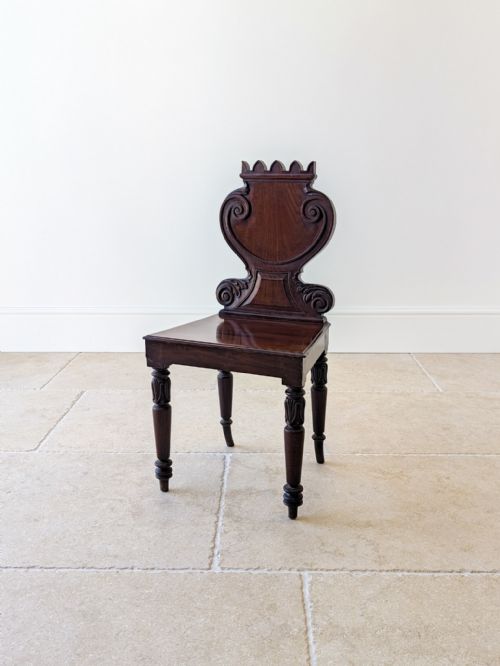
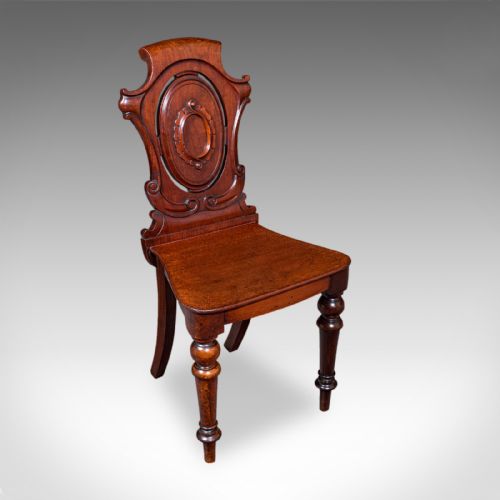
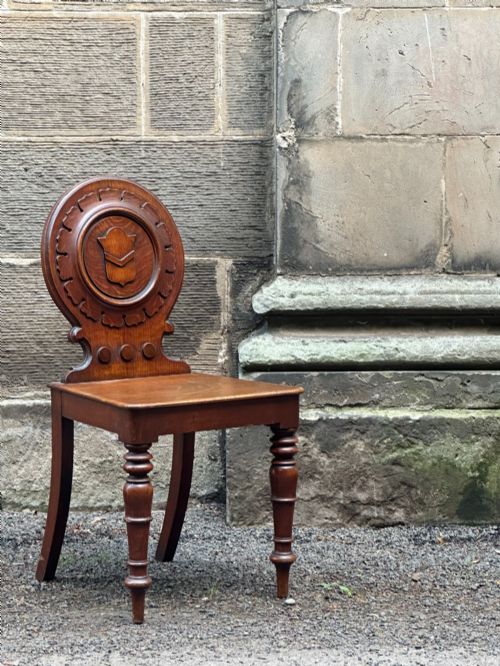
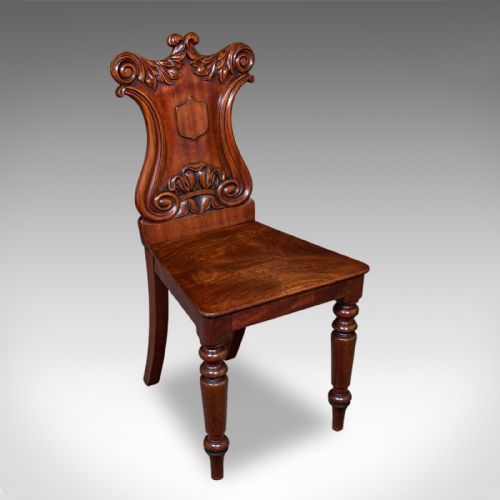
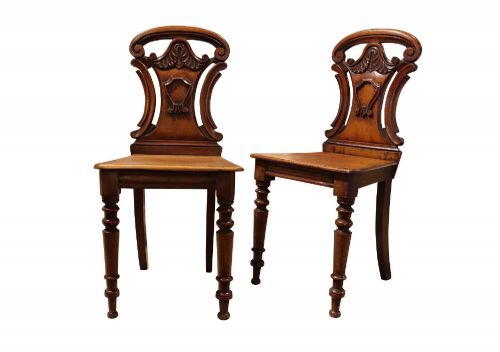
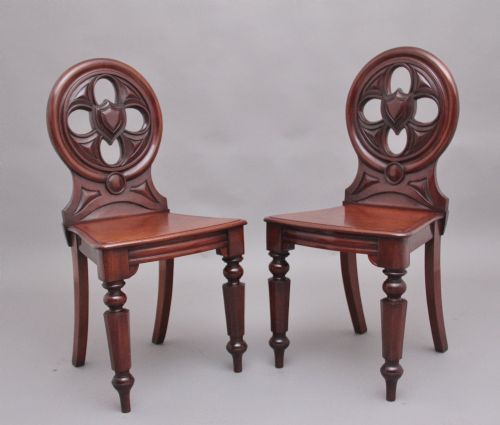
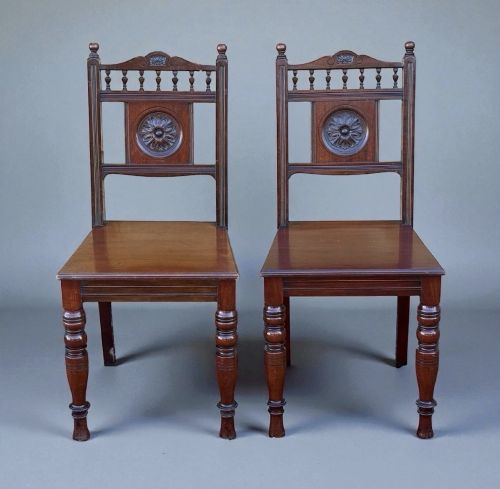
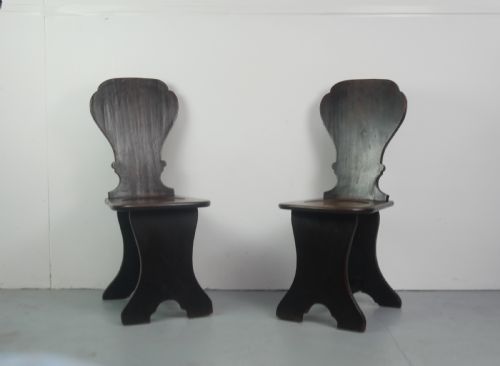
Solid wood entry seats appear on this page primarily as hall chairs, side seats, and settles. These items serve the entryway or reception room, designed for brief seating rather than long lounging.
The pieces span several periods, with Victorian and Georgian examples dominating the selection. Buyers frequently encounter mahogany and oak constructions featuring shield backs, shell backs, or carved wooden panels.
Origins range across English, Scottish, and Irish workshops from the eighteenth and nineteenth centuries. Regional variations show in the choice of timbers such as walnut alongside standard mahogany and oak.
What Varies in Quality
Quality rests upon the depth and definition of the carving on the wooden back panels and the choice of solid timber. Sculptural forms with crisp, deep relief work separate standard examples from finer commissions.
Proportion and the integrity of the timber framing define the upper tier of the range. Uniform grain selection and robust joinery ensure the seat remains stable over centuries of daily service.
Solid Wood Entry Seats Retail Price Guide 2026
Typical asking prices for solid wood entry seats among the pieces listed under this phrase on Sellingantiques today, from the lower quarter to the upper quarter. They describe what is for sale here now, not the wider market.
Listings feature mahogany, oak, and walnut timbers across Georgian, Regency, and Victorian periods.
Strahan And Co
The Solid Wood Entry Seats Glossary
- Hall chair
- A rigid wooden seat placed in an entrance hall for visitors waiting briefly. These pieces often feature carved wooden backs without upholstery.
- Shield back
- A chair back shaped in the outline of a heraldic shield, popular during the Georgian and Victorian periods. Carvers often decorated the centre with crests or foliage.
- Settle
- A wooden bench with a high back and solid arms, designed to block drafts in an entranceway. Early examples utilise heavy oak panels.
- Shell back
- A carved chair back resembling a scallop shell, seen frequently on Regency and nineteenth century seating. This motif highlights the carver's skill in shaping solid timber.
- Brass inlay
- Metal strips or motifs set flush into the wooden surface of the seat frame or legs. This decorative technique appears on Regency examples.
Solid Wood Entry Seats: Frequently Asked Questions
What is a solid wood entry seat?
A solid wood entry seat is a sturdy chair or bench placed in a hallway for brief use. These items are typically made from dense timbers like mahogany or oak without upholstery.
They provide a functional resting place by the front door while displaying decorative carved backs that greet visitors.
How do I date an antique hall chair?
Dating relies on observing the timber species, construction methods, and prevailing style motifs such as shield backs or shell carvings. Georgian pieces often display different proportions compared to Victorian revivals.
Maker labels or estate sale tags can provide specific chronological markers when present on the underside.
Were these seats used daily?
These wooden seats served busy hallways in grand homes and law chambers where visitors waited. Their solid timber construction handled frequent use without needing soft cushions.
Their primary purpose was practical seating rather than relaxed lounging, which dictated their upright and rigid forms.
How do I live with a wooden hall chair?
Placing a wooden hall chair in a hallway or reception space creates a striking focal point against plain walls. Their narrow profiles allow them to fit well in transitional areas.
Regular polishing keeps the solid mahogany or oak timber nourished and protects the carved details from dry air.
What styles are common in entry seats?
The listings feature Georgian, Regency, and Victorian styles alongside Gothic Revival interpretations. Each period brought distinct carving styles to the wooden backs and legs.
Design choices ranged from simple panelled settles to highly sculptural mahogany hall chairs with detailed crests.