






Solid Silver Chalice
A solid silver chalice brings centuries of ritual drinking vessels and presentation cups into modern hands, offering substantial weight and historic craft.
Solid Silver Chalice
A solid silver chalice spans ecclesiastical vessels, presentation trophies, and domestic drinking vessels often grouped with goblets. These pieces emerge across Georgian, Victorian, and twentieth-century periods, reflecting varied domestic and ceremonial uses.
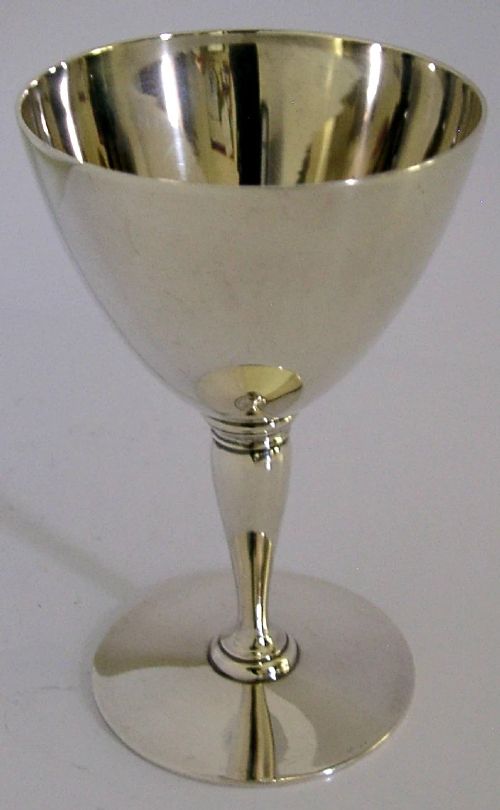
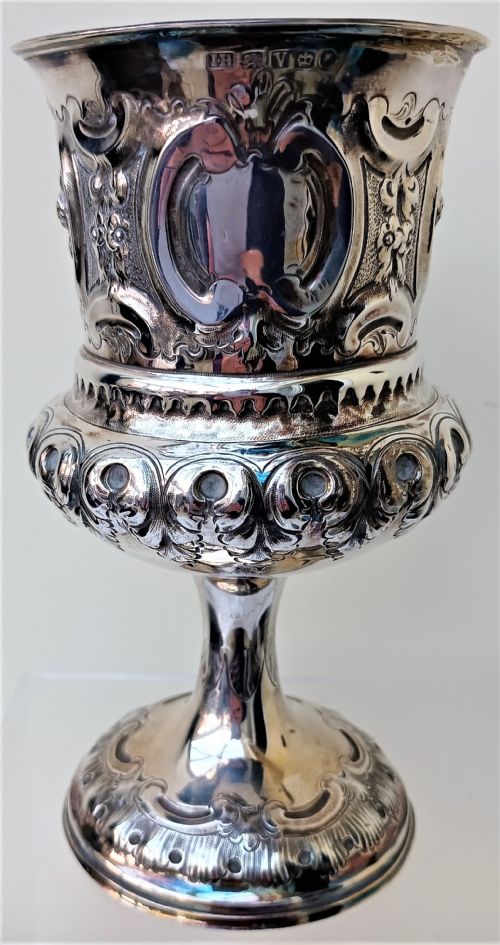
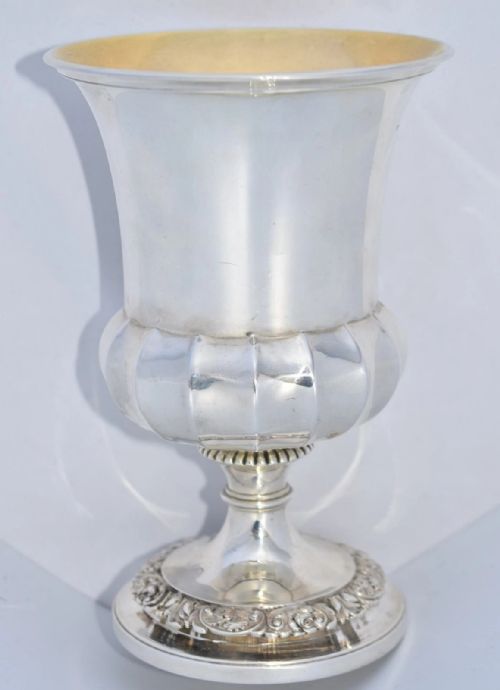
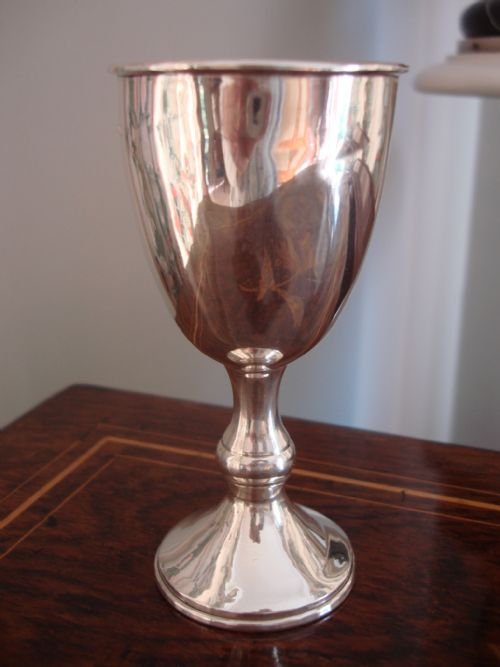
The version most commonly met on this page is the nineteenth-century English sterling silver goblet or chalice, frequently bearing hallmarks from London or Sheffield. Alongside these, buyers encounter Art Deco cocktail cups, twentieth-century religious vessels, and international pieces.
Makers such as Tiffany and Co., George Unite, and Mappin and Webb contribute distinct forms to the selection. Forms range from plain vase-shaped bodies to heavily chased religious chalices and engraved sporting trophies.
Materials and construction
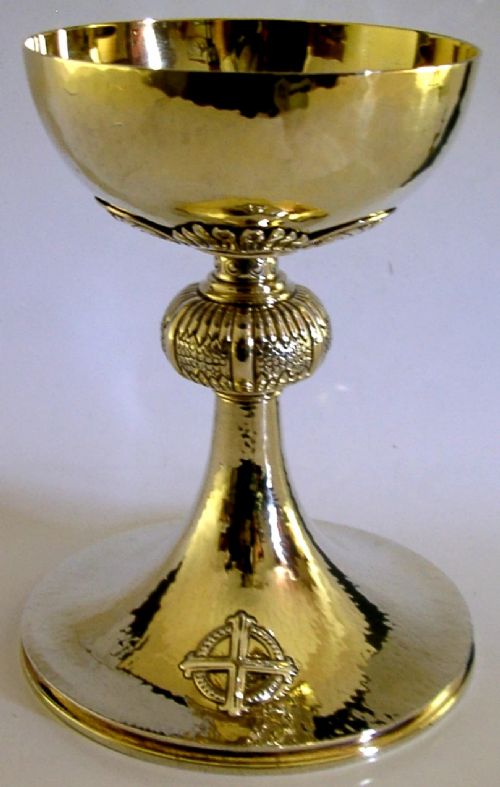
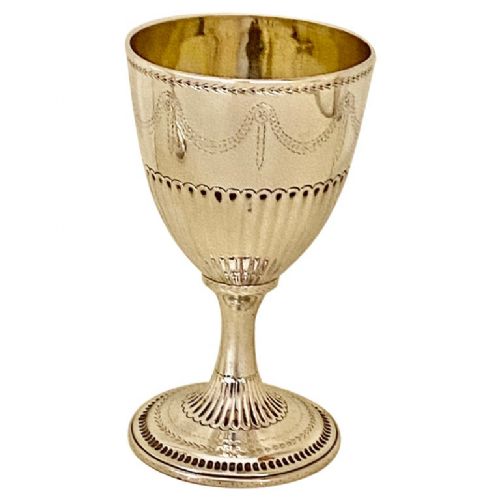
Silversmiths constructed these vessels primarily in sterling silver, utilising sheet silver raised or spun into deep bowls, then mounted on cast stems and circular feet. Many examples incorporate interior gilding known as silver-gilt, which protected the silver from acidic wine.
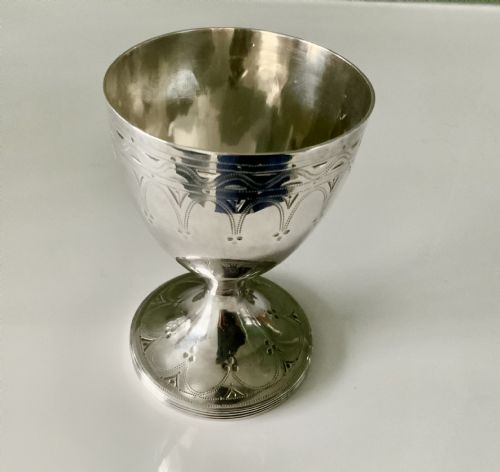
Decoration relied on hand techniques such as bright-cut engraving, chasing, and hammering, visible in Arts and Crafts beakers. Handles, where present on two-handled cups or trophy vessels, were cast separately and soldered securely to the body.
Materials recorded across the archive include sterling silver, silver-gilt, and velvet linings found in travelling presentation cases.
Distinctions in quality
Quality in a solid silver chalice rests upon the gauge of the metal and the crispness of the original chasing or engraving. Thicker walls provide a substantial feel in the hand, avoiding the flex found in lighter presentation pieces.
The integrity of the hallmarks and the balance of the proportions dictate the standing of a piece. Well-preserved gilding inside the bowl and crisp maker marks indicate careful preservation through centuries of use.
Tiffany and Co·George Unite·William Eaton·James Deakin and Sons·Charles Stuart Harris·Mappin and Webb
The Solid Silver Chalice Glossary
- Sterling silver
- A silver alloy containing 92.5 percent silver by mass, standard for British plate since medieval times. Most listed chalices carry hallmarks certifying this standard.
- Silver-gilt
- Silver that has been coated with a thin layer of gold on its surface. This technique was frequently applied to the interior of chalices to prevent tarnishing from liquids.
- Hallmark
- An official stamp applied by an assay office indicating metal purity, origin city, and date letter. These marks allow precise dating of British silver.
- Bright-cut engraving
- A surface decoration technique using faceted cuts that reflect light. It appears frequently on Georgian examples in geometric or floral patterns.
- Parcel gilt
- Silver objects that are partially gilded, leaving some areas of plain silver exposed for contrast. This finish highlights specific decorative motifs on the vessel.
Solid Silver Chalice: Frequently Asked Questions
How do I clean a solid silver chalice?
Maintenance requires gentle washing with warm soapy water and a soft cloth to preserve the patina. Avoid abrasive dips that strip the historic finish.
For gilded interiors, extra care prevents the gold layer from wearing thin over time. Regular handling often keeps silver naturally bright without harsh polishes.
Were all chalices used for church services?
Many examples served religious functions, particularly those dated to the Victorian and mid-century periods. Others were made specifically as domestic wine goblets or sporting trophies.
In secular settings, large cups functioned as presentation pieces or club awards. Hallmarks and inscriptions usually clarify the original purpose of the vessel.
What is the difference between a chalice and a goblet?
The terms often overlap in trade descriptions, though chalices traditionally imply a religious or ceremonial function with a deep bowl. Goblets generally point toward domestic drinking vessels or barware.
Both share the fundamental form of a bowl raised on a stem and foot. Makers applied similar silversmithing techniques to construction regardless of the intended title.
How can I date an unmarked piece?
British pieces rely on official assay office stamps, including leopard heads or anchor symbols alongside date letters. Unmarked or international items require stylistic comparison to known periods.
Form and decorative styles, such as Art Deco geometric lines or Georgian bright-cut engraving, provide strong clues when official stamps are absent.