

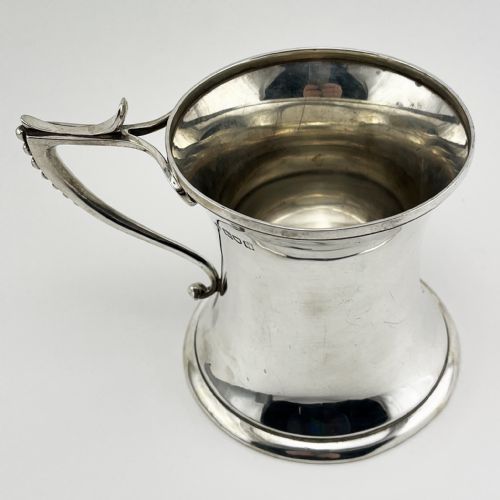
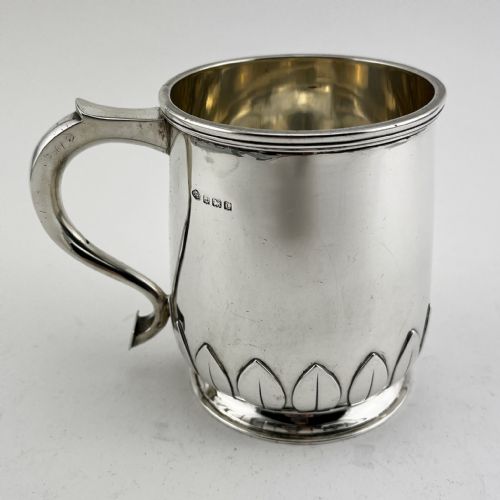


Solid Silver Beer Tankard
A solid silver beer tankard is a drinking vessel of considerable weight and presence, prized for its tactile heft and historic utility.
Solid Silver Beer Tankard
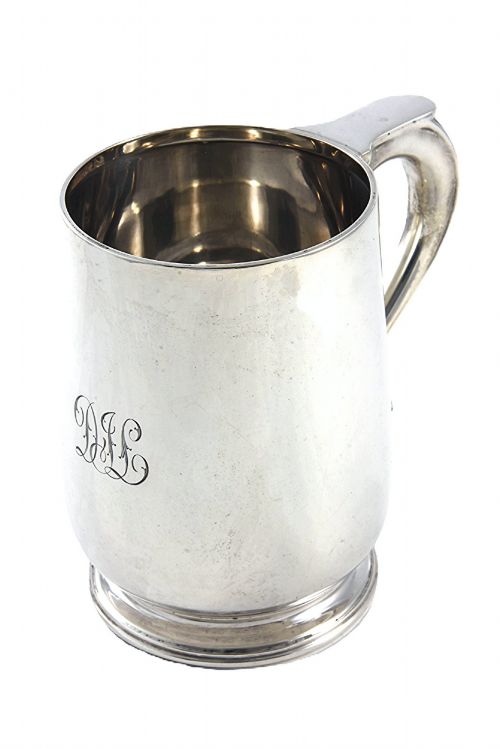
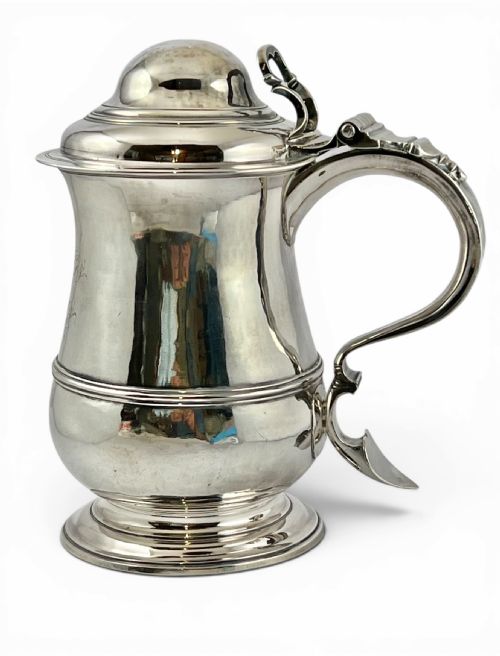
When you search for a solid silver beer tankard, you encounter robust drinking vessels spanning the Georgian, Victorian, and Edwardian eras, alongside later twentieth-century examples. The selection ranges from unlidded pint mugs to substantial lidded tankards fashioned in London and Newcastle.
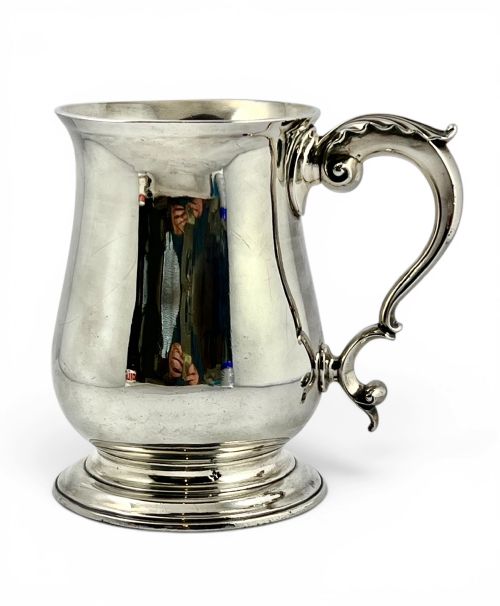
The most common form on this page is the sterling silver pint mug or tankard featuring a sturdy scroll handle. These pieces reflect specific royal periods from George II through to George V, capturing centuries of British silver-smithing tradition.
Methods of Manufacture
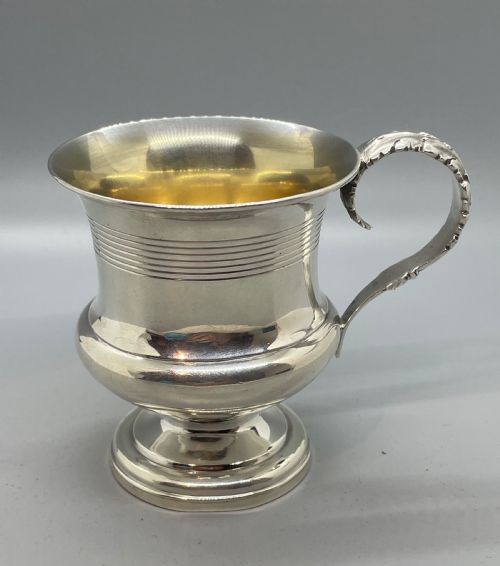
These vessels are formed primarily from sterling silver, occasionally finished with gold gilt interiors known as vermeil. Silversmiths shaped the heavy metal bodies by raising or spinning, attaching cast scroll handles securely to the main cylinder.
Makers utilised traditional techniques such as hammering, soldering, and polishing to achieve smooth exterior surfaces or unusual contours. Hallmarks stamped directly into the silver record the assay office, date letter, and maker's mark.
Some antique mugs retain interior gold gilt designed to stop acidic ales from tasting faintly of metal.
Assessing Quality
Quality in these drinking vessels rests upon the gauge of the sterling silver and the crispness of the original form. Heavier metal gauge prevents distortion and provides the substantial balance expected from a proper drinking vessel.
Refinement in the handle attachment, the proportion of the foot rim, and the legibility of the hallmarks separate ordinary production from superior examples. Interior gilding, where present, adds a layer of finish that distinguishes finer pieces.
John Payne·William Grundy·Gabriel Sleath
The Solid Silver Beer Tankard Glossary
- Sterling silver
- An alloy comprising ninety-two point five percent silver and seven point five percent other metals, typically copper. This standard ensures durability for functional items like tankards and mugs.
- Hallmark
- A series of official marks stamped on precious metal items in the United Kingdom. It certifies the standard of purity, the assay office, and the year of manufacture.
- Baluster
- A curved architectural form resembling a vase, frequently seen in the profile of eighteenth-century mug handles and bodies. This shape provides an ergonomic grip for the hand.
- Gilt
- A thin layer of gold applied to the interior surface of a silver vessel. This process protects the silver from tarnishing when in contact with acidic beverages.
Solid Silver Beer Tankard: Frequently Asked Questions
Can I drink beer from a silver tankard?
Yes, sterling silver conducts temperature rapidly, keeping contents cool while in use.
Silver is food-safe and has been utilised for drinking vessels for centuries without issue.
How do I clean a silver tankard?
Wash the vessel gently using warm water and mild soap, drying it immediately with a soft cloth.
Avoid abrasive cleaners that can wear away crisp hallmarks or fine surface details.
What is the difference between a mug and a tankard?
A tankard traditionally refers to a lidded drinking vessel, though the term often encompasses heavy open-topped mugs in modern parlance.
Mugs lack lids but share the same robust construction, heavy gauge metal, and large scroll handles.
How can I date my silver tankard?
Examine the stamped hallmarks near the rim or base to find the specific date letter corresponding to assay office records.
Stylistic cues such as baluster profiles and handle shapes also indicate whether a piece originates from the Georgian or Victorian period.