


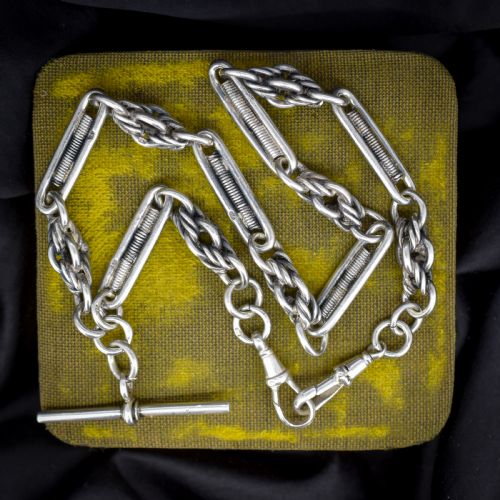
Solid Silver Albert Necklace
A solid silver albert necklace is a sturdy nineteenth or early twentieth-century watch chain converted for the neck, prized for its substantial links and historic T-bars.
Solid Silver Albert Necklace
When you search for a solid silver albert necklace, you encounter robust pocket watch chains repurposed as neckwear from the Victorian, Edwardian, and Art Deco eras. These pieces originated as functional accessories designed to secure pocket watches to a gentleman's waistcoat, anchored by a central T-bar.
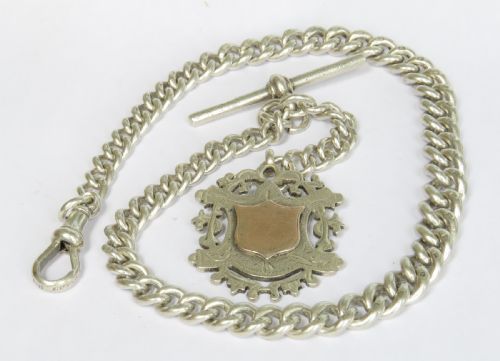
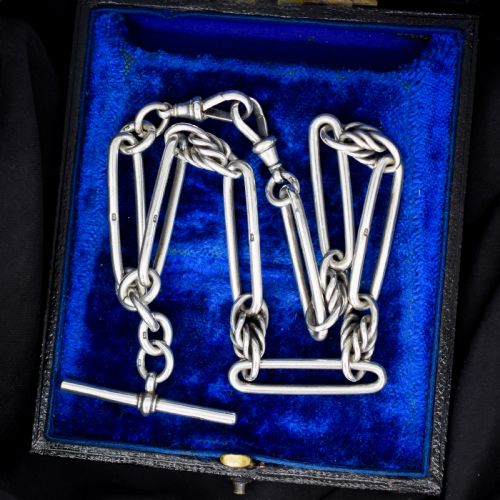
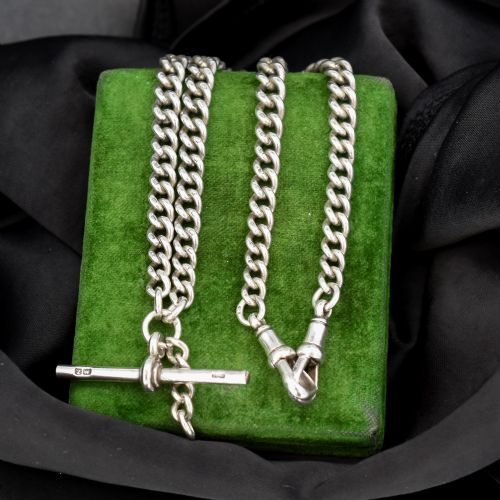
The versions you meet most frequently on this page feature uniform curb links or trombone links fashioned from sterling silver. Many retain their original dog clips and swivel clasps, which allow the chain to be worn doubled at the throat or extended as a single strand.
Spanning from the eighteen-eighties through to the nineteen-twenties, these items demonstrate the heavy metalwork characteristic of British watch chains. They offer a tangible connection to period haberdashery while functioning as durable modern necklaces.
How they were made
Silversmiths constructed these chains using solid sterling silver, shaping individual links by hand or through early industrial stamping methods. Curb links, love knots, and trombone patterns required precise soldering to ensure each section could withstand daily wear.
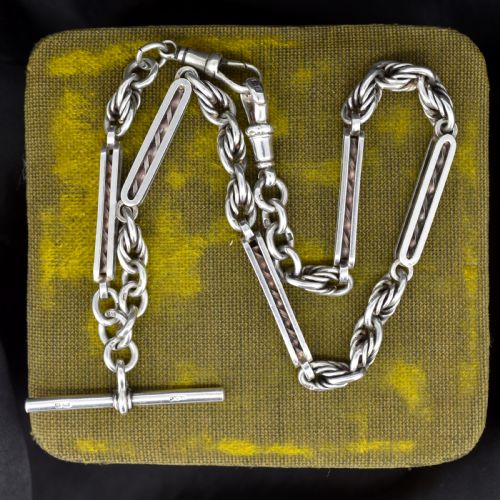
Component parts such as dog clips, jump rings, and T-bars were assembled separately before being joined to the main chain. Many examples incorporate rose gold highlights or hallmarks stamped directly onto the silver links to denote the assay office and year of creation.
What varies in quality
The distinction between standard pieces and superior examples lies in the weight of the silver and the crispness of the original links. Heavier chains containing substantial gram weights provide a more satisfying drape when worn around the neck.
Quality also depends on the preservation of original components, such as fully functioning dog clips and legible hallmarking. Pieces that retain their makers' marks and unaltered T-bars hold greater integrity than those with replaced parts.
The Solid Silver Albert Necklace Glossary
- Albert chain
- A heavy watch chain designed to secure a pocket watch, named in honour of Prince Albert. These pieces feature a T-bar at one end and one or more dog clips.
- T-bar
- A small horizontal bar attached to the centre of the chain, originally passed through a waistcoat buttonhole. It now serves as a decorative focal point when worn as a necklace.
- Dog clip
- A spring-loaded snap hook attached to the end of the chain. It allows the wearer to attach a fob, pendant, or secure the chain to another link.
- Curb link
- A type of chain link characterised by flat, interlocking links that lie relatively flat against the skin. This pattern provides both flexibility and considerable physical weight.
- Trombone link
- A specific chain design featuring alternating long rectangular links and small circular rings. It originated in the nineteenth century and is frequently paired with love knots.
Solid Silver Albert Necklace: Frequently Asked Questions
How do I wear an albert necklace?
These pieces can be worn as a single long strand or doubled up to sit closer to the collar as a choker. The T-bar usually hangs at the front or side as a decorative toggle.
The dog clips allow you to attach charms or fobs, or you can clip them directly onto the chain to adjust the overall length.
Are these chains made of solid silver?
The pieces recorded here are fashioned from solid sterling silver or Continental silver standards. They are heavy metal items rather than plated alternatives.
Assay marks and date letters stamped onto the individual links or clips confirm the metal purity and the year of manufacture.
How do I date a silver watch chain?
Dating relies upon British hallmarking standards stamped directly onto the silver links, which include assay office symbols and specific year letters. Stylistic traits such as trombone links or love knot motifs also point to specific decades like the Victorian or Edwardian periods.
Comparing the form of the dog clips and the construction of the T-bar helps narrow down the exact era of production.