
Edwardian Watch Chain Necklace
An edwardian watch chain necklace adapts gentleman's pocket watch chains into versatile neckwear using historic clips and bars.
Edwardian Watch Chain Necklace
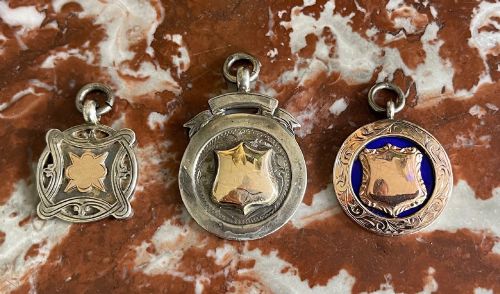
The edwardian watch chain necklace category brings together antique pocket watch chains, albert chains, and guard chains repurposed for the neck. Pieces commonly surface from the Edwardian period, the Victorian era, and the 1920s.
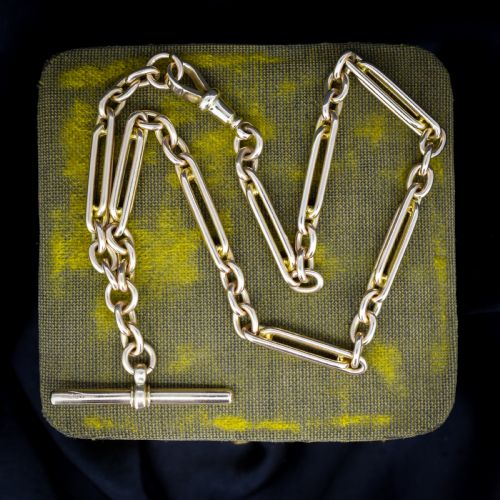
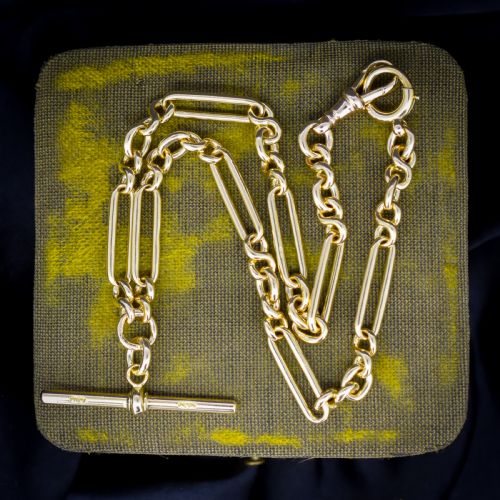
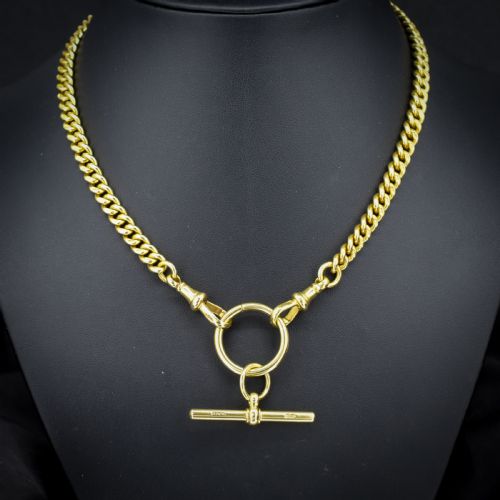
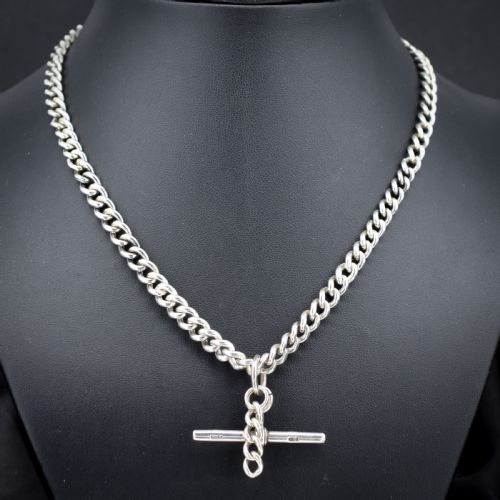
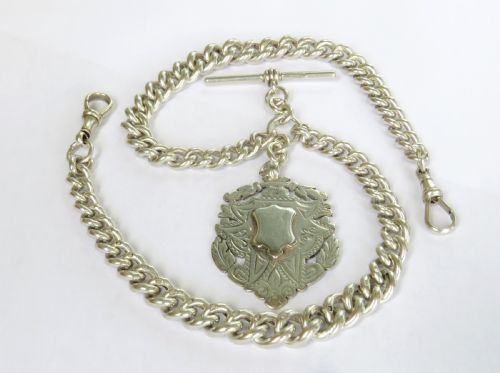
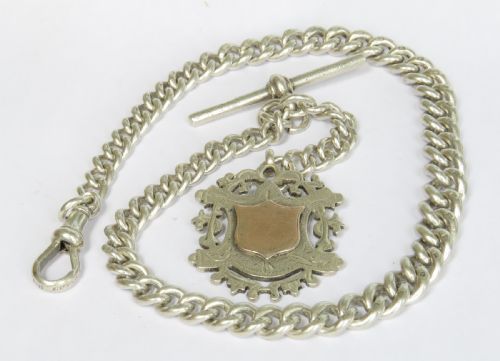
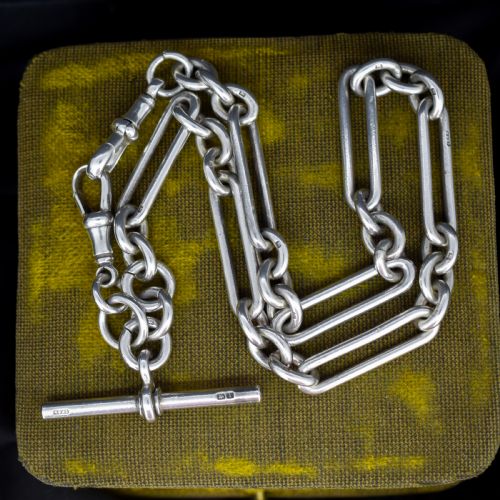
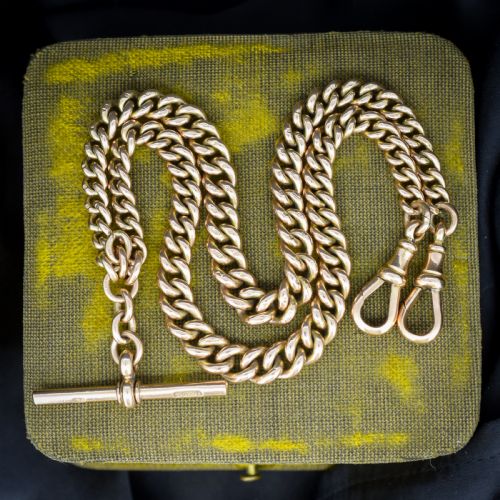
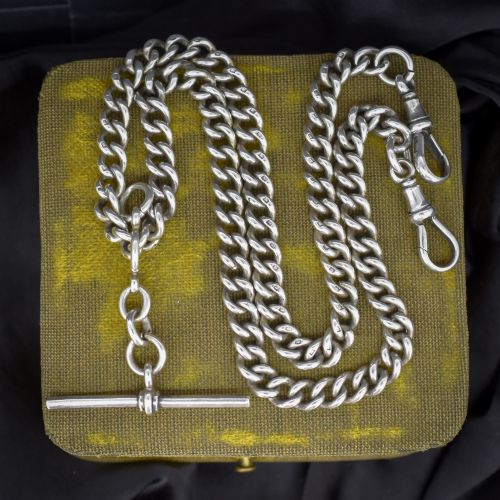
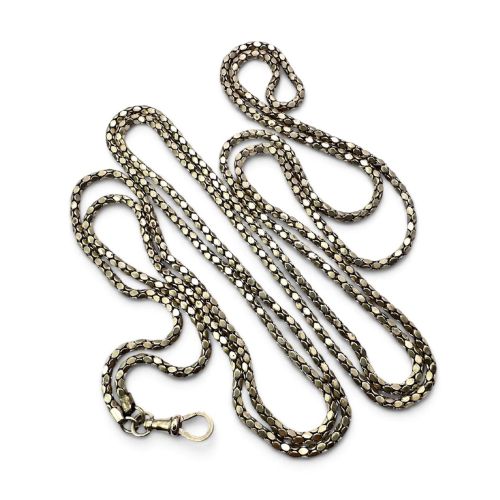
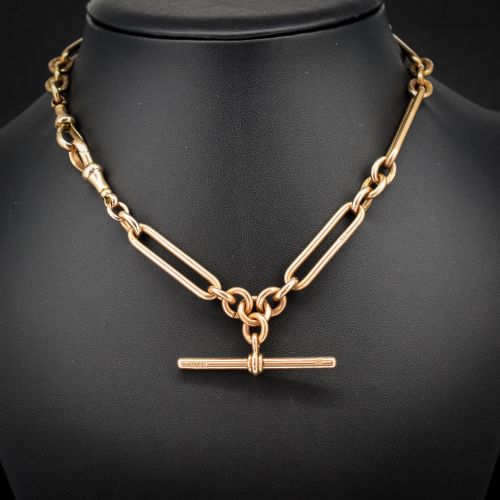
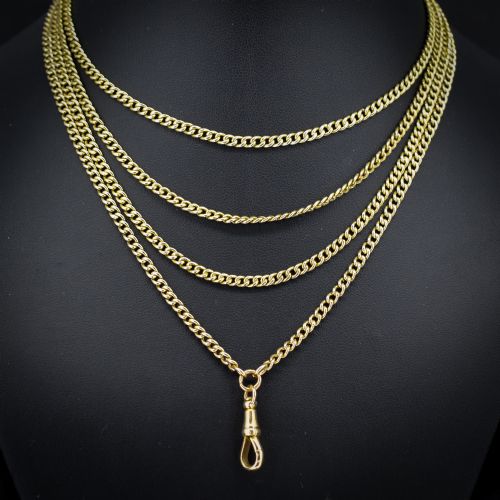
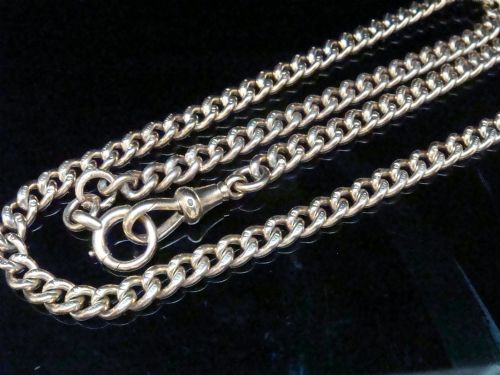
Most examples found on this page take the form of curb link or trombone link chains, often retaining functional additions such as swivel dog clips, bolt rings, and T-bars. Lengths span from shorter choker styles to exceptionally long guard chains designed to loop multiple times.
Makers and goldsmiths utilised standard pocket watch hardware, transforming functional waist-worn chains into wearable necklaces that preserve their original mechanical fixings.
Materials and Construction
Metals span sterling silver, rolled gold, and varying purities of gold including 9ct yellow gold, 9ct rose gold, 12ct, 15ct, 18ct yellow gold, and platinum. Individual links often display hallmarks or partial stamps denoting the assay office and metal purity.
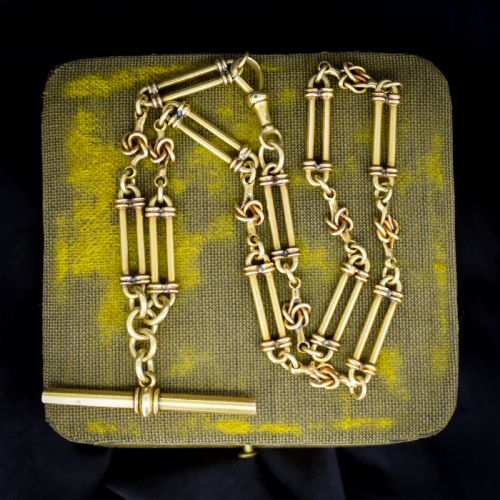
Construction relies on distinct link geometries such as curb, trombone, oval, fetter and knot, figaro, and belcher formations. Artisans joined these components by hand, incorporating swivel dog clips and T-bars as integral parts of the fastening system.
Several heavy silver chains weigh nearly one hundred grams, originally built to secure weighty pocket watches without snapping.
Quality Variations
Quality rests upon the weight of the metal and the precision of the link assembly, ranging from hollow rolled gold variations to heavy, solid gold and substantial sterling silver pieces. Substantial weight and fully hallmarked links on every single component elevate an example above standard production.
The preservation of original elements such as working dog clips, functional T-bars, and matching safety catches dictates desirability. Even wear across the link joints indicates a well-used piece whose structural integrity remains sound over a century later.
The Edwardian Watch Chain Necklace Glossary
- Albert Chain
- A pocket watch chain designed to attach to a waistcoat, typically featuring a T-bar at one end and a swivel dog clip at the other. In modern usage, these are frequently worn as necklaces.
- T-bar
- The short transverse bar attached to the centre of an albert chain, originally used to secure the chain through a buttonhole. It hangs as a decorative feature when the chain is worn around the neck.
- Dog Clip
- A small, spring-loaded swivel hook used on watch chains to secure a pocket watch or fob. These clips serve as the main closure when the chain is adapted into a necklace.
- Trombone Link
- A watch chain link style composed of alternating long rectangular bars and short oval or circular connectors. This geometric pattern is characteristic of late nineteenth and early twentieth-century chains.
- Longuard Chain
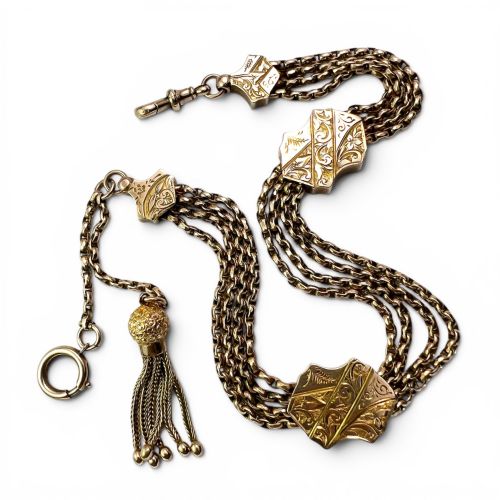
- An exceptionally long nineteenth-century chain designed to be worn doubled around the neck. They frequently incorporate slide pieces and dog clips.
- Rolled Gold
- A material made by fusing a thin sheet of gold to a base metal core under heat and pressure. It offers the appearance of solid gold while utilising a more affordable interior alloy.
Edwardian Watch Chain Necklace: Frequently Asked Questions
How do I wear a watch chain as a necklace?
These pieces fasten around the neck using the original swivel dog clip or bolt ring, allowing the T-bar to drop down as a pendant detail. You can adjust how the chain sits by clipping the clasp into different links.
Heavier chains sit flat against the collarbone, while longer guard chains can double up for a layered look.
What is the difference between an Albert and a guard chain?
An albert chain is a shorter, heavier pocket watch chain featuring a T-bar at one end and a dog clip at the other. Guard chains are much longer chains originally designed to secure pocket watches, muff items, or eyeglasses around the neck.
Guard chains often measure over fifty inches, whereas standard albert chains usually fall between thirteen and twenty-two inches.
Can I remove the T-bar and dog clip?
The T-bars and dog clips are typically connected using jump rings or split rings that form an integral part of the antique construction. Altering these components risks damaging the historic fixings and hallmarked sections.
Most buyers choose to leave the original hardware intact as it defines the character and historic function of the piece.