


Trombone Link Albert Chain
A trombone link albert chain is a distinguished watch chain turned necklace, offering substantial metal links for everyday wear.
Trombone Link Albert Chain
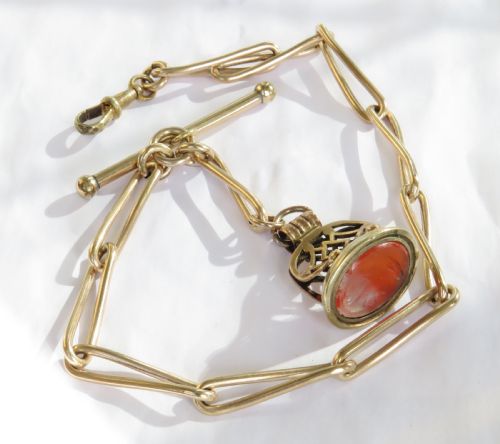
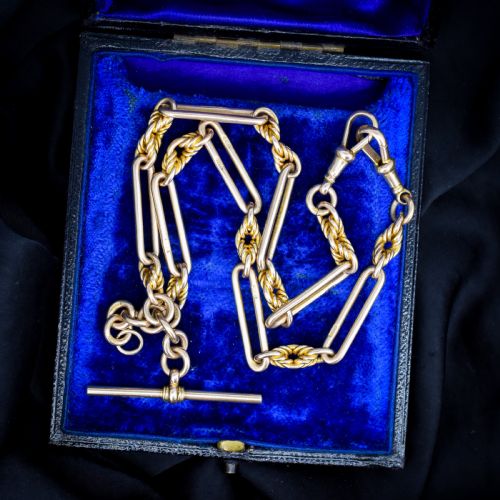
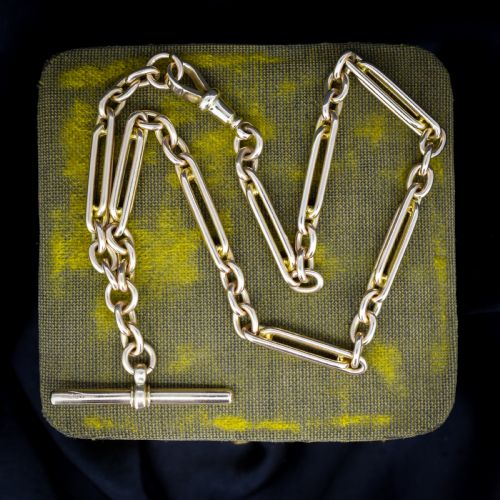
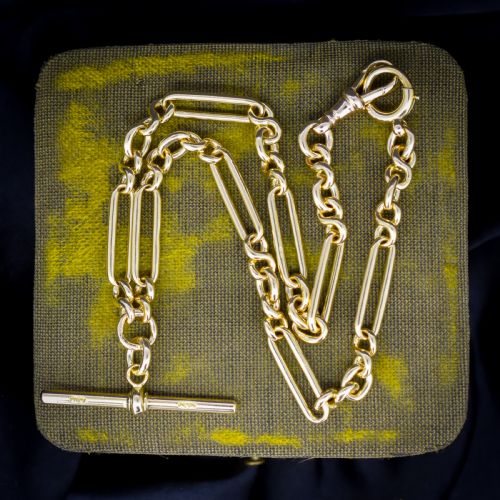
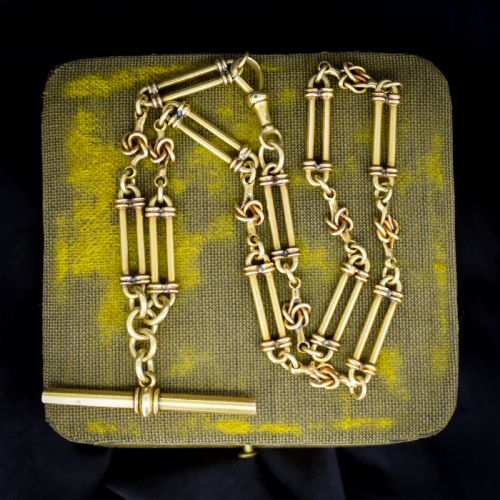
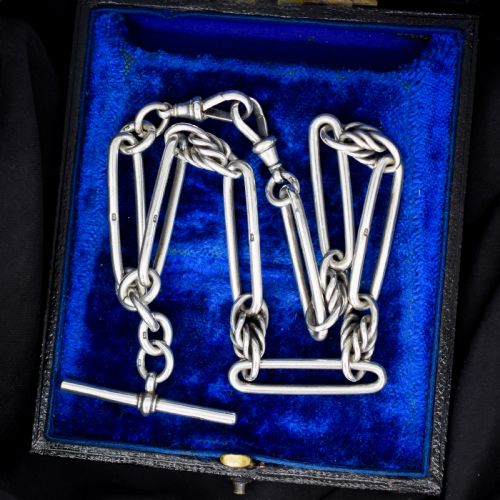
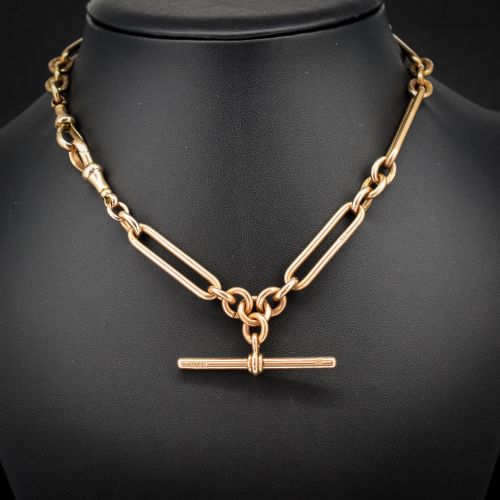
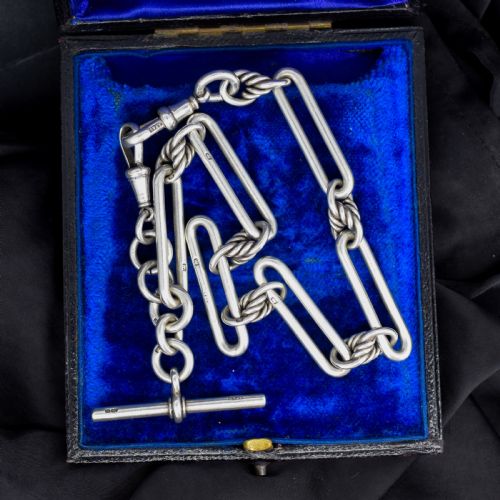
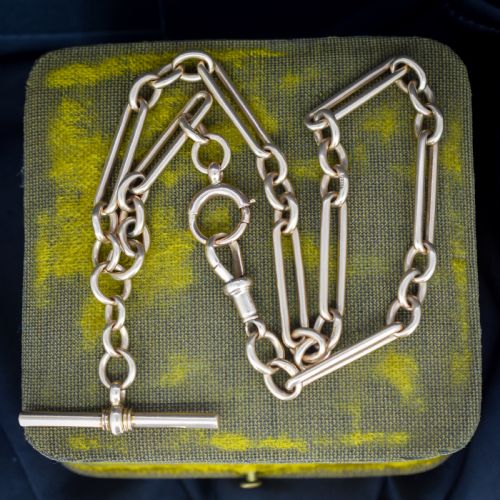
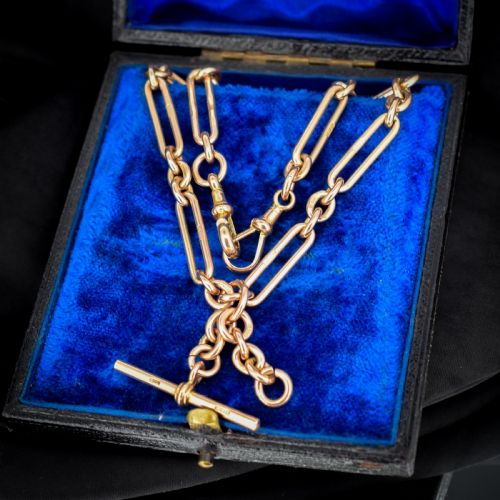
A trombone link albert chain displays elongated rectangular links reminiscent of musical instrument tubing, interspersed with smaller connector rings or love knots. These pieces emerge from the Victorian, Edwardian, and Art Deco periods, spanning the late nineteenth century into the nineteen-twenties.
Most examples function as pocket watch chains or converted necklaces, frequently retaining original attachments such as swivel dog clips, T-bars, and fob pendants.
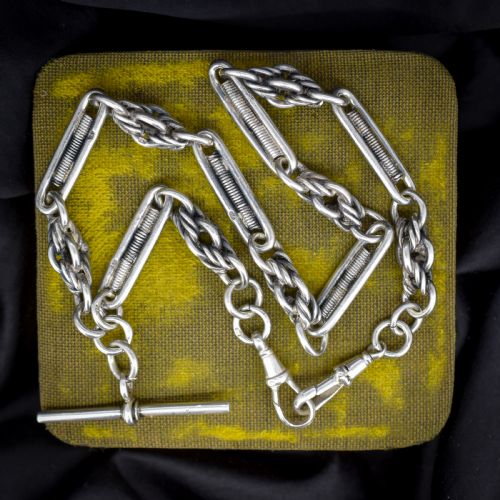
Materials range from solid sterling silver and varied tones of nine carat, ten carat, eighteen carat, and rolled gold, sometimes paired with carnelian.
Materials and Construction
Metals are worked in solid sterling silver or gold variants including yellow, rose, and platinum combinations, shaped into long hollow or solid uniform profiles. Links are individually formed, soldered, and joined by hand with smaller connecting rings or twisted love knots.
Functional hardware such as swivel dog clips, bolt rings, and T-bars utilise secure mechanical springs and hinge mechanisms integral to period pocket watch security.
Listings feature sterling silver, nine carat gold, ten carat gold, eighteen carat gold, and rolled gold across the Victorian, Edwardian, and Art Deco periods.
Distinctions in Quality
Quality rests upon the gauge of the metal and the integrity of each link's soldering, distinguishing substantial solid gold and silver formations from lighter rolled gold alternatives. Substantial weight and crisp definition in the elongated trombone bars indicate superior manufacturing.
The presence of original hallmarking, maker's marks, and intact period hardware like swivel dog clips and T-bars preserves the structural completeness and historical authenticity of the piece.
The Trombone Link Albert Chain Glossary
- Albert chain
- A pocket watch chain designed to attach to a waistcoat, named after Prince Albert. These pieces are frequently worn today as necklaces.
- Trombone link
- An elongated, rectangular metal link shaped like the slide of a trombone. It forms the primary repeating unit of the chain.
- Dog clip
- A spring-loaded swivel clasp attached to the end of the chain. It was originally used to secure a pocket watch.
- T-bar
- A short transverse bar attached to the centre of the chain. It secured the piece through a buttonhole on a waistcoat.
- Love knot
- A decorative joining link formed from intertwined or twisted wire. It often alternates with trombone links in these designs.
Trombone Link Albert Chain: Frequently Asked Questions
How do I wear a pocket watch chain as a necklace?
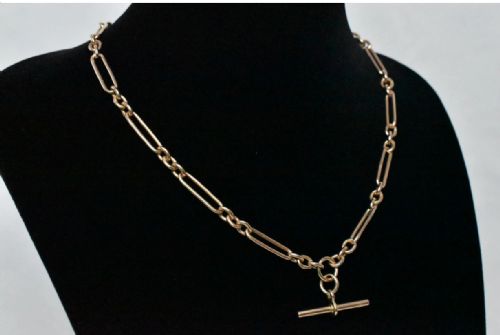
Many trombone link albert chains are worn directly as necklaces by fastening the dog clip to a connecting ring or the opposite end of the chain. The hanging T-bar is left to rest naturally as a decorative pendant drop.
Lengths typically range between thirteen and eighteen inches, suiting standard collarbone placement without requiring alteration.
What is the difference between sterling silver and gold pieces?
Silver pieces originate primarily from the Victorian and Edwardian eras, offering a bright reflective finish. Gold examples occur in nine carat, ten carat, and eighteen carat purity, appearing in yellow, rose, and two-tone combinations.
Both metals maintain durability, though gold options provide a warmer hue and greater density.
What are dog clips and T-bars used for today?
Original hardware functions as decorative and practical elements for modern wearers. The swivel dog clip secures charms, pendants, or secures the chain length.
The T-bar hangs centrally as a traditional focal point reminiscent of the piece's origins.
How can I tell the period of my chain?
Dating relies upon British hallmarking stamped directly onto the links, dog clips, or T-bars, indicating specific assay office locations and active years. Stylistic clues such as love knot pairings and rose gold tones also point toward Victorian or Edwardian manufacture.