
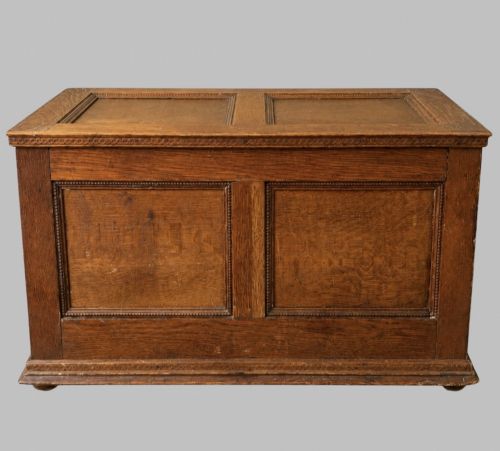
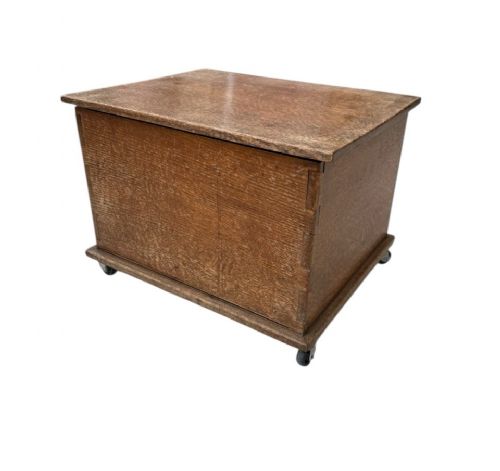
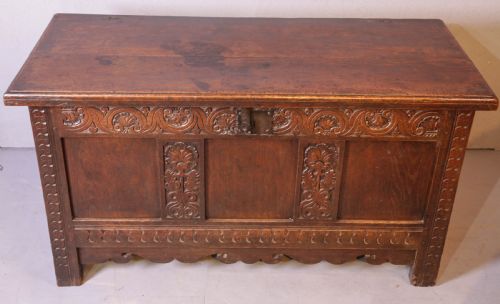

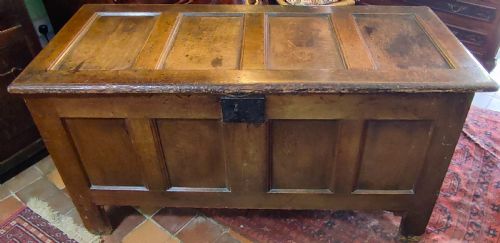


Solid Oak Blanket Box
A solid oak blanket box brings centuries of heavy timber and honest grain straight into a room.
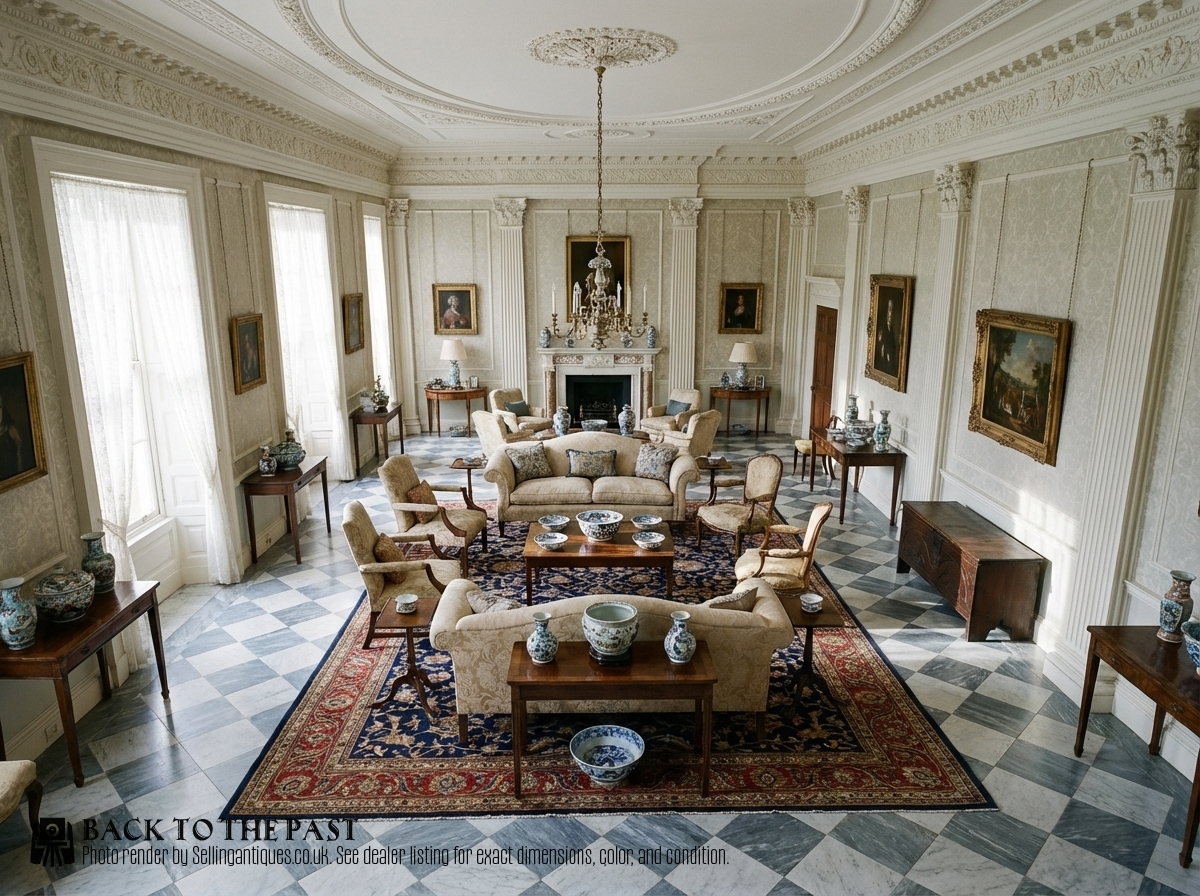
What a solid oak blanket box is
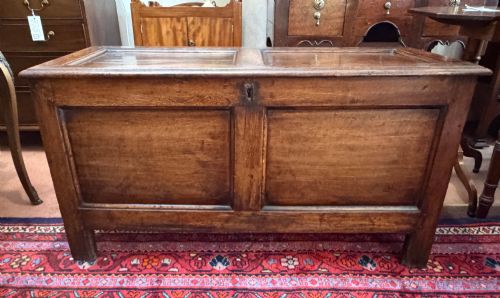
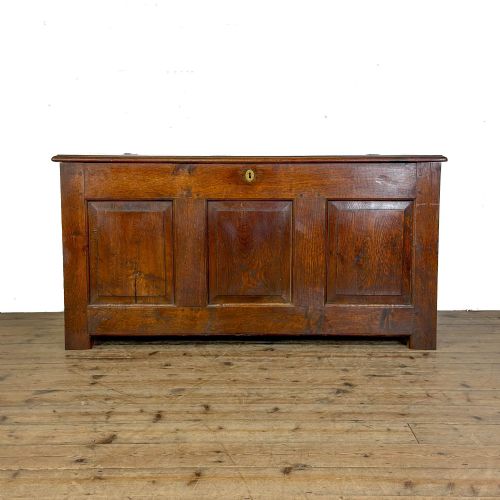
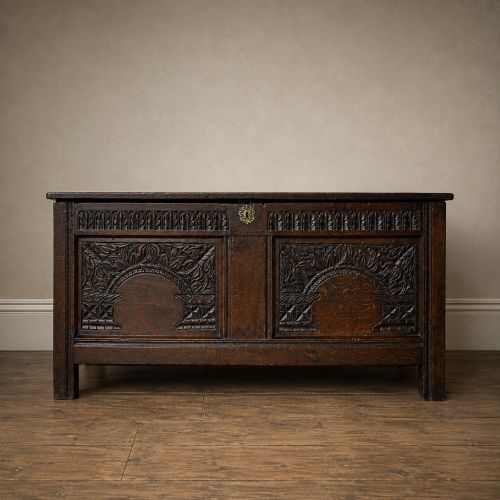
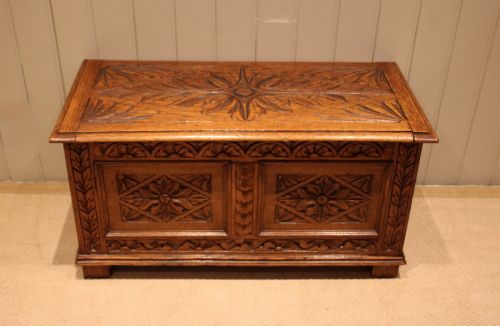
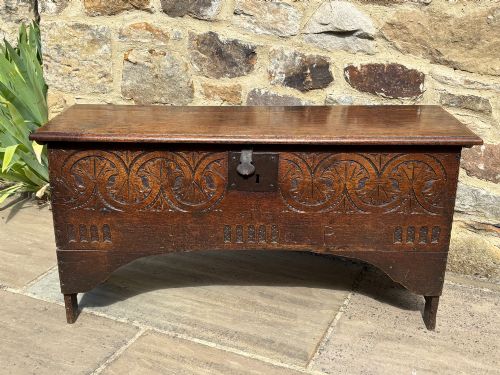
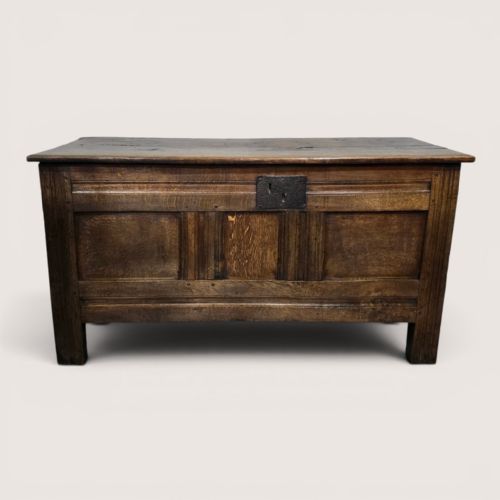
A solid oak blanket box serves as a heavy storage chest, often catalogued as a coffer or trunk. These pieces provide deep interior space whilst doubling as low seating or tables.
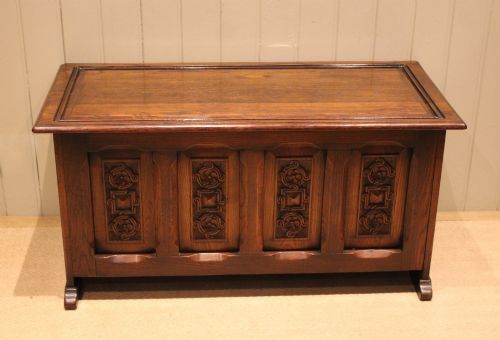
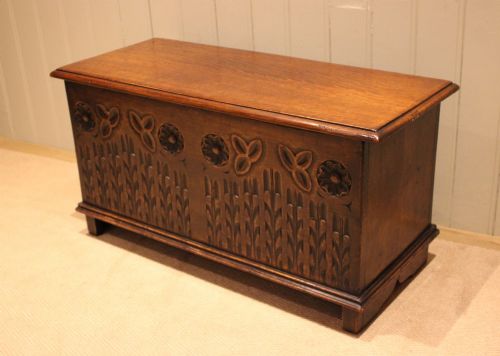
The versions met most frequently on this page date from the seventeenth century through to the Georgian era and the early twentieth century. Styles range from plain utilitarian panels to carved Jacobean designs and mule chests fitted with lower drawers.
Materials and construction
Every piece is constructed primarily from solid oak, chosen for its dense weight and hard-wearing nature. Iron, wrought iron and brass appear in hinges, strapwork and lockplates.
Joinery relies on traditional methods suitable for heavy timber, holding the sturdy panels together across generations of daily use.
Retail Price Guide 2026
Typical UK retail prices for solid oak blanket box, calculated from the Sellingantiques database of over a million retail prices indexed since 2003. This retail price guide relies exclusively on Sellingantiques data; no external sources or auction records are used, so the figures do not describe the wider market.
Some chests retain seventeenth century lockplates designed to baffle intruders with entirely decorative keyholes.
Distinctions in quality
Quality rests on the integrity of the timber and the depth of regional character, such as West Country carving versus plainer panels. Original ironwork and untouched surfaces set superior examples apart from later alterations.
The balance of proportions and the survival of early hinges and lock mechanisms define the finer pieces in this category.
The Solid Oak Blanket Box Glossary
- Mule chest
- A blanket box fitted with one or more drawers beneath the main compartment. This form bridges the gap between the simple chest and the chest of drawers.
- Jacobean
- A style dating from the early seventeenth century characterised by dark oak, geometric mouldings and rigid symmetry. It represents a heavy, architectural aesthetic.
- Wrought iron
- Iron beaten into shape by hand while hot, producing visible hammer marks and robust hinges. It provides durable pivoting joints for heavy lids.
Frequently Asked Questions
What is the difference between a coffer and a blanket box?
A coffer is a traditional term for a heavy storage chest, whereas a blanket box describes the modern domestic use for the same object.
Both terms apply interchangeably to these solid oak pieces depending on whether the listing leans towards historical or functional language.
How do I date a seventeenth century oak box?
Dating relies on construction methods, timber movement and style details like panel carving or iron hinges. Seventeenth century pieces show distinct hand-tool marks and pegged joints.
Later copies or Georgian interpretations introduce different moulding profiles and lighter internal framing that reflect the period of their manufacture.
Can I use a blanket box as a coffee table?
The flat top and sturdy height of these chests make them suitable for use as low tables in a living space. Their solid oak construction easily supports books and everyday items.
Care should be taken to protect the historic timber surface from moisture and direct heat.
What is a mule chest?
A mule chest combines the deep top compartment of a blanket box with base drawers for smaller linens and garments. This layout appeared as makers sought easier access to stored items without lifting the main lid.
Georgian examples often display this practical double-storage format.