
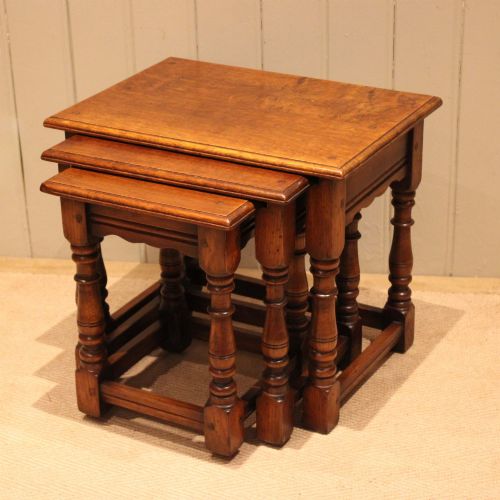
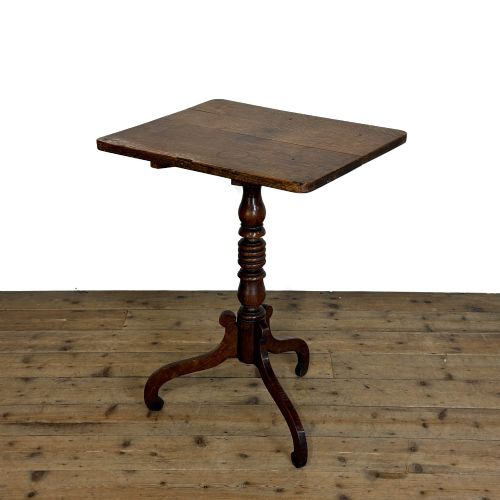
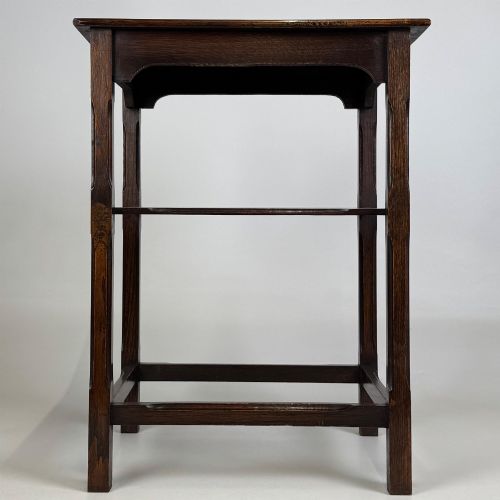
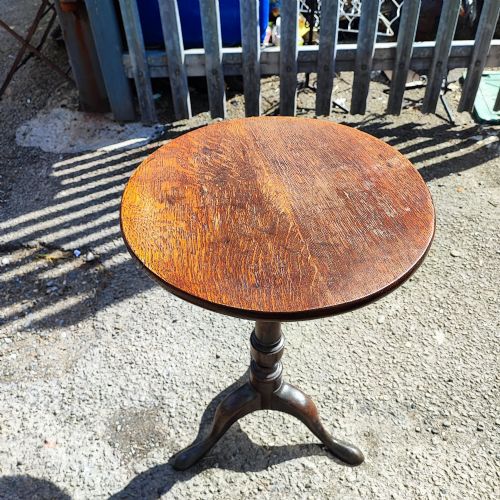
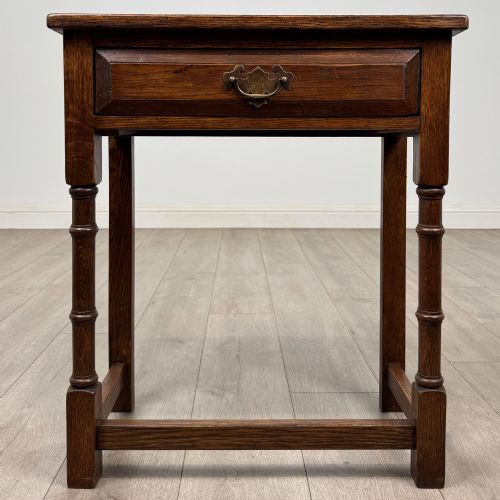
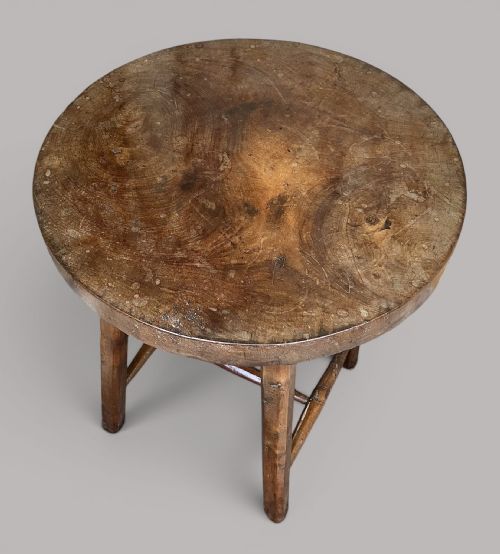
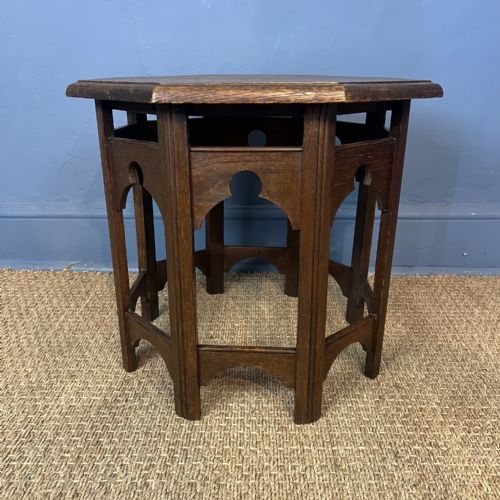
Solid Oak Accent Table
A solid oak accent table brings practical timber and honest construction to a room, ranging from early joint stools to Edwardian side tables.
Solid Oak Accent Table
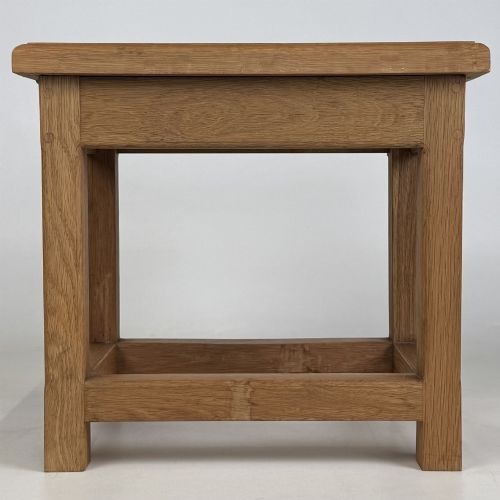
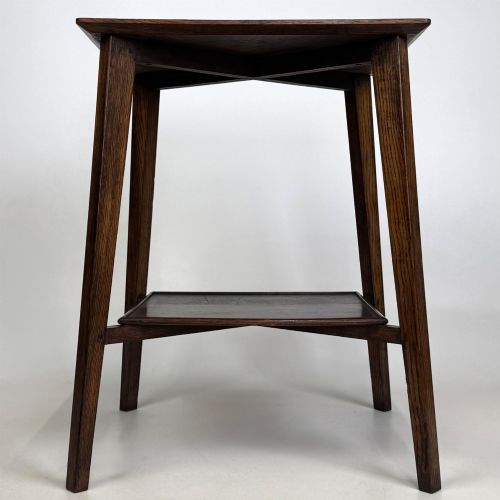
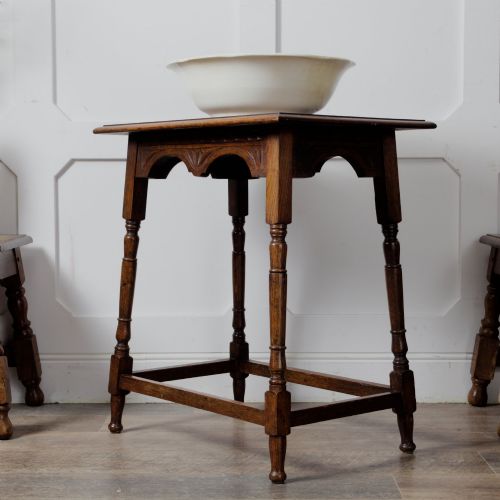
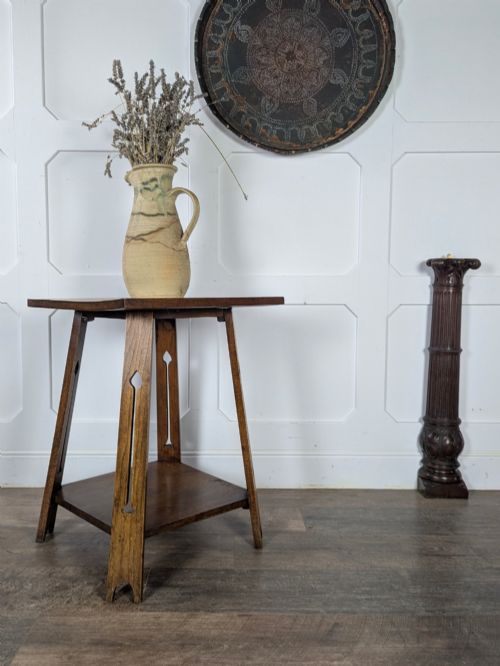
A solid oak accent table covers a diverse group of smaller items designed for occasional placement, including side tables, wine tables, coffee tables, and joint stools. These pieces serve functional roles beside seating or in corners, utilising sturdy domestic timber built to endure heavy daily use.
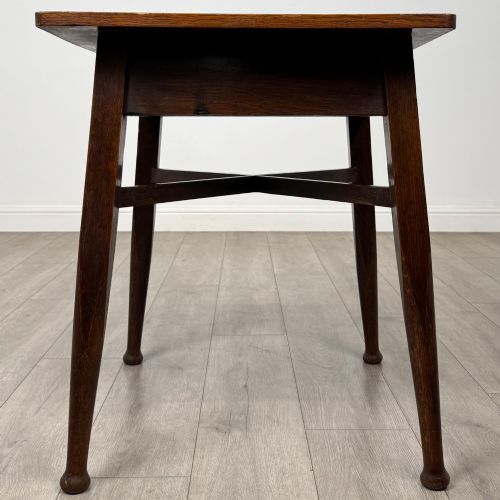
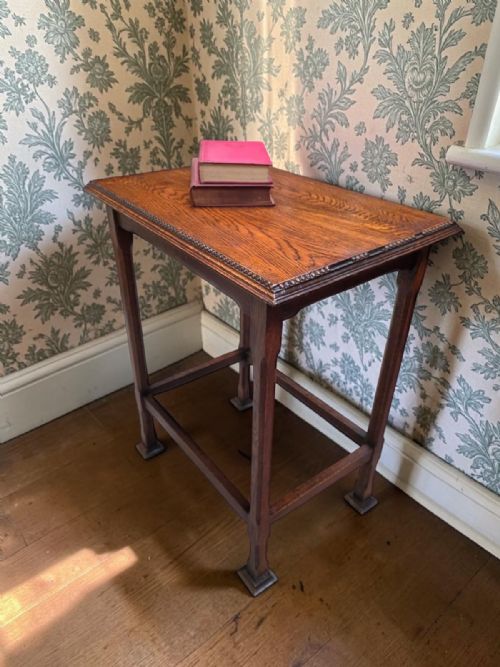
Edwardian side tables and early twentieth-century occasional pieces appear most frequently alongside older formats such as eighteenth-century side tables and seventeenth-century gateleg variants. Makers adapted these compact forms for domestic utility across multiple periods, incorporating turned legs, tilt tops, and structural stretcher bases.
How they were made
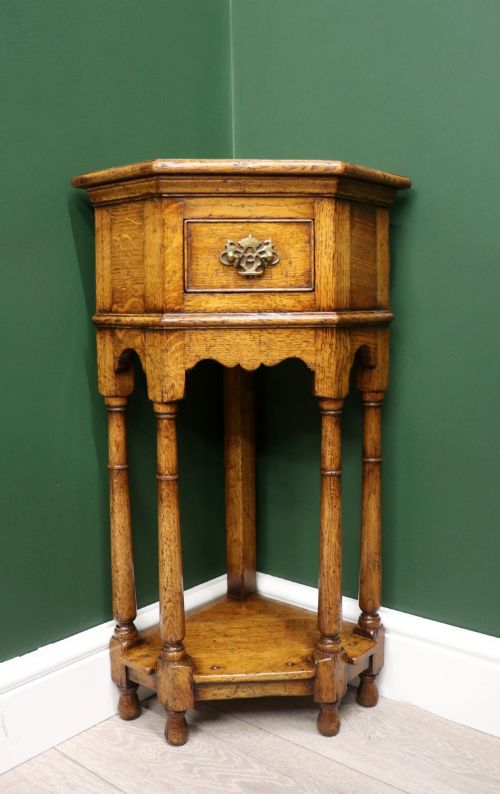
Constructed primarily from solid oak, these pieces frequently incorporate secondary timbers like ash alongside brass hardware details and ebonised wood highlights. Carpenters utilised traditional joining methods, including mortise and tenon joints seen in joint stools and early side tables.
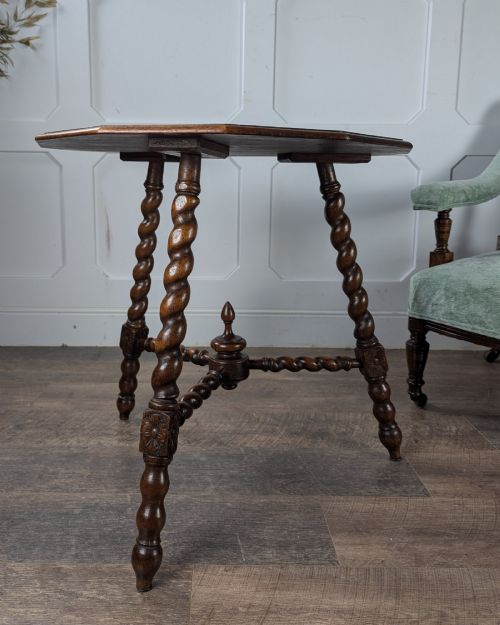
Surfaces display various finishes and treatments, from limed oak and golden tones to carved ornamentation and barley twist turnings. Cabinetmakers shaped structural elements by hand, leaving tool marks and grain patterns that reflect period workshop practices.
Listings feature periods spanning from the 17th century through the Edwardian era and 1920s.
What varies in quality
The standard of a solid oak accent table rests on the selection of the timber and the crispness of its construction rather than surface condition alone. Pieces featuring quarter-sawn oak display stronger ray fleck patterns, indicating superior log selection by the maker.
Structural integrity differentiates simpler utility items from finer examples, particularly in the tightness of joints and the retention of original components. Artistry in hand-carved details or balanced proportions elevates certain period pieces above standard workshop production.
The Solid Oak Accent Table Glossary
- Joint stool
- A sturdy wooden seat or small stand constructed with pegged mortise and tenon joints rather than turned legs. These items date from the seventeenth century and later periods.
- Gateleg table
- A drop-leaf table featuring hinged legs that swing outward to support the folding leaves. This design provides an extendable surface area within a compact footprint.
- Tilt top
- A table mechanism allowing the top to pivot to a vertical position when not in use. This feature enabled easy storage against walls in period interiors.
- Barley twist
- A spiral turning carved into table legs or structural supports. This decorative technique appears frequently on nineteenth-century and revival pieces.
- Limed oak
- A wood finishing technique using a white or pale compound rubbed into the grain. This treatment highlights the porous texture of oak timber.
Solid Oak Accent Table: Frequently Asked Questions
What is a solid oak accent table used for?
These pieces function as small surfaces for lamps, drinks, or decorative objects placed beside seating or in hallways. Their compact proportions allow them to fit into tight spaces while providing sturdy utility.
Historically, formats like wine tables and joint stools fulfilled specific domestic requirements for serving or seating within country houses and parlours.
How do I date an oak side table?
Dating relies on observing construction methods, timber preparation, and stylistic details such as turnings or carved motifs. Hand-cut joinery and visible tool marks often indicate older periods.
Comparative analysis with documented examples helps place pieces into eras like the Edwardian period, the Georgian era, or the seventeenth century.
What is limed oak?
Limed oak is a finish where a pale composition is applied into the open grain of the timber to create a contrasting, lighter appearance. This technique gained popularity during the early twentieth century.
It accentuates the natural grain pattern of solid oak while modifying the overall tone of the surface.
Are these tables solid oak throughout?
The listings comprise items made from solid oak timber, though secondary woods like ash occasionally appear in structural supports or internal components. Construction methods depend on the specific period of manufacture.
Makers selected solid timber to ensure durability and strength across functional forms like coffee tables and occasional stands.