


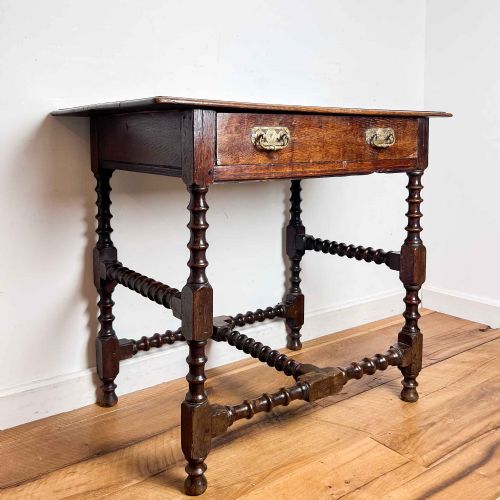


Early Oak Lowboy Table
These early oak lowboy table pieces are low-slung domestic classics that bring quiet, functional warmth to a room.
Early Oak Lowboy Table
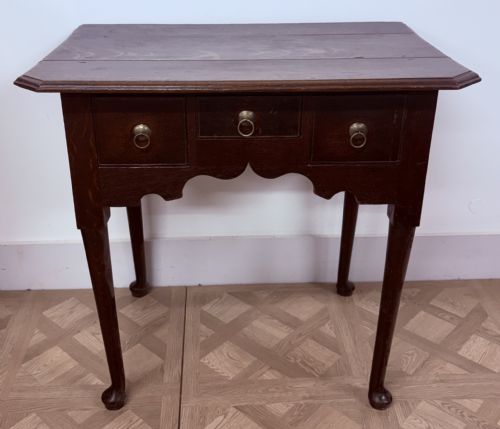
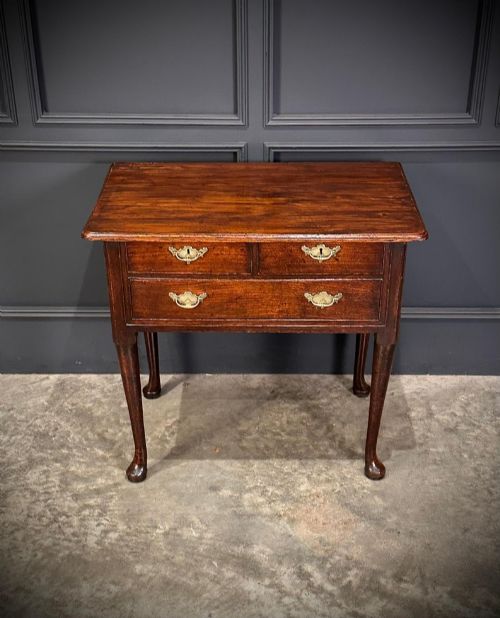
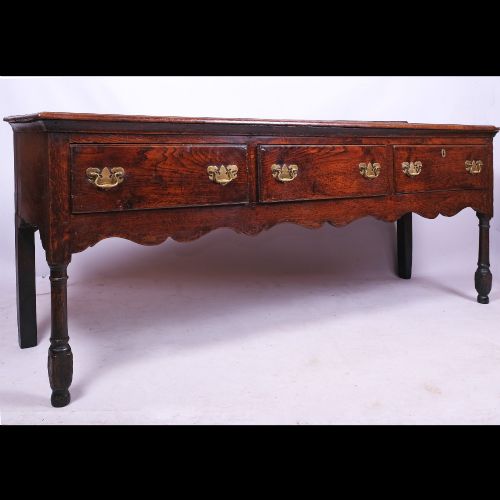
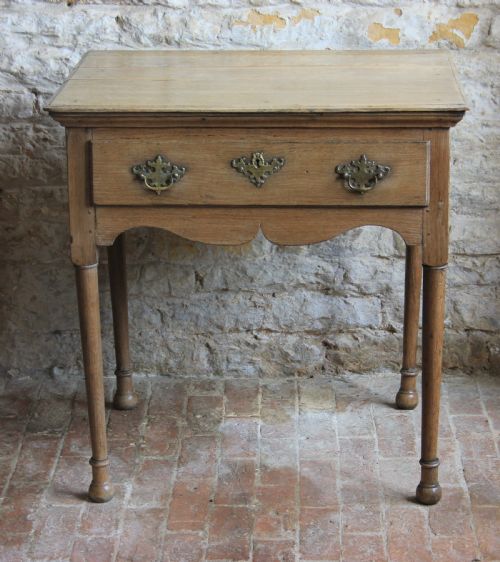
An early oak lowboy table serves as a compact desk, dressing table, or side table, typically featuring drawers set beneath a clean plank top. You will most frequently encounter examples from the eighteenth century, alongside variations spanning the seventeenth to nineteenth centuries.
The form often aligns with Queen Anne or George I styles, showcasing vernacular British craftsmanship from English and Welsh regions. These pieces work well as accent furniture in hallways, bedrooms, and living spaces where a smaller footprint is required.
Makers designed these low tables to hold personal items, writing materials, or grooming accessories close at hand. The combination of timber warmth and modest proportions makes them enduringly practical for modern interiors.
What varies in quality
The refinement of the timber and the crispness of the joinery set finer examples apart from simpler country workshop pieces. Grain patterns in the oak top and the proportion of the legs contribute significantly to the visual balance of the table.
Original brass hardware and the survival of the original surface finish heavily influence the character of the piece. Subtle details such as moulded edge profiles on the top or shaped aprons denote a higher tier of design.
Some regional lowboys feature delightfully uneven drawer depths, hinting at the individual maker measuring by eye rather than a ruler.
The Early Oak Lowboy Table Glossary
- Lowboy
- A small table with drawers, standing on relatively short legs, commonly used as a dressing or side table.
- Dresser base
- The lower section of a kitchen or dining room storage unit, often sharing similar proportions and drawer configurations with lowboys.
- Vernacular
- Furniture built by regional makers using local traditions rather than following strict metropolitan design rules.
- Mortise and tenon
- A traditional woodworking joint where a projecting tongue fits snugly into a corresponding cavity.
- Dovetail
- An interlocking joint used to construct drawer boxes securely without relying on metal fasteners.
Early Oak Lowboy Table: Frequently Asked Questions
What room suits an early oak lowboy table?
These tables fit easily into hallways, bedrooms, and reception rooms as compact side surfaces or writing desks. Their modest height and depth allow them to sit neatly against walls without dominating the floor space.
They also pair well with both traditional and contemporary interiors, offering practical storage through their integrated drawers.
How do I spot a George I lowboy?
George I examples often feature characteristic cabriole legs and pad feet, reflecting the prevailing style of the early eighteenth century. The proportions tend to be robust yet graceful, with careful attention paid to the shaping of the frieze.
Looking closely at the drawer arrangement and leg profile helps distinguish these specific period pieces from later country interpretations.
Were these tables used for writing?
Many lowboys functioned interchangeably as writing tables, dressing tables, or side tables depending on the household needs. The drawer provided a convenient space to store ink, paper, or personal grooming items.
This versatility is why historical listings frequently categorise the same furniture form under multiple names.
What maintenance does oak furniture need?
Solid oak requires minimal upkeep beyond dusting with a soft cloth and occasional treatment with suitable natural wax. Keeping the timber away from direct heat sources and extreme humidity prevents the wood from drying out.
Allowing a natural patina to develop over time preserves the character built up across centuries of domestic use.