





Solid Brass Stand
A solid brass stand provides sturdy utility and warm metal reflection across domestic interiors from the nineteenth and early twentieth centuries.
Solid Brass Stand
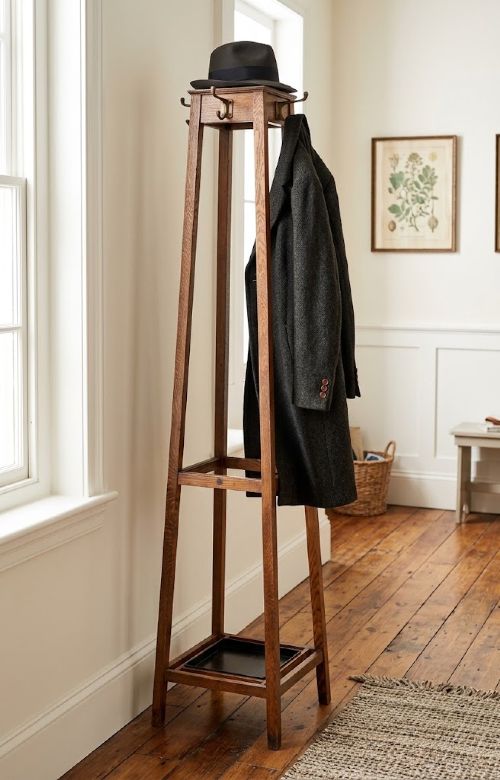
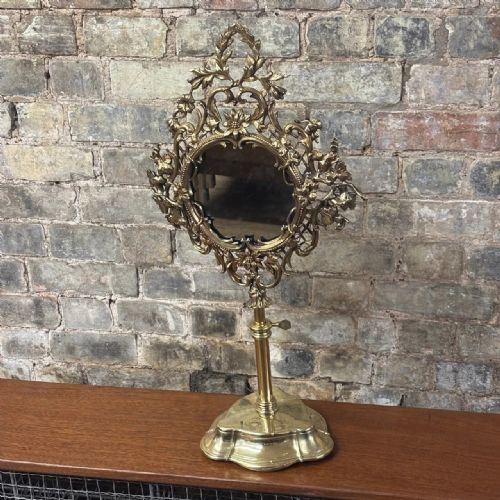
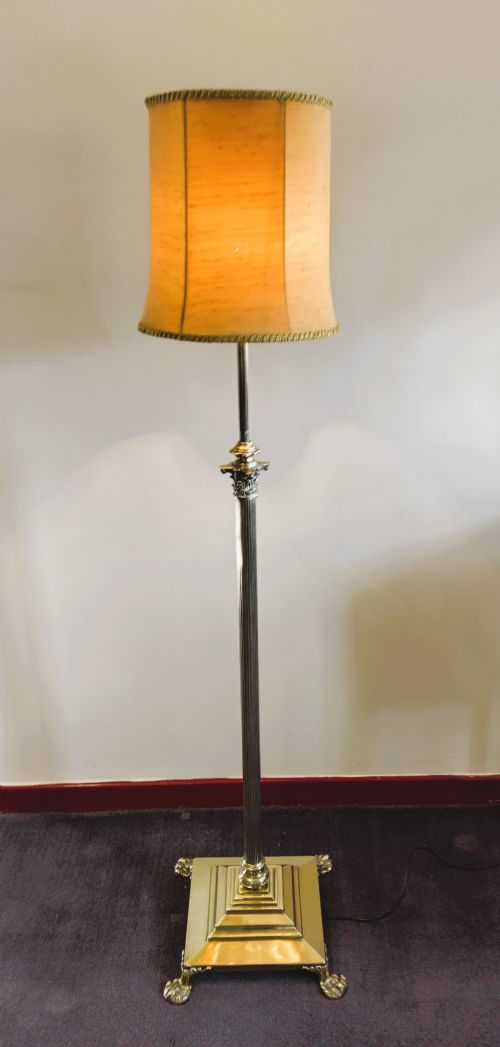
When you search for a solid brass stand, you encounter a varied group of utilitarian and decorative objects spanning the Georgian, Victorian, and Edwardian periods. These pieces frequently take the form of standard lamps, floor lamps, reading lecterns, plant stands, stick stands, and table mirrors.
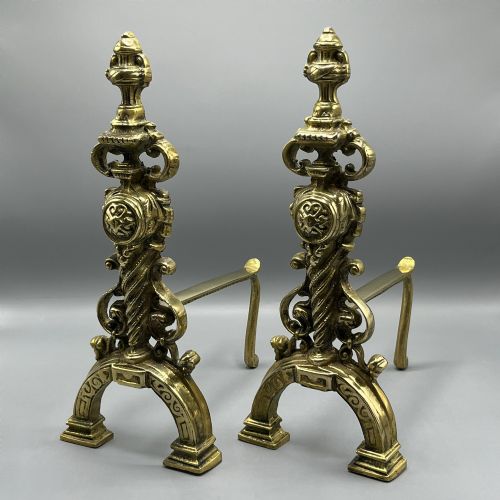
The selection on this page leans heavily toward lighting supports and hallway furniture, moving from heavy Corinthian column standard lamps to decorative fire dogs and plant holders. Origins stretch across English, Scottish, Dutch, and Swedish workshops, utilising metalwork traditions from the seventeenth century through to the interwar decades of the twentieth century.
How They Were Made
Craftsmen utilised both cast and sheet brass, often combining solid brass components with oak, walnut, or mahogany frames in hybrid furniture pieces like umbrella stands and hall furniture. Casting methods allowed for intricate decorative motifs, seen clearly in Louis XV revival patterns and fluted Corinthian columns.
Surface finishes range from polished bronze to patinated brass, while structural stability was achieved through weighted bases or timber mounts. Secondary materials such as glass, fabric, and cast iron appear alongside the primary metalwork to complete functional assemblies like oil lamps and reading stands.
Solid Brass Stand Retail Price Guide 2026
Typical asking prices for solid brass stand among the pieces listed under this phrase on Sellingantiques today, from the lower quarter to the upper quarter. They describe what is for sale here now, not the wider market.
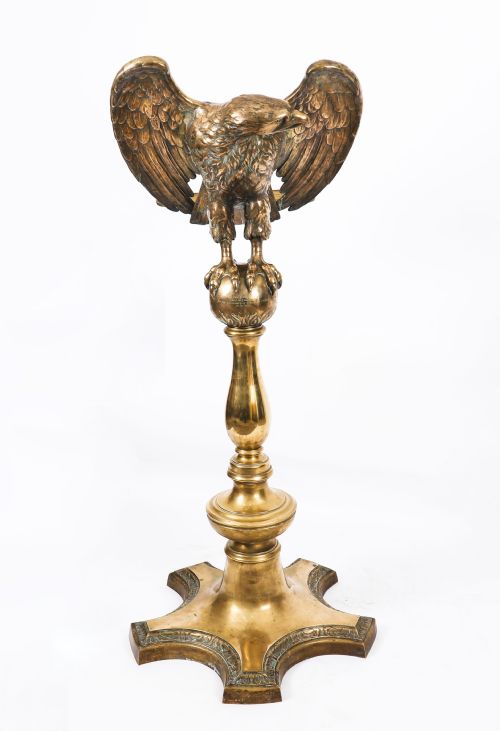
Church furnishings cross over into domestic spaces here via an antique Scottish ecclesiastical brass eagle lectern.
What Varies in Quality
Substantial weight and the precision of the casting separate standard examples from finer productions. Superior items display crisp detailing in floral or classical ornamentation without surface pitting or excessive smoothing from old cleaning.
Integrity of construction defines the higher end of the range, particularly in adjustable mechanisms for telescopic standard lamps and secure joinery on pieces combining brass with oak or walnut. The presence of maker marks or attribution to established firms elevates specific examples.
Jas. Shoolbred·Whytock & Reid·Messenger·J.T.& Co
The Solid Brass Stand Glossary
- Corinthian column
- A classical architectural column form featuring ornate acanthus leaf capitals, frequently utilised on tall standard lamps from the Victorian and Edwardian eras.
- Fire dogs
- Metal supports placed within a hearth to hold logs, often cast in solid brass and paired with decorative andirons.
- Standard lamp
- A tall floor-standing lamp base designed to illuminate a room, commonly engineered with telescopic height adjustment during the early twentieth century.
- Lectern
- A slanted reading stand designed to hold books or folios, sometimes executed in brass or ecclesiastical bronze.
- Stick stand
- A hall furniture piece designed to hold umbrellas and walking sticks, combining a solid brass frame with drip trays.
Solid Brass Stand: Frequently Asked Questions
What periods do these metal stands cover?
The available pieces span from the Georgian and Victorian eras through the Edwardian period and into the 1930s and 1940s.
Most items date from the nineteenth and early twentieth centuries, reflecting revival styles such as Neoclassical and Louis XV alongside Arts and Crafts designs.
How do I identify a standard lamp?
Standard lamps are tall floor supports designed to hold lighting fixtures, frequently featuring weighted circular bases and sometimes telescopic height adjustment.
They appear widely in Edwardian and Victorian forms, often constructed entirely from solid brass or mounted on timber.
Were these items used for lighting?
Many solid brass stands served specific lighting functions, including column candlesticks, oil lamps, and tall electrical standard lamps.
Metal construction provided the necessary weight and stability required to support heavy burners or candles safely.
What materials accompany the metalwork?
While brass is dominant, numerous pieces incorporate solid oak, walnut, or mahogany, particularly in hall furniture and umbrella stands.
Secondary elements like glass shades, fabric components, and cast iron ballast weights also appear across the inventory.