




Snow Landscape Fine Art
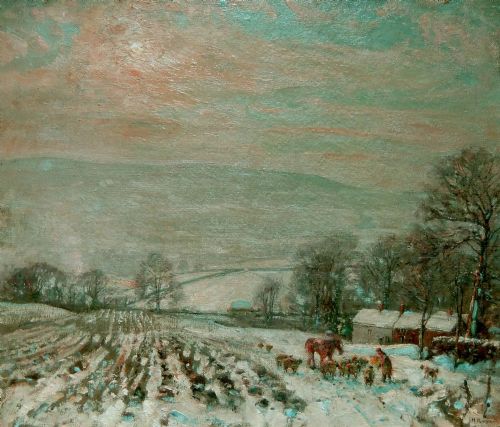
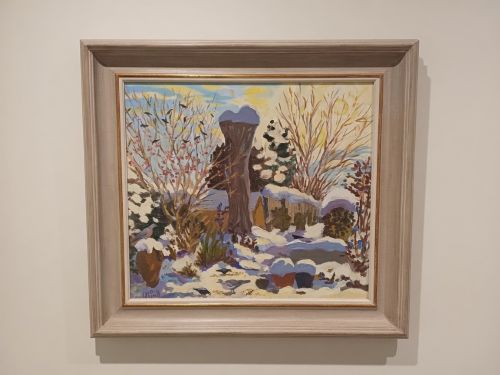
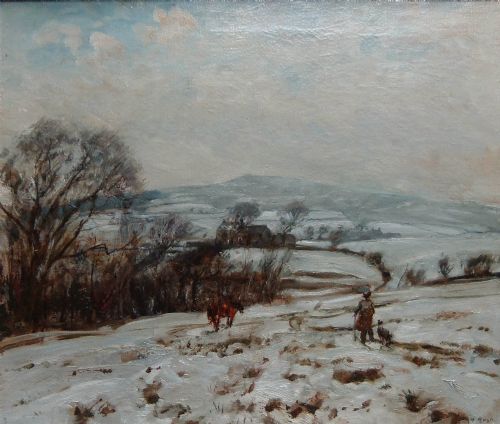
Snow landscape fine art captures winter light and freezing weather across canvas and paper through the eyes of British, French, and Dutch painters.
Snow Landscape Fine Art
Snow landscape fine art brings together wintry scenes and frosty rural views rendered in oil and watercolour. Buyers browsing this selection encounter depictions of winter feeding, frozen fields, and stagecoaches making their way through ice and snow.
The works span from the nineteenth century through the 1930s up to later modern periods. Most examples rely on traditional oil on canvas or framed watercolour, capturing atmospheric chill and muted winter light.
Regional British subjects feature prominently alongside Dutch winter scenes and French compositions. Artists capture specific locations such as Wharfedale, Swaledale, and Nesfield alongside broader Canadian vistas.
Materials and methods
Painters applied oil paint to canvas or wood panels, building up thick layers to render heavy snow and frosty skies. Others utilised watercolour and gouache on paper to achieve lighter, transparent washes for frozen atmosphere.
Completed paintings found themselves secured within traditional wood frames designed to protect the edges of the canvas and complement the muted palette of the artwork.
Listings feature works executed in oil paint, watercolour, and gouache on canvas, wood, and paper.
Assessing quality and execution
Quality rests in the artist's handling of light against white snow and the convincing depth of wintry atmospheric conditions. Stronger examples demonstrate confident brushwork that defines the chill of the air and the weight of snow upon the land.
The subtlety of tone in shadowed snow separates standard decorative works from accomplished pieces. Superior execution captures the exact grey and blue hues of winter daylight rather than relying on flat white paint.
Herbert Royle·Lucy Pratt·Gaston Cornil·Ernest Higgins Rigg·John Richard Worsdale·Emily M. Paterson·George Augustus Williams·William Cave Day
The Snow Landscape Fine Art Glossary
- Oil paint
- A slow-drying medium consisting of pigments suspended in a drying oil, typically linseed oil. This medium allows artists to build rich textures and deep tones suitable for heavy winter skies.
- Watercolour
- A paint wherein the colour pigments are suspended in a water-soluble vehicle. It produces luminous washes that lend themselves well to misty winter landscapes on paper.
- Gouache
- An opaque water-based paint that includes a white pigment added to watercolour for density. Artists use it to add solid highlights of snow to paper works.
- Impressionism
- A nineteenth-century movement characterised by relatively small, thin yet visible brush strokes and an emphasis on accurate depiction of light. This style suits the shifting appearance of winter daylight.
- Wood frame
- A rigid structural case fitted around a painting to support and exhibit the artwork. Period frames often feature gilt or toned wooden mouldings appropriate to the era.
Snow Landscape Fine Art: Frequently Asked Questions
What periods do these snow paintings cover?
The works span from the nineteenth century through the 1920s and 1930s, extending to pieces created later than 1960.
These dates reflect the active periods of the artists who recorded winter scenes across Britain, France, and Canada.
Which materials are most common?
Oil paint on canvas and wood form the majority of the works, alongside watercolours and gouache on paper.
Most surviving pieces retain their original or period wood frames.
Are these works signed by the artists?
Many of the paintings and watercolours are attributed to named artists such as Herbert Royle and George Augustus Williams.
Signatures or recorded provenance help attribute works to specific practitioners of the period.
How should I care for a watercolour snow scene?
Watercolour and gouache works on paper require protection from direct sunlight to prevent the fading of subtle pigments.
Keeping them behind glass with acid-free mounts preserves the paper and the delicate washes.