



Small Wood Panel Painting
These small wood panel painting examples offer intimate glimpses into past eras, prized for their portability and rich brushwork.
Small Wood Panel Painting
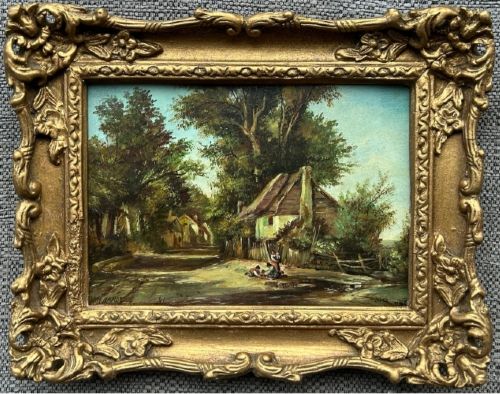
A small wood panel painting brings together historical oil techniques and compact wooden supports, spanning from the seventeenth century through the mid-twentieth century. Buyers encounter works attributed to the English School, German makers, and Italian workshops, alongside British Impressionism and French Neoclassical aesthetics.
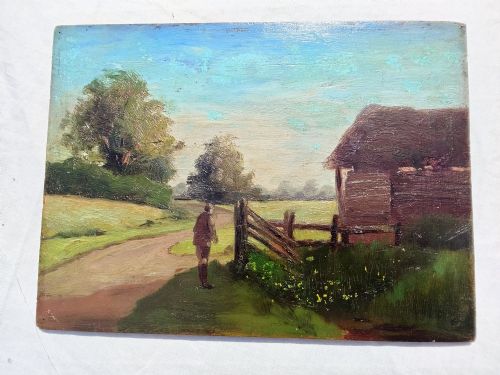
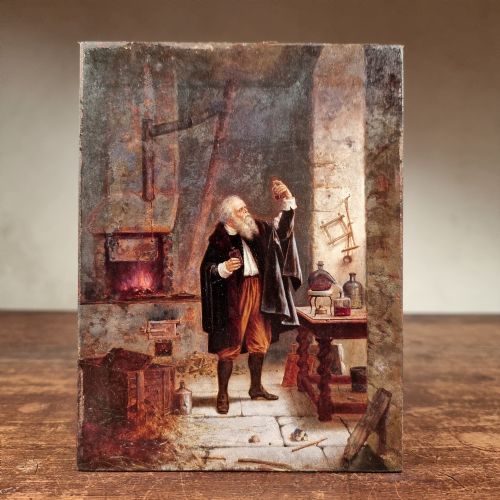
The format encompasses miniature portraits of figures like Napoleon Bonaparte, pastoral landscapes, and still life compositions. Many pieces arrive framed in brass or painted wood, reflecting styles from the Victorian and Aesthetic periods.
While some pieces remain unsigned, others carry signatures from artists such as William Howard Hardy, Kershaw Schofield, and Fernando Del Basso. Scale varies from intimate miniatures to slightly larger boards depicting boats, seascapes, and campfires.
Materials and Construction
Makers applied oil paint directly onto prepared wood panels, wooden boards, or miniature supports. This firm substrate allowed artists to build rich layers of pigment without the flex associated with stretched canvas.
Framing materials included cast brass and decorative painted wood, which provided structural protection and a finished presentation for these portable works.
Small Wood Panel Painting Retail Price Guide 2026
Typical asking prices for small wood panel painting among the pieces listed under this phrase on Sellingantiques today, from the lower quarter to the upper quarter. They describe what is for sale here now, not the wider market.
Napoleon Bonaparte watches quietly from a nineteenth-century miniature portrait, sharing space with tranquil nineteenth-century campfires and Capri boats.
Assessing Quality
The refinement of brushwork and the clarity of the composition separate standard decorative works from accomplished artistic output. Subtle handling of light in landscapes or expressive detail in miniature portraits indicates a higher level of execution by the painter.
The stability of the wooden support and the preservation of the original oil paint layer dictate the overall integrity of the piece. Works that retain their early surface character without excessive intervention command greater attention from collectors.
William Howard Hardy·Fernando Del Basso·Kershaw Schofield·Sir John Everett Millais
The Small Wood Panel Painting Glossary
- Oil paint
- A slow-drying medium consisting of pigment particles suspended in a drying oil, typically linseed. This medium allows for smooth blending and rich depth of colour.
- Wood panel
- A rigid wooden support used by artists instead of canvas. These surfaces provide a stable base that resists the sagging common in fabric supports over long periods.
- Miniature painting
- A small-scale artwork created with precise detail. These pieces were often designed for private contemplation or portable display.
- Aesthetic period
- A late nineteenth-century movement emphasising visual beauty over narrative or moral themes. Works from this time focus on harmonious colour and design.
Small Wood Panel Painting: Frequently Asked Questions
What periods do these paintings cover?
The available selection spans from the seventeenth century through to mid-century modern examples.
Most pieces originate from the nineteenth century, including Victorian and Aesthetic period creations.
Are these paintings signed by artists?
Certain panels bear artist signatures or attributions to specific regional schools.
Others remain unsigned, reflecting workshop traditions or anonymous production.
What subjects appear on the panels?
Common subjects include British and European landscapes, coastal scenes with boats, and still life compositions.
Miniature portraits of historical figures also occur alongside genre scenes of couples by lakes.
How should I display them?
These compact works suit small wall spaces or tabletop display cabinets.
Their solid wood construction makes them stable, though they require protection from direct sunlight and fluctuating humidity.