

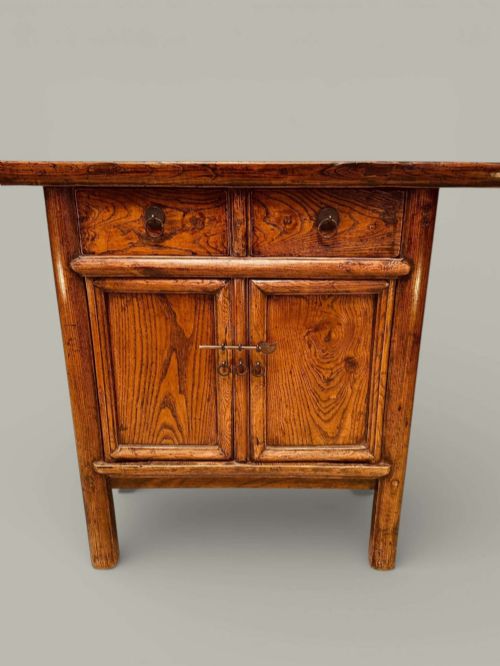
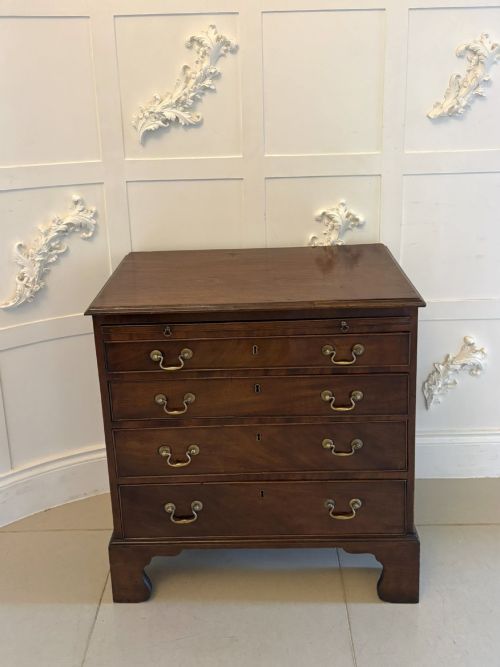
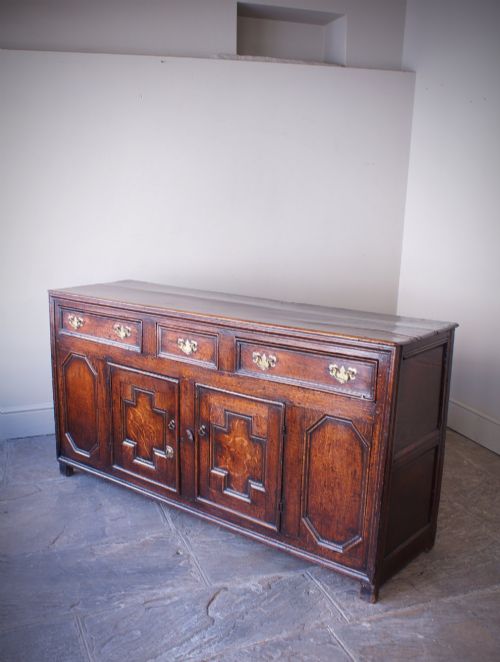
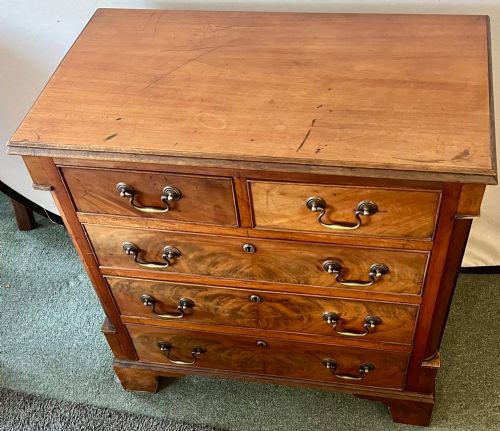



Small Wood Dresser
A small wood dresser brings compact storage and rich timber grain to domestic rooms, spanning Georgian forms and later pine or oak examples.
Small Wood Dresser
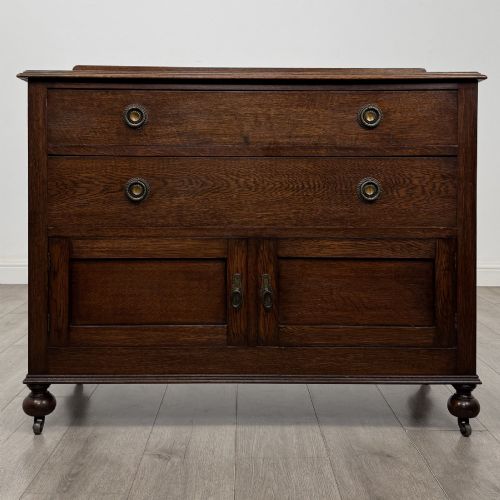
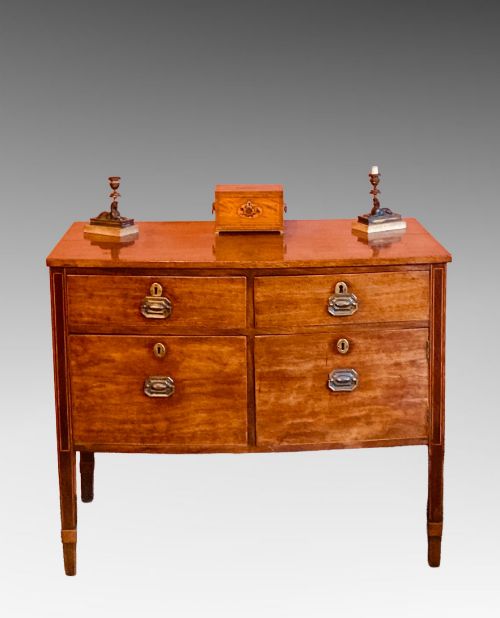
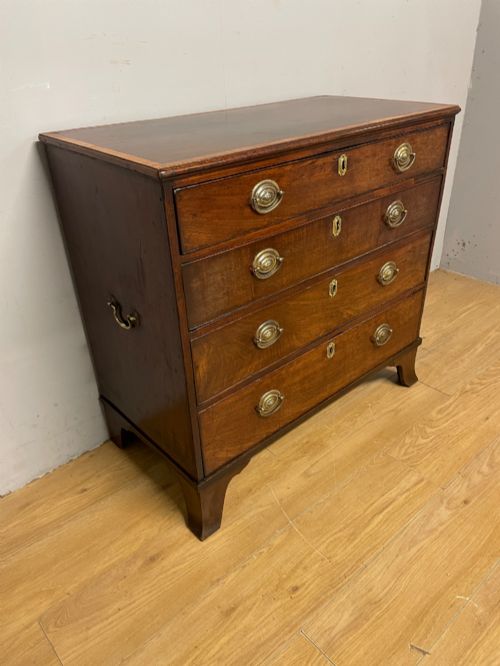
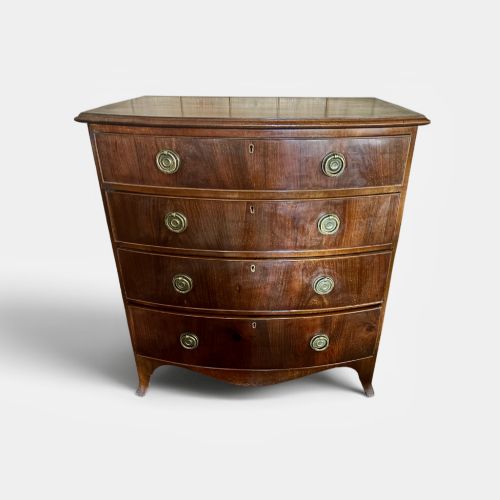
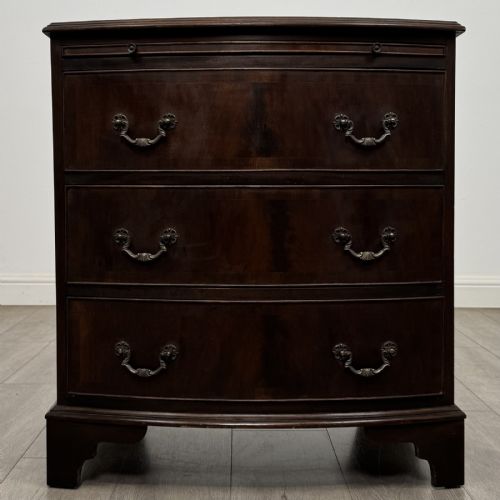
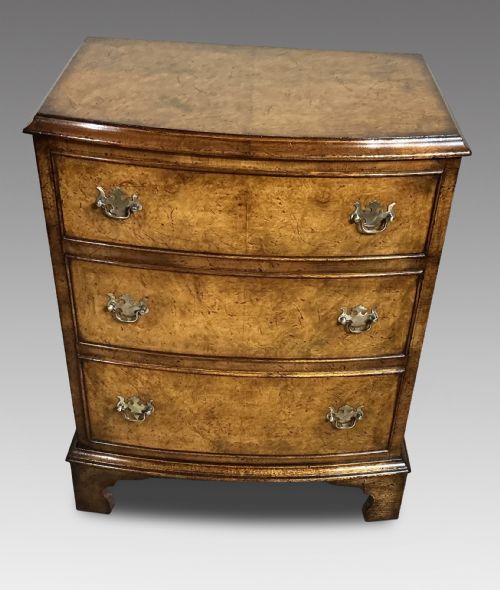
When searching for a small wood dresser, buyers encounter a diverse selection of low storage furniture spanning centuries of cabinet making. The pieces range from Georgian mahogany chests of drawers and bachelor chests with brushing slides to oak dresser bases and pine chiffoniers.
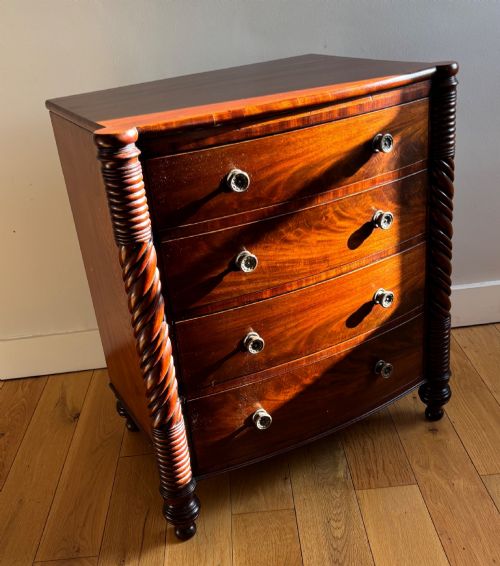
The version most frequently met on this page is the Georgian mahogany chest of drawers, often constructed with bow fronts or bracket feet. Alongside these sit side tables, elm dressers, and French fruitwood examples designed for compact interiors.
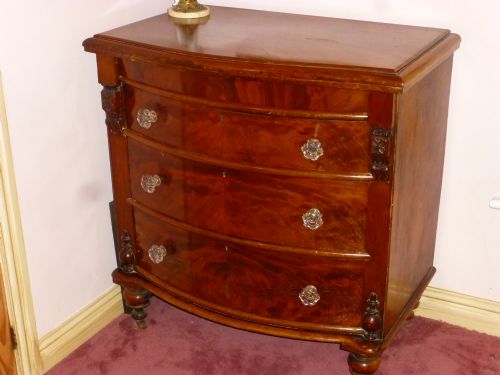
Periods represented stretch from the late seventeenth century through the Victorian era and into the early twentieth century. These domestic items served varied functions in bedrooms and living spaces, offering surface tops alongside tiered drawer storage.
How they were made
Cabinet makers utilised dense hardwoods such as mahogany, walnut, oak, and yew, often selecting flame mahogany veneer for decorative fronts. Secondary timbers like pine appear in internal drawer linings and carcass backs.
Construction methods relied on traditional joinery, including hand-cut dovetails for drawer boxes and mortise and tenon frames for larger bases. Surfaces were finished with polished wax or polish, preserving the natural figure of the wood.
Small Wood Dresser Retail Price Guide 2026
Typical asking prices for small wood dresser among the pieces listed under this phrase on Sellingantiques today, from the lower quarter to the upper quarter. They describe what is for sale here now, not the wider market.
Listings feature timbers including mahogany, oak, walnut, yew, fruitwood, ash, and pine across periods spanning the seventeenth to the twentieth century.
What varies in quality
The standard of timber selection largely dictates quality, separating finely figured mahogany or untouched walnut surfaces from plain, utility-grade boards. Matching veneers across drawer fronts and retaining original handles or bracket feet significantly elevate a piece.
Structural integrity and timber preservation define the upper tier of surviving examples. Retaining original patination, smooth drawer action, and untouched backboards distinguish superior cabinet work from heavily restored items.
The Small Wood Dresser Glossary
- Brushing slide
- A pull-out shelf fitted above the top drawer of a chest, historically used for writing or grooming. It slides flush into the cabinet frame when not in use.
- Bow front
- A convex curved cabinet front popular during the Georgian and Regency periods. This shape softens room angles and accentuates the grain of mahogany veneers.
- Bracket foot
- A structural support foot shaped like an L-bracket, standard on eighteenth-century chests of drawers. They often take ogee or plain shaped profiles.
- Caddy top
- A raised, moulded tabletop profile resembling the lid of a tea caddy. Cabinet makers applied this detail to fine Georgian chests.
- Pot board
- An open lower shelf fitted beneath a dresser base. It provided space for storing heavy earthenware pots and kitchen utensils.
Small Wood Dresser: Frequently Asked Questions
What is a bachelor chest?
A bachelor chest is a small chest of drawers featuring a pull-out brushing slide directly beneath the top surface. These compact pieces date predominantly from the eighteenth century.
Cabinet makers designed them for gentlemen requiring a small writing surface and personal storage in chambers. They combine drawer capacity with a versatile fold-down or pull-out desk feature.
How do I identify a Georgian chest?
Georgian chests typically display proportioned timber construction, hand-cut dovetails, and bracket or plinth feet. They often utilise solid mahogany, walnut, or oak with polished timber finishes.
Examining the drawer linings and backboards reveals period construction methods. Look for irregular hand-sawn boards and pegged joints rather than modern mechanical fixings.
Where should I place a small dresser?
These compact storage units fit well in hallways, bedrooms, and smaller living rooms where floor space is limited. Their shallow depths allow them to function as side tables or bedside storage.
Ensure the room humidity remains stable to protect antique timber veneers. Positioning them away from direct heat sources prevents wood shrinkage and splitting.
What is a pot board dresser?
A pot board dresser is an open-based storage unit featuring a low shelf beneath the main surface. Early examples originated in country houses for kitchen utility use.
The lower shelf, or pot board, allowed cooks to store heavy ceramic vessels close at hand. Today, these open bases serve well in dining rooms for displaying decorative ceramics.