
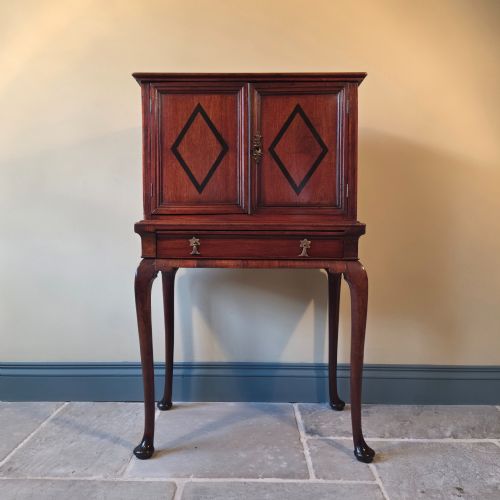
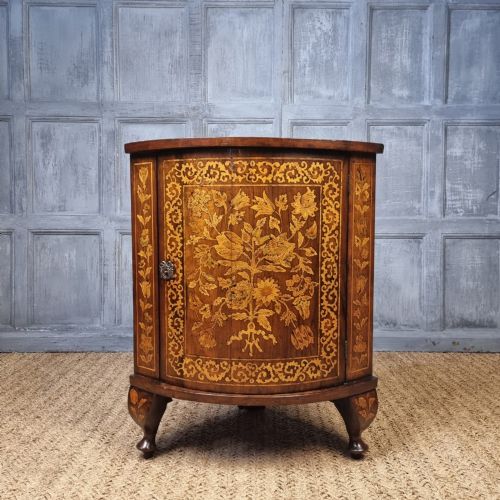


Small Walnut Standing Cabinet
A small walnut standing cabinet brings rich timber grain and compact proportion to a room, offering practical display and storage.
Small Walnut Standing Cabinet
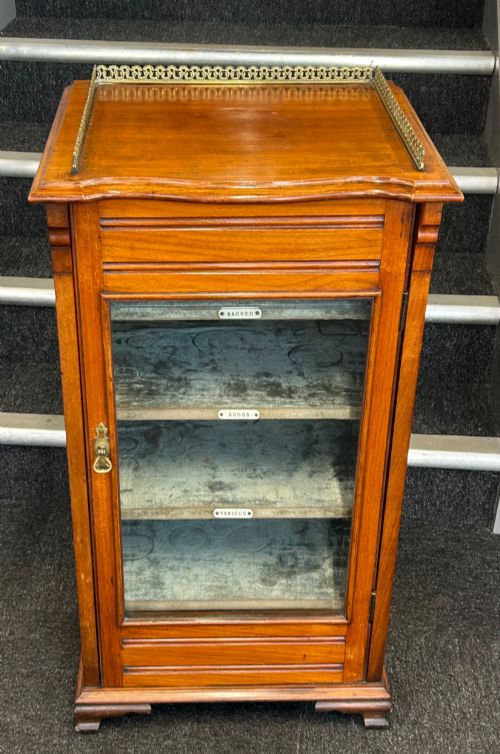
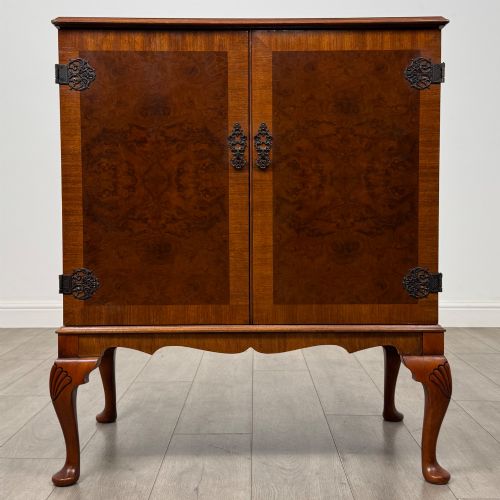
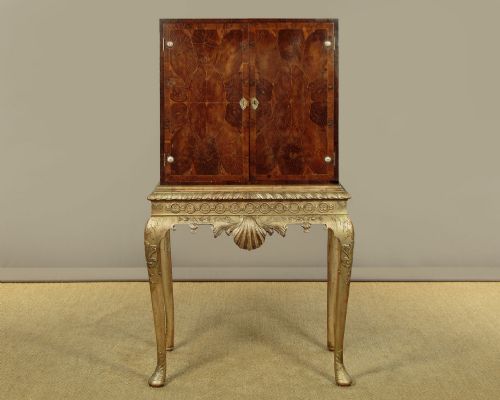
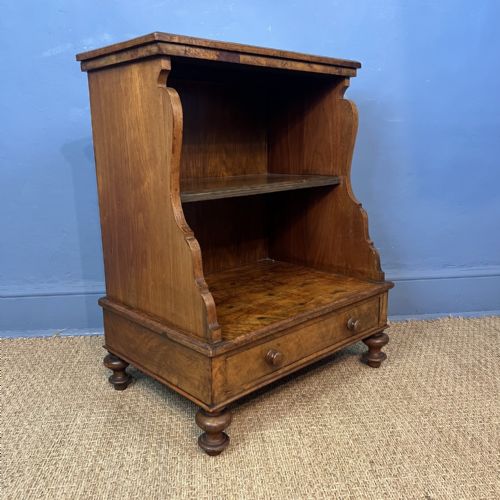
A small walnut standing cabinet spans several centuries of design, appearing in forms such as music cabinets, open bookcases, corner cupboards, and writing bureaux. These pieces range from eighteenth-century examples to Victorian, Edwardian, and twentieth-century interpretations.
The most common versions encountered are music cabinets, open bookcases, and corner cupboards fashioned in figured or burr walnut. Many pieces adopt revival aesthetics, drawing directly on Queen Anne, William and Mary, or Spanish Renaissance styles.
Standing entirely on the floor rather than mounting to a wall, these compact units serve diverse domestic functions while displaying the characteristic dark warmth of walnut timber.
How they were made
Cabinetmakers utilised solid walnut and decorative veneers like burr walnut, often highlighting the natural figure of the wood across doors and drawer fronts. Secondary timbers provide structural stability to the carcasses while exterior surfaces receive polish to deepen the grain.
Marquetry inlay, brass hardware, and glass panels frequently accompany the woodwork, alongside ebonised wood details or silver leaf applications. Joinery techniques reflect the period of production, from eighteenth-century carcase construction to later Edwardian and twentieth-century manufacturing methods.
A shaving stand waits patiently for whiskers that vanished a century ago.
What varies in quality
The choice of timber creates a primary distinction, as highly figured burr walnut and intricate marquetry inlay elevate the visual presence of a cabinet compared to plain timber surfaces. The crispness of carved details and the finesse of brass mounts further separate standard production from superior work.
Proportion and structural integrity define the architectural success of each piece, with refined revival styles demonstrating closer adherence to historical cabinetmaking standards than simpler commercial outputs.
The Small Walnut Standing Cabinet Glossary
- Burr walnut
- A prized wood veneer harvested from the growth warts of walnut trees, yielding complex swirling grain patterns. This material is frequently used on the main focal surfaces of fine cabinets.
- Marquetry
- Decorative veneer work arranged in geometric or pictorial patterns across the surface of furniture. Craftsmen cut contrasting woods and materials to form intricate designs.
- Ebonised wood
- Timber treated with a chemical stain or finish to imitate true ebony. This dark contrast material frequently outlines panels or frames doors on Victorian and later pieces.
- Music cabinet
- A specialised storage item fitted with internal compartments or drop-down shelves designed for sheet music. These upright pieces often feature glazed or panelled doors.
- Bureau
- A sloping desk form that opens to reveal writing surfaces and small internal pigeonholes or drawers. They frequently stand upon supporting legs or drawer bases.
Small Walnut Standing Cabinet: Frequently Asked Questions
What periods do these cabinets come from?
The selection includes pieces spanning from the eighteenth century through the Victorian and Edwardian eras into the twentieth century. Revival designs also draw inspiration from earlier periods like William and Mary.
Craftsmanship methods and hardware details generally align with the specific decades in which the items were manufactured.
How do I care for walnut furniture?
Walnut timber benefits from placement away from direct heat sources and strong sunlight to prevent the wood from drying or fading. Regular dusting with a soft, dry cloth maintains the polished finish.
Application of appropriate furniture wax preserves the moisture and natural sheen of the timber over time.
Where were these cabinets used?
These compact standing units were designed for various residential rooms, including sitting rooms, libraries, and bedrooms. Corner cupboards made efficient use of awkward domestic angles.
Music cabinets and bookcases kept specialised collections organised within easy reach in parlour settings.
How can I tell a revival piece from an older one?
Revival items, such as those made in the Queen Anne or William and Mary style during the Victorian or Edwardian periods, combine historical forms with the construction techniques of their actual manufacturing date. Secondary woods, drawer linings, and screw types offer clear clues to the true age of the piece.
Stylistic proportions can also differ subtly between an original eighteenth-century cabinet and a twentieth-century interpretation.