



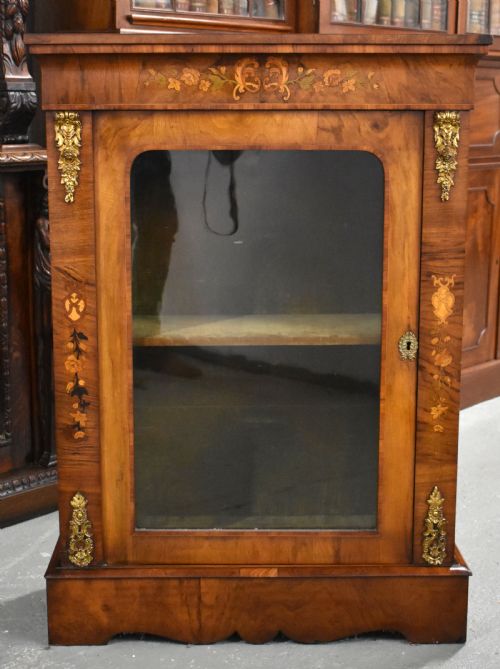


Small Walnut Display Case
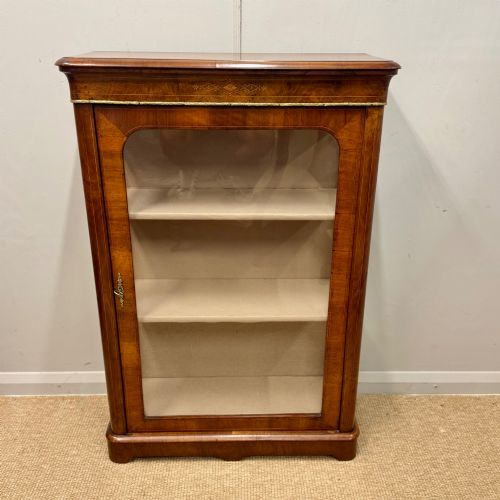
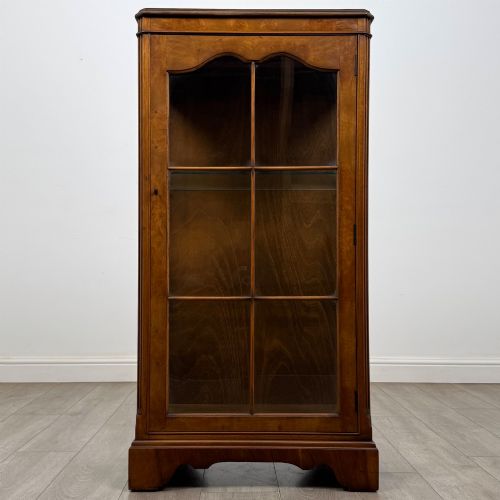
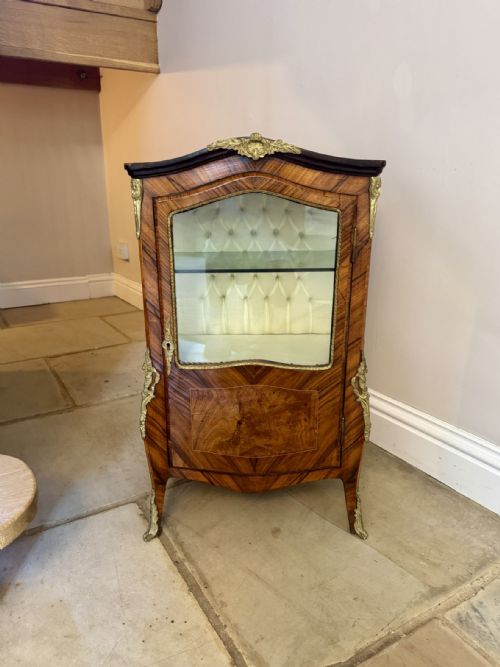
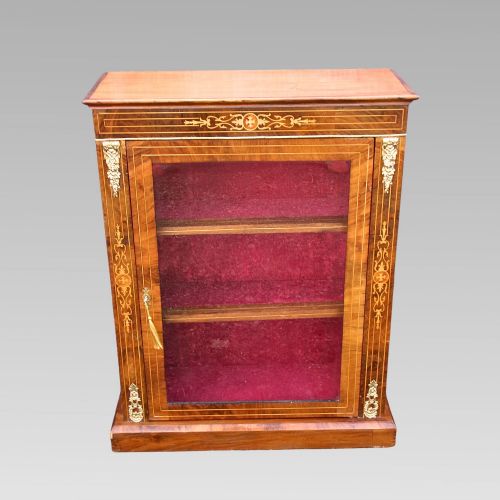
These small walnut display case pieces are compact glazed cabinets designed to showcase treasures while protecting them from dust.
Small Walnut Display Case
A small walnut display case brings together rich timber and clear glazing in compact forms designed to sit neatly within a room without dominating the floor space. Buyers searching for a small walnut display case will encounter Victorian pier cabinets, Edwardian bookcases, and compact vitrines that serve both storage and exhibition purposes.
The selection ranges from mid nineteenth century Victorian examples featuring burr walnut veneers and marquetry through to Edwardian pieces and Art Deco corner cabinets. Pier cabinets and table cabinets dominate the forms, offering glazed doors to keep collections visible and secure.
How they were made
Cabinet makers utilised dense hardwood timbers, selecting plain and burr walnut veneers to create rich grain patterns across the exterior surfaces. Fine brass mounts, delicate marquetry, and gilt ormolu details embellish the facades of these polished timber enclosures.
Interiors often incorporate fabric linings such as velvet, alongside adjustable wooden or glass shelving. Glazing panels are fitted into wooden framework doors to secure the contents while maintaining complete visibility from the exterior.
What varies in quality
The standard of timber selection and veneer matching defines the visual weight of the piece, with burr walnut yielding intricate natural patterns. Superior examples display meticulous inlay work and cohesive mounting, whereas simpler pieces rely solely on the polished grain of the wood.
Hardware integration and structural joinery separate standard production from exceptional craftsmanship. The precision of the door fit and the refinement of internal fabric linings indicate the level of attention dedicated during manufacture.
The Small Walnut Display Case Glossary
- Burr walnut
- A prized wood veneer harvested from the growth warts of walnut trees, displaying swirling and mottled grain patterns. It adds distinct decorative texture to cabinet doors and panels.
- Pier cabinet
- A narrow upright cabinet designed specifically to fit the wall space between windows. These Victorian forms typically feature single glass doors and flat backs.
- Ormolu
- Gilded bronze ornamentation applied to furniture mounts and feet. This technique adds metallic contrast against dark walnut timber surfaces.
- Marquetry
- The art of applying small pieces of veneer to form decorative patterns and pictures. It appears frequently on Victorian cabinet friezes and doors.
- Vitrine
- A glass-fronted cabinet designed for displaying fine objects and curiosities. These pieces often feature glass side panels to maximise light entry.
Small Walnut Display Case: Frequently Asked Questions
What is a pier cabinet?
A pier cabinet is a narrow upright piece designed to stand against the wall between windows. These cabinets generally feature a single glazed door and flat sides.
They emerged in popularity during the nineteenth century to utilise tight architectural spaces while providing display room for ceramics and glassware.
How do I clean walnut furniture?
Dust the timber regularly with a soft, dry cloth to prevent accumulation in carved details and veneer edges. Avoid commercial silicone sprays that can build up and dull the polished surface over time.
Apply a traditional beeswax sparingly if the wood appears dry, buffing it gently to maintain the natural sheen of the walnut.
Are the shelves adjustable?
Many cabinets feature adjustable wooden or glass shelving supported on small brackets within the interior. This allows collectors to alter the shelf heights to accommodate objects of varying sizes.
Earlier pieces may have fixed shelving positions built directly into the cabinet carcass during manufacture.
What is burr walnut?
Burr walnut is a specialised wood veneer taken from the distorted growth knots of walnut trees. The resulting grain exhibits dense, swirling patterns that create a highly decorative surface.
Cabinet makers used these dramatic veneers on primary display panels to catch the eye and signal superior craftsmanship.