

Small Victorian Nightstands
Small Victorian nightstands are compact timber bedside pieces built for nineteenth-century chambers, offering useful surface space and discrete storage next to a bed.
Small Victorian Nightstands
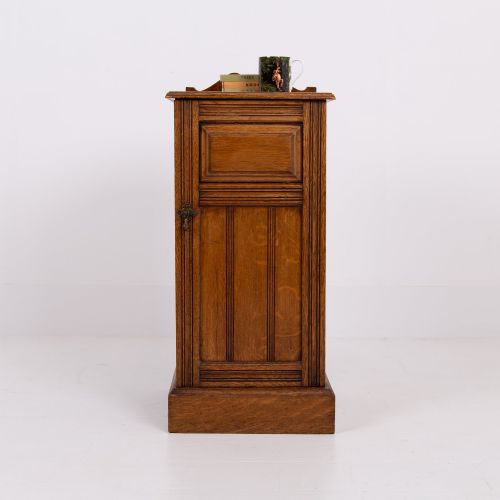
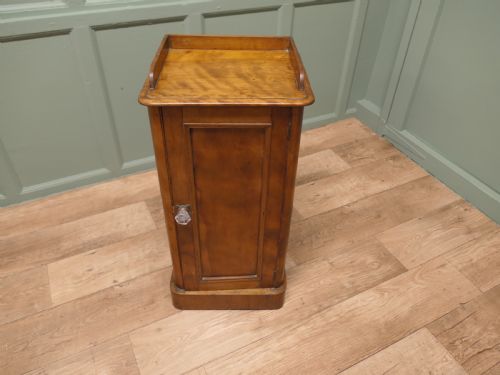
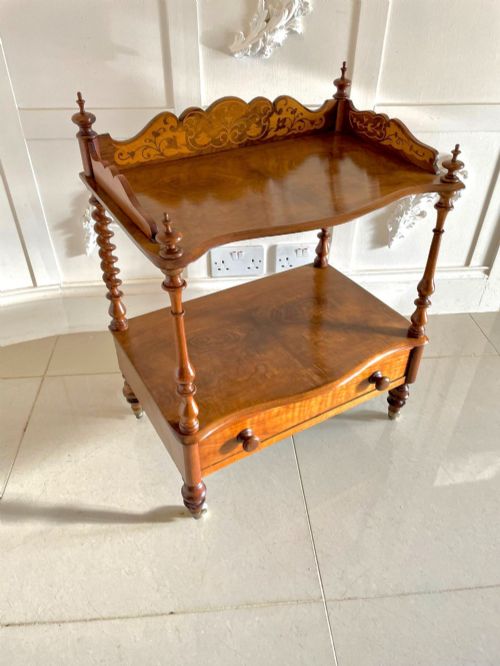
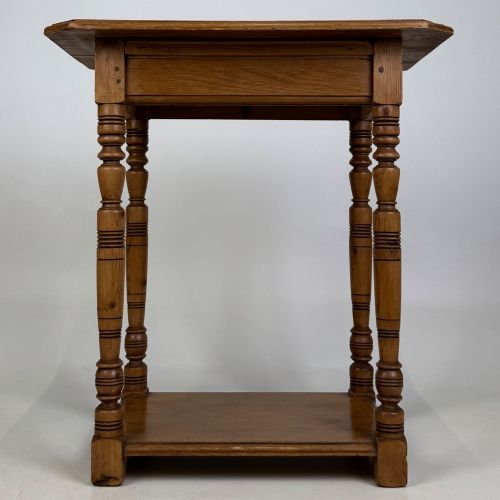
Small Victorian nightstands appear primarily as bedside chests of drawers, enclosed pot cupboards, and open side tables dating from the nineteenth century. These pieces were designed to sit beside a bed to hold chamber items, books, and lamps within easy reach of the sleeper.
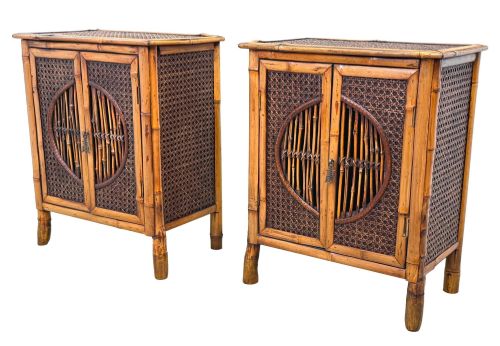
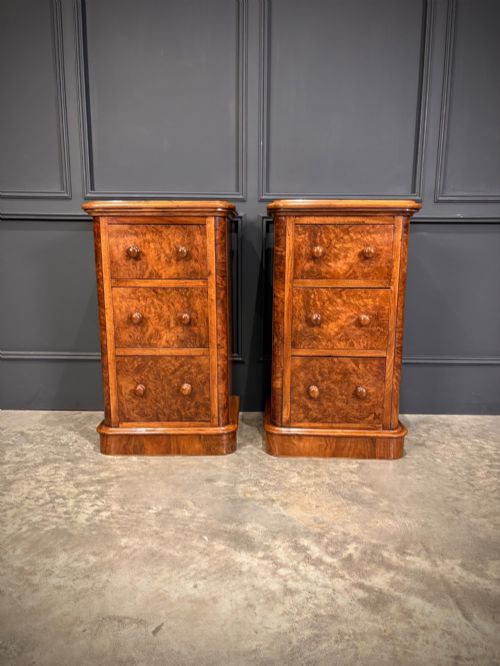
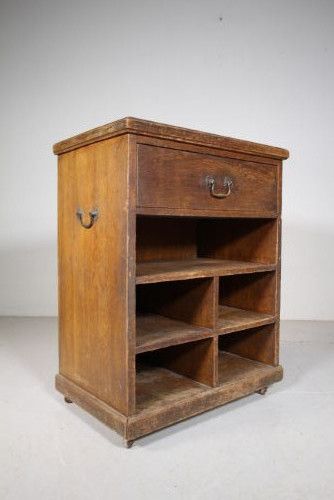
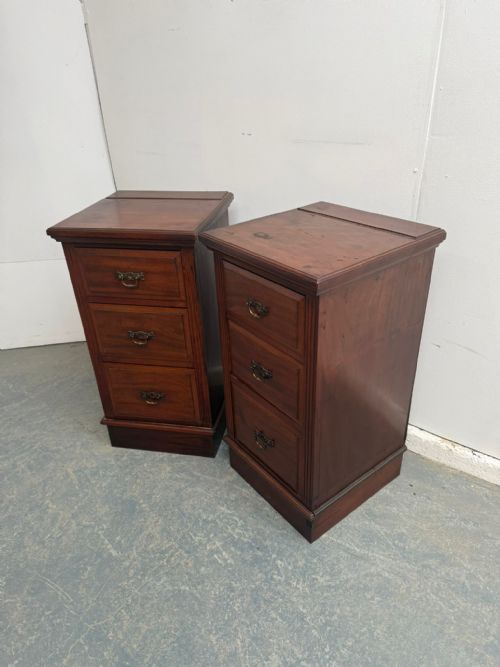
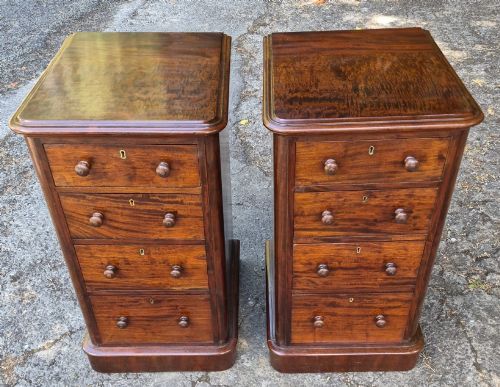
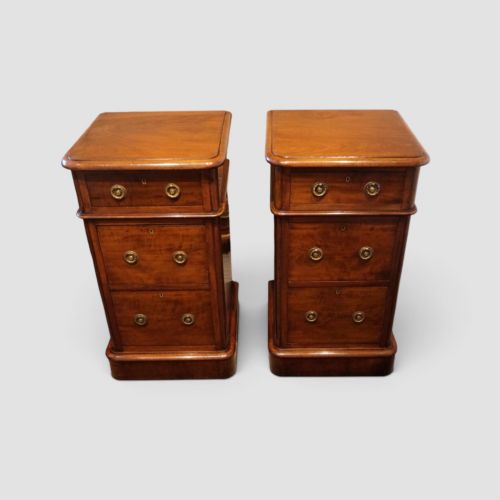
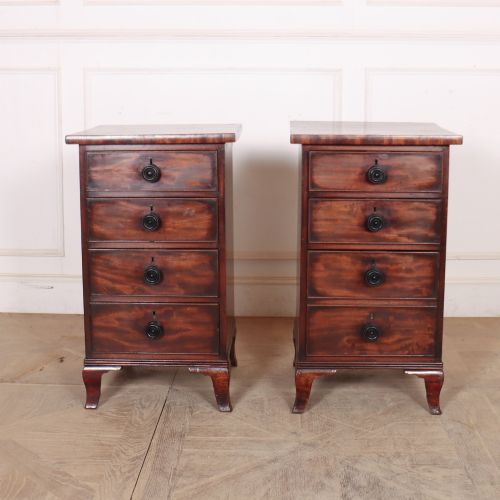
The versions most common on this page are mahogany and burr walnut bedside chests with multiple drawers, alongside single-door pot cupboards in oak and pine. Pairs frequently emerge, reflecting the Victorian preference for symmetrical bedroom furnishings.
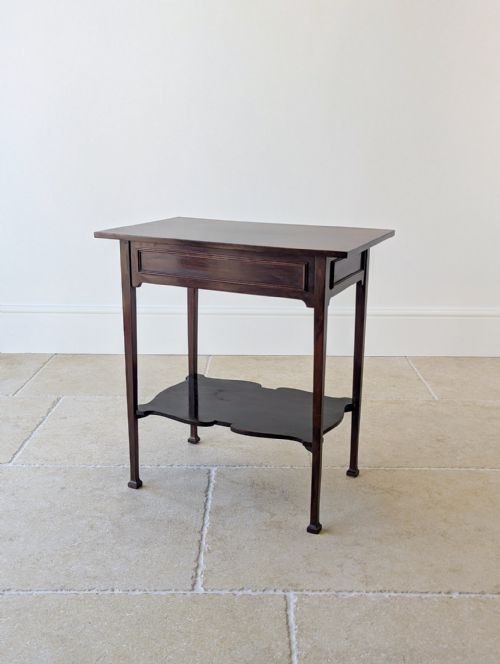
Makers and manufacturers utilised various regional revival styles, incorporating Gothic, Aesthetic Movement, and Sheraton Revival motifs into standard bedroom furniture forms. Buyers also encounter drop-leaf tables, small work tables, and miniature cabinets adapted to serve as nightstands.
Materials and construction
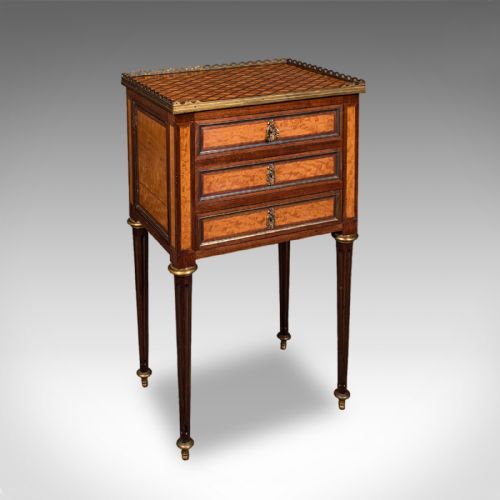
Cabinet makers built these nightstands using solid hardwoods like mahogany, walnut, and oak, often applying figured burr walnut veneers to drawer fronts and door panels. Secondary timbers such as pine appeared in internal drawer linings and carcass backs.
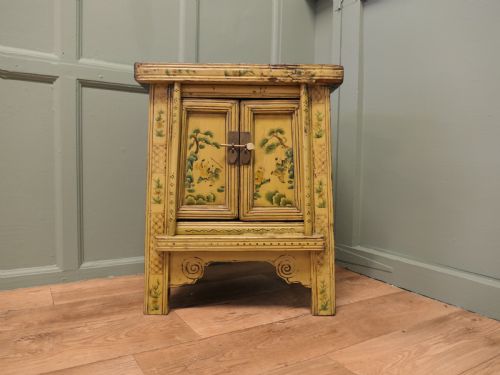
Joinery relied on traditional methods including dovetail joints for drawers and mortise and tenon frames for doors and structural supports. Surfaces were finished with wax or polish, while decorative examples featured hand-painted Chinoiserie scenes, inlaid brass, or carved Gothic details.
Design styles span standard Victorian production through Aesthetic Movement, Gothic Revival, and Chinoiserie decoration.
Distinctions in craftsmanship
Quality rests in the selection of timbers, such as richly figured burr walnut veneers matched across drawer fronts rather than standard plain cuts. Superior pieces display crisp mouldings, tight dovetail joints, and original brass or wooden turning handles.
Proportion and structural integrity distinguish utilitarian bedroom cabinets from finer decorative furniture. Pieces that retain their original polished surfaces, functional doors, and smooth-sliding drawers command greater appreciation among collectors.
The Small Victorian Nightstands Glossary
- Pot cupboard
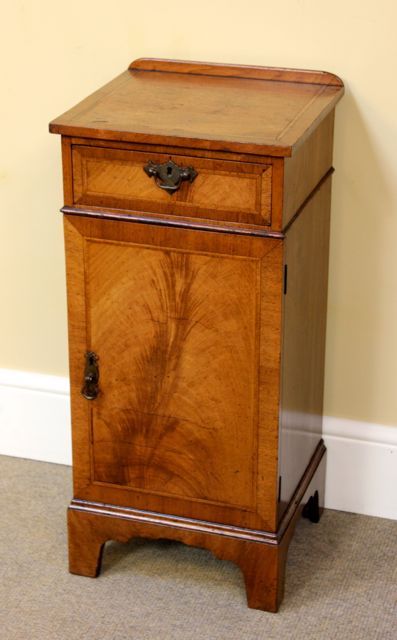
- A small bedside cabinet originally designed to enclose a chamber pot behind a single panelled door. These pieces often feature an internal shelf and a raised gallery top.
- Burr walnut
- A highly decorative wood veneer obtained from the Burl growths of walnut trees. It displays swirling knot patterns highly prized in mid-nineteenth-century cabinet making.
- Dovetail
- A traditional interlocking woodworking joint used to connect drawer sides to drawer fronts. Hand-cut dovetails indicate older, skilful construction.
- Pembroke table
- A small drop-leaf table with hinged flaps on either side, often fitted with a single drawer. They served varied domestic functions including occasional work and bedside use.
- Aesthetic Movement
- A late-nineteenth-century design style emphasising simplicity, art for art's sake, and often drawing inspiration from Japanese motifs. It rejected heavy Victorian ornamentation in favour of cleaner lines.
Small Victorian Nightstands: Frequently Asked Questions
How can I tell if a pair of nightstands is original?
Examine the timber grain, construction methods, and interior secondary woods to determine if the pair was built together. Subtle variations in hand-cut dovetails or hardware often confirm authentic nineteenth-century pairing.
Matching dimensions, identical wear patterns, and corresponding internal construction details indicate that two separate tables originated from the same workshop.
Were these tables originally made as nightstands?
Many nineteenth-century bedside pieces began life as pot cupboards, miniature chests, or small occasional tables rather than dedicated nightstands. Cabinet makers adapted various small furniture forms to suit bedside use as bedroom layouts evolved.
Some examples listed as nightstands started as Pembroke tables or small side tables before being repurposed for modern domestic requirements.
How do I care for nineteenth-century wood surfaces?
Maintain polished mahogany and walnut surfaces by applying natural beeswax sparingly and buffing with a soft cloth. Avoid placing timber furniture near direct heat sources or in strong sunlight to prevent veneer splitting.
Regular dusting with a dry lint-free cloth preserves the aged patina without stripping the historic wax finish built up over decades.