
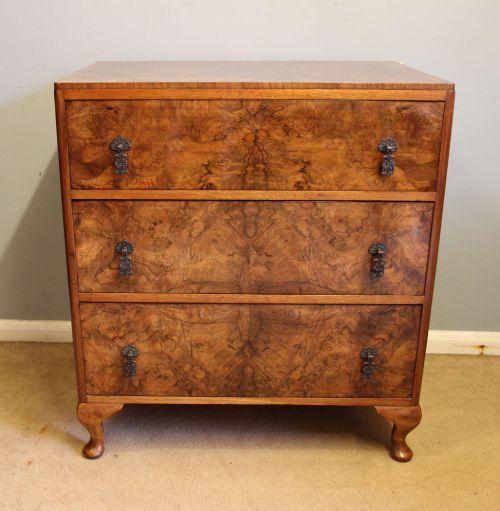
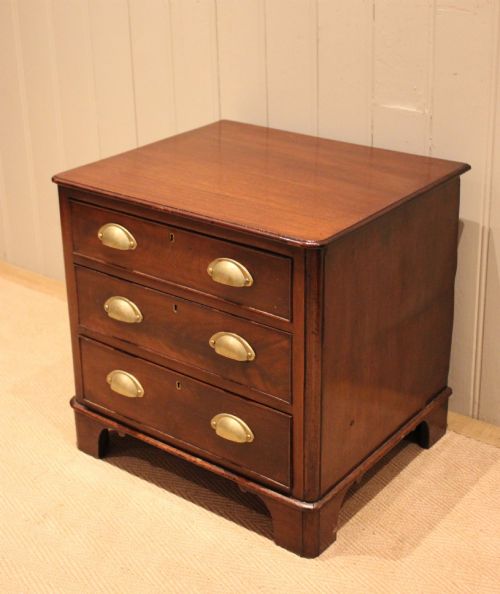
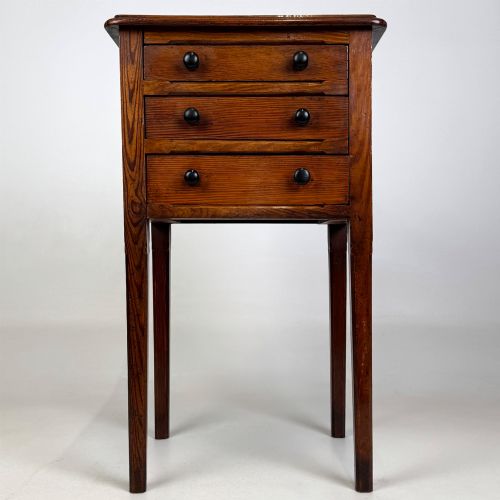

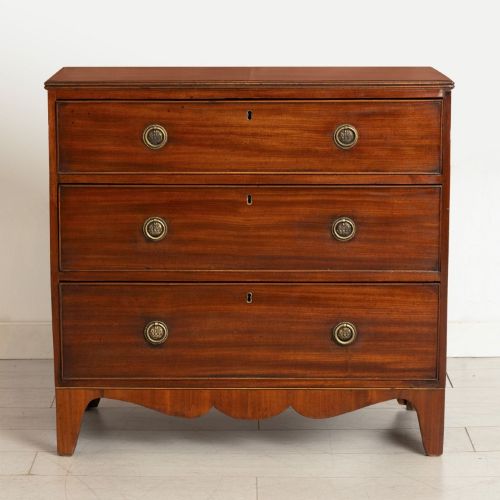

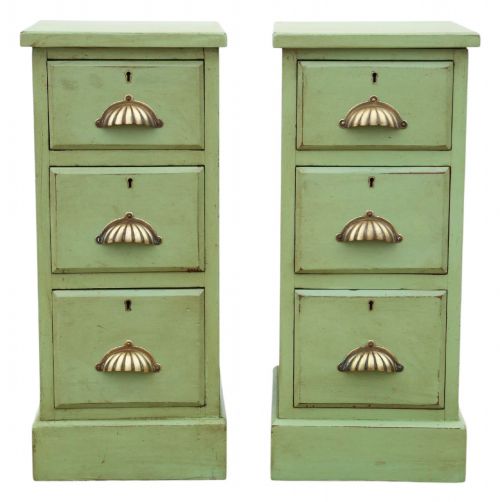
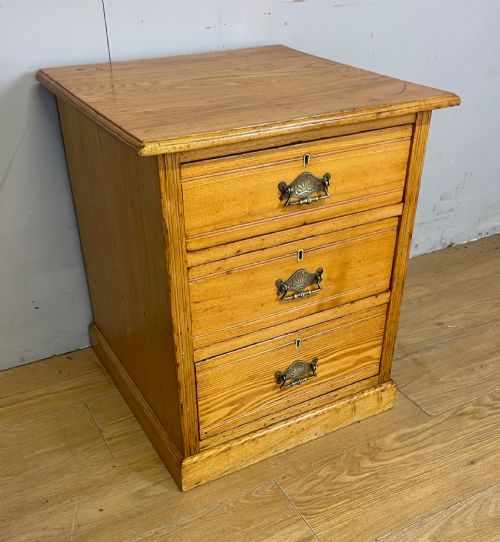
Small Three Drawer Chest
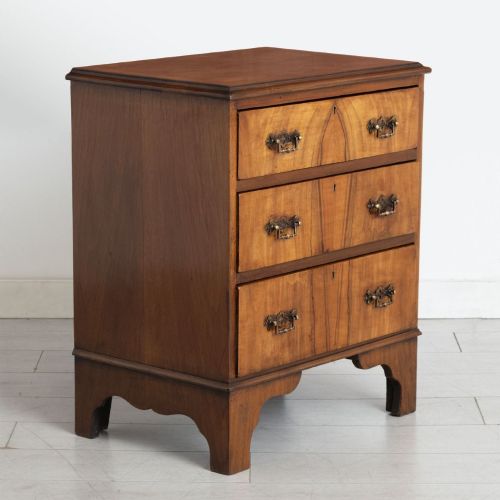
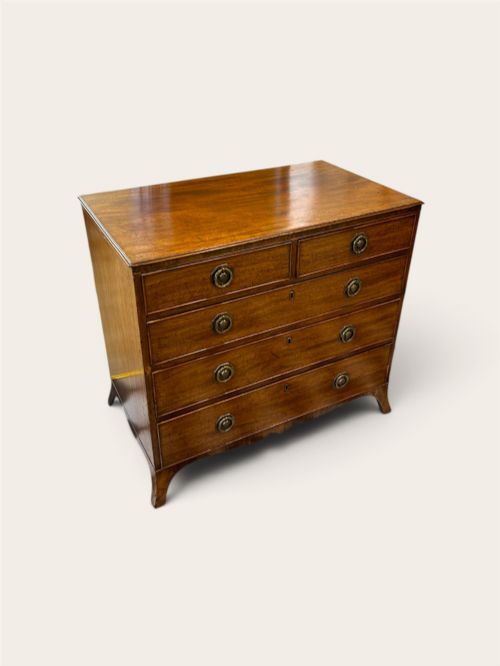
A small three drawer chest serves as a compact storage solution that brings period character into bedrooms and living spaces.
Small Three Drawer Chest
A small three drawer chest functions primarily as a scaled-down storage unit, frequently appearing in forms such as bedside chests, commodes, and miniature cabinets. These pieces serve daily utility while fitting restricted footprints in domestic interiors.
The selection ranges across Georgian, Victorian, and Edwardian periods alongside later 20th-century revivals. Mahogany, walnut, oak, and painted pine constitute the predominant domestic timber choices encountered.
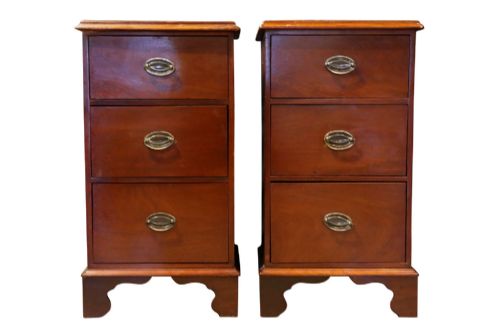
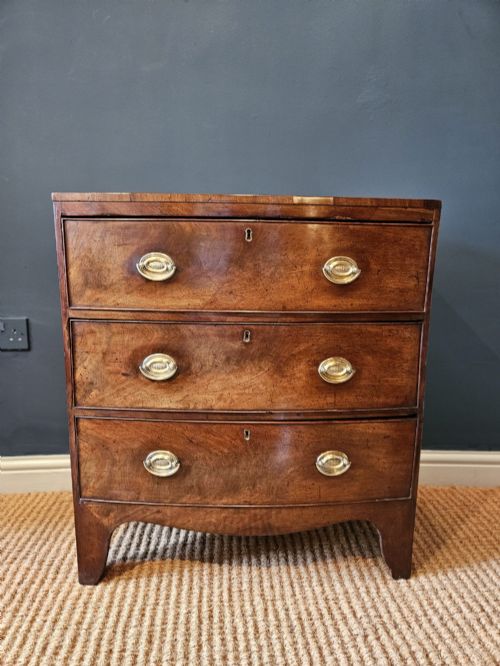
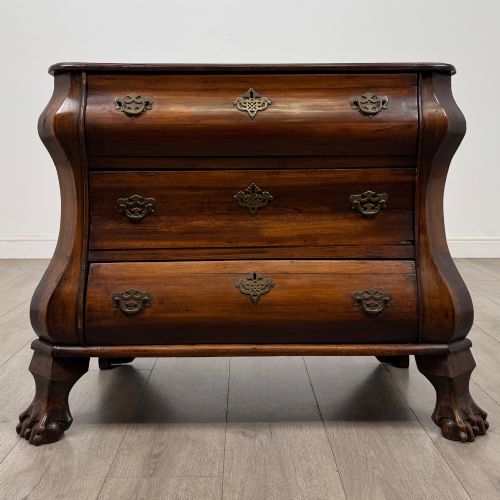
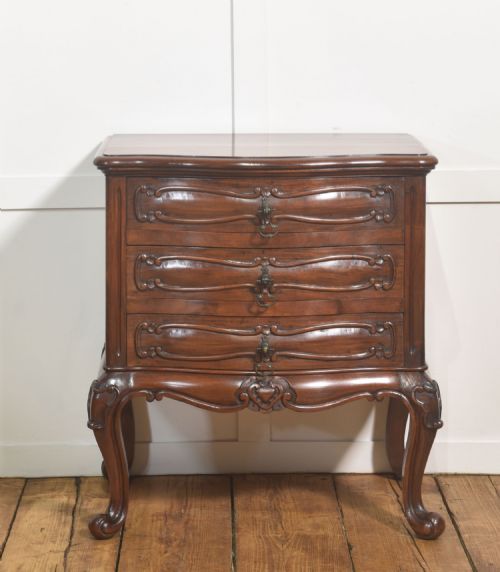
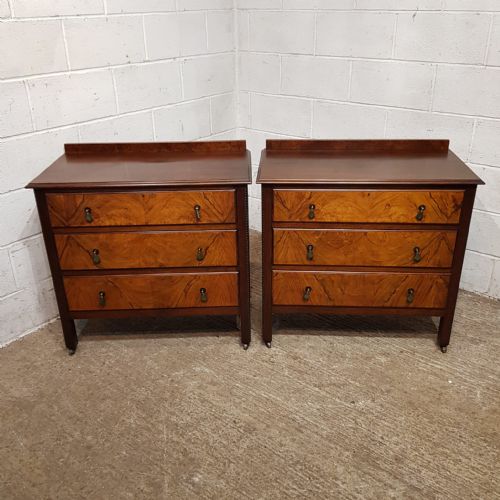
Buyers frequently encounter variations like bow fronts, serpentine shapes, and bedside pairs adapted for modern living. Regional influences from English, French, and Dutch workshops add diversity to the available forms.
How they were made
Cabinet makers utilised solid and veneered hardwoods including mahogany, walnut, burr walnut, and fruitwood over secondary timbers such as oak and pine. Crossbanding and string inlay frequently decorate the primary surfaces of finer examples.
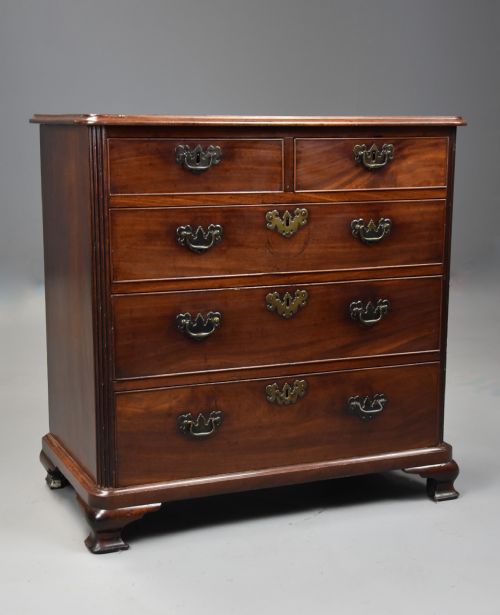
Joinery methods relied on dovetailed drawer construction and traditional bracket or bun feet. Brass drop handles, ring pulls, and working locks provide the standard functional hardware across the periods.
Listings span several centuries of cabinet making, featuring Georgian, Victorian, and Art Deco eras constructed in mahogany, walnut, oak, and painted pine.
What varies in quality
The degree of refinement depends heavily on timber selection and figure, where highly figured burr walnut, flame mahogany, or figured mahogany command greater visual presence. Subtle details like crossbanded tops and fine patination elevate a piece from utility furniture to high craftsmanship.
Proportions dictate overall balance, with smaller proportions and clean architectural lines distinguishing superior examples from bulkier utility items. The integration of decorative elements like serpentine fronts or precise inlay work separates standard output from exceptional cabinet making.
The Small Three Drawer Chest Glossary
- Bow front
- A convex curved front facade popular in Georgian and Victorian cabinet making. This shape softens the corners of the chest.
- Serpentine
- A gently undulating front with a convex centre flanked by concave curves. It requires advanced woodworking skill to execute properly.
- Crossbanding
- A narrow strip of veneer laid around the border of a drawer front or top with the grain running perpendicular to the centre. This frames the primary timber.
- Patina
- The surface sheen and mellowing developed by wood over decades of handling and exposure to light. It indicates age and consistent care.
- Commode
- A decorative set of drawers or a low cabinet, often French or Dutch in origin. The term frequently describes serpentine or bombe forms.
Small Three Drawer Chest: Frequently Asked Questions
Where should I place a small three drawer chest?
These compact chests fit easily beside a bed, within a hallway, or as an accent piece in a sitting room. Their reduced footprint allows them to occupy awkward corners while providing useful surface and drawer space.
Ensure you measure the available floor space and clearance for opening drawers before final placement. Their scale makes them versatile enough to move between rooms as domestic needs change over time.
How do I identify a Georgian chest?
Georgian pieces typically display dense mahogany, oak, or walnut timbers with hand-cut dovetails on the drawer sides. Look for proportions that feel balanced, often standing on bracket feet or plain bases.
Hardware such as brass drop handles should fit original bore holes, and secondary woods like oak should show appropriate age and tool marks on the interior.
Are bedside chests matched pairs?
Many bedside chests originate as matched pairs designed for placement on either side of a bed. Others consist of single chests or later adaptations created from larger furniture.
Checking the internal construction and drawer linings helps determine if a pair shares the same workshop origin. Matching pairs hold particular appeal for symmetrical bedroom layouts.