



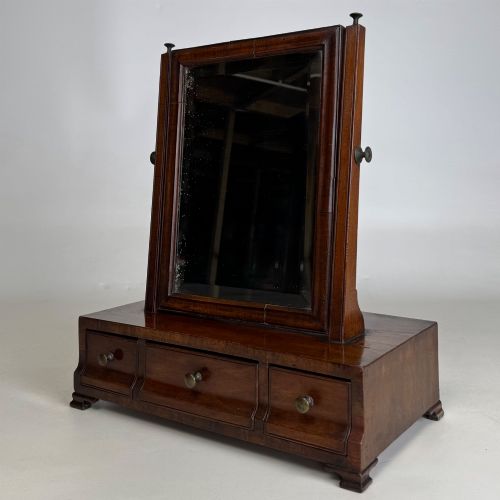
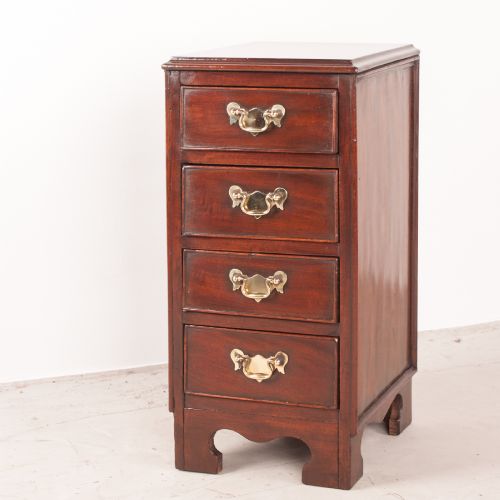
Small Tabletop Drawers
Small tabletop drawers are compact miniature chests and cabinets built for practical storage or display, offering centuries of craftsmanship in a portable scale.
Small Tabletop Drawers
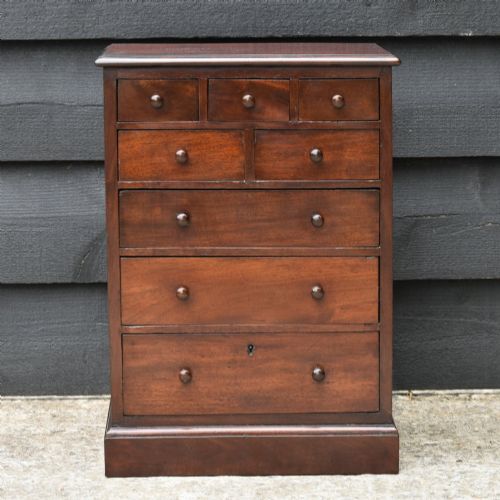
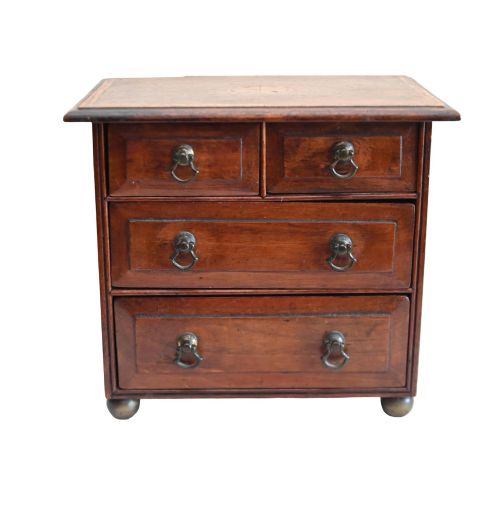
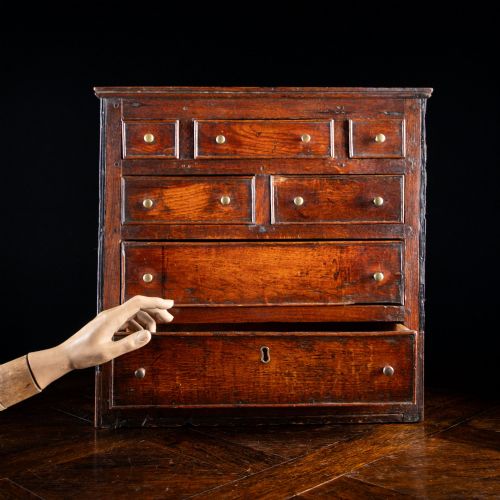
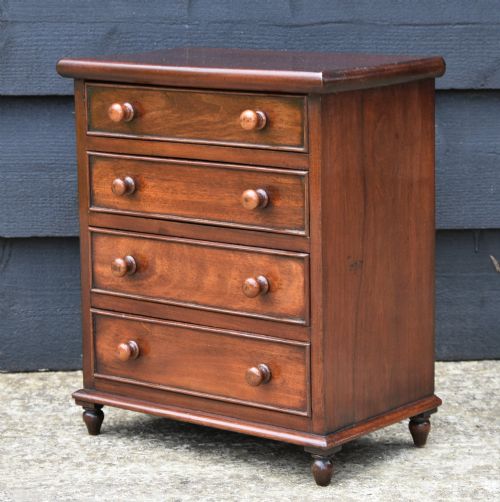
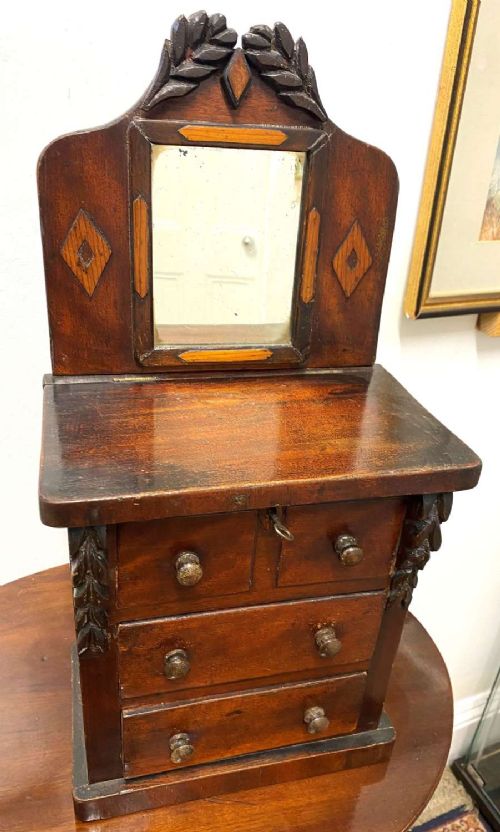
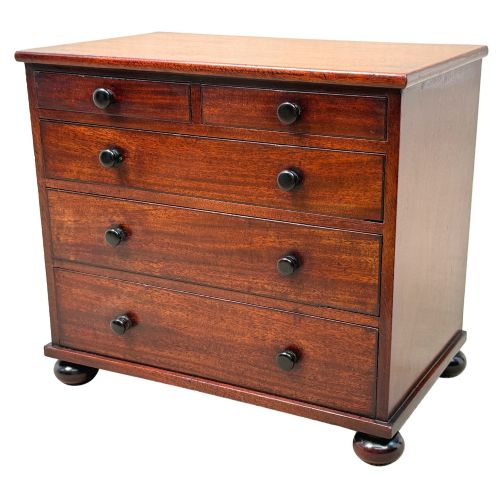
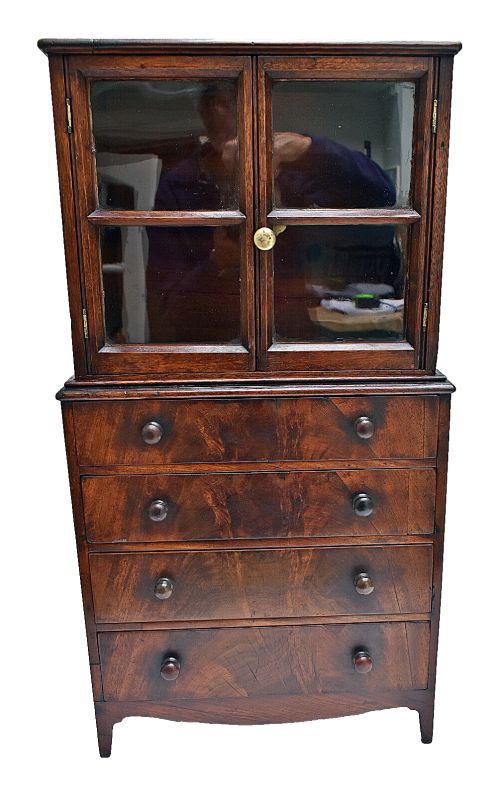
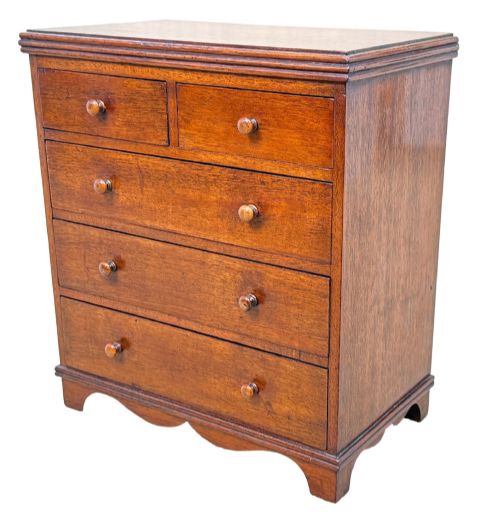
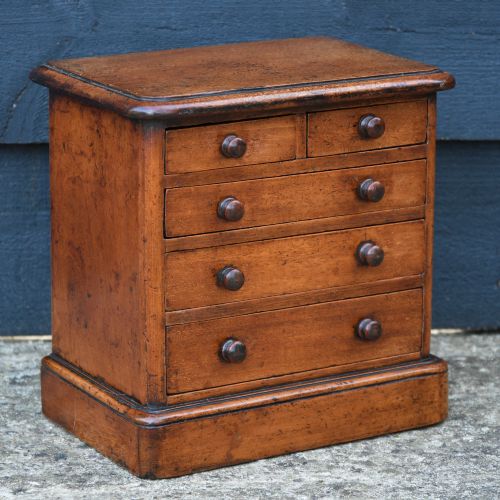
Small tabletop drawers encompass miniature chests of drawers, apprentice pieces, specimen cabinets, and spice drawers originating from the eighteenth, nineteenth, and early twentieth centuries. These pieces replicate full-scale furniture and specialised storage forms down to the smallest detail, designed to sit upon desks, tables, or dressers.
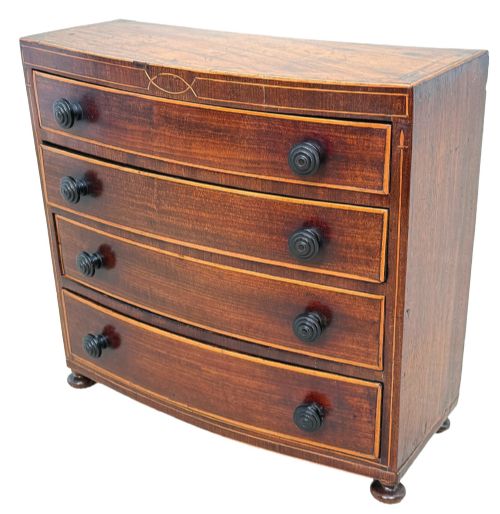
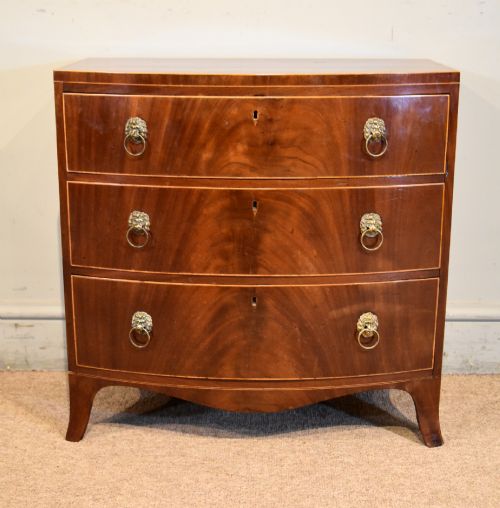
Mahogany remains the dominant wood found across these listings, alongside oak, pine, rosewood, elm, and fruitwood. Cabinets often appear in Georgian, Regency, and Victorian styles, ranging from bowfront miniature chests to multi-drawer apothecary and dental units lined with milk glass.
Materials and Construction
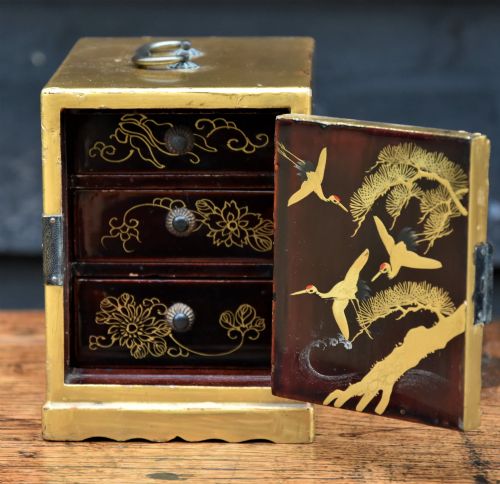
Traditional joinery defines these items, utilising solid hardwoods like mahogany and oak, occasionally finished with marquetry, burr walnut veneers, or gilt lacquer. Drawer construction relies on hand-cut dovetails, while brass handles, escutcheons, and bone details provide operational hardware.
Specialised interiors feature glass linings, mirrored compartments, or multiple small pigeonholes and drawers designed for collectors, dentists, or doctors. Secondary woods like pine frequently appear in drawer linings and carcases.
Small Tabletop Drawers Retail Price Guide 2026
Typical asking prices for small tabletop drawers among the pieces listed under this phrase on Sellingantiques today, from the lower quarter to the upper quarter. They describe what is for sale here now, not the wider market.
Listings span the eighteenth to the twentieth centuries, featuring mahogany, oak, pine, and rosewood across Georgian, Regency, and Victorian styles.
Quality and Proportion
Proportion and fidelity to full-scale furniture separate standard examples from finer ones, as superior miniature chests maintain correct architectural scaling and timber selection. The crispness of dovetail joints and the choice of figured veneers, such as flame mahogany or burr walnut, signal superior cabinet-making.
Hardware originality and surface preservation also dictate standing. Pieces retaining their original brass pulls, functioning locks with keys, and uncompromised patinated timber finishes command greater appreciation.
Luxmore's of Ilfracombe
The Small Tabletop Drawers Glossary
- Apprentice piece
- A small-scale item of furniture traditionally created by a trainee woodworker to demonstrate mastery of skills before guild admission. These frequently mirror full-size chests of drawers.
- Bowfront
- A curved front profile on a cabinet or chest where the central section swells outward. This stylistic choice is frequently seen on Georgian and Regency miniature chests.
- Specimen cabinet
- A small wooden housing fitted with numerous shallow drawers designed for storing natural history samples, coins, or geological items. Interiors often feature soft linings.
- Wellington chest
- A tall, narrow cabinet secured by a hinged vertical locking sidebar that fastens over the right-hand edge of the drawers. This form appears in miniature formats alongside standard sizes.
- Escutcheon
- A protective plate surrounding a keyhole, usually fashioned from brass, bone, or ivory. It prevents the wood around the lock from splitting through repeated use.
Small Tabletop Drawers: Frequently Asked Questions
What were apprentice pieces used for?
Apprentice pieces served as trial items where young cabinet makers proved their ability to execute complex woodworking techniques. They were constructed with the same care and joinery as full-sized furniture.
Over time, these scaled-down items transitioned into decorative tabletop pieces used for storing small personal effects like trinkets or sewing accessories.
How do I date a miniature chest of drawers?
Dating relies on examining the timber species, construction methods, and prevailing style of the period. Georgian and Regency examples typically feature cockbeaded drawer edges and bracket feet, while Victorian versions often incorporate plinth bases or turned feet.
Secondary woods inside the carcase and the style of the dovetail joints also provide clear chronological markers for the piece.
How do I care for antique tabletop drawers?
Keep wooden surfaces away from direct sunlight and sudden temperature shifts to prevent the timber from warping or veneers from lifting. Maintaining stable indoor humidity preserves the old finish and structural integrity.
Apply a traditional beeswax polish occasionally to nourish the wood and maintain the natural patina without sealing the pores.