



Small Sutherland Side Table
A small sutherland side table folds down into a slim footprint, offering a clever drop-leaf surface for tighter spaces.
Small Sutherland Side Table
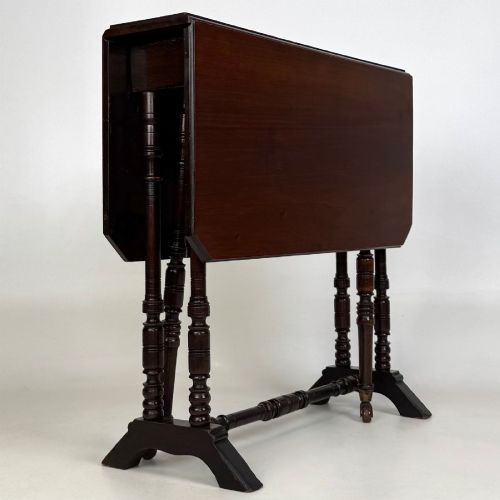
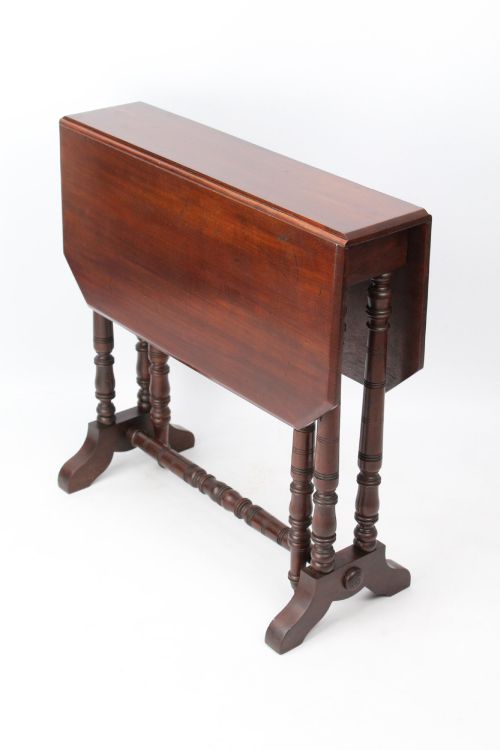
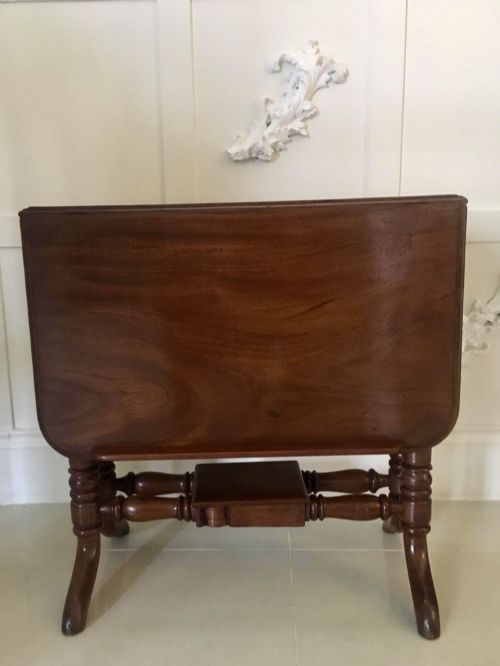
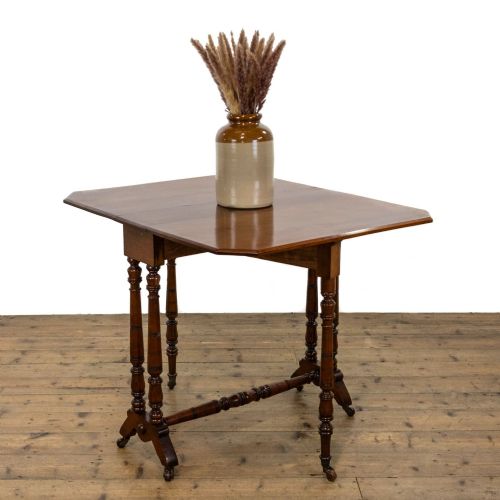
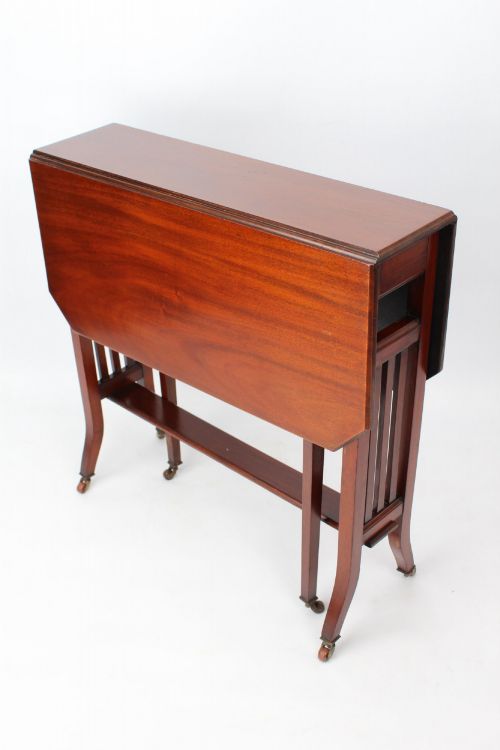
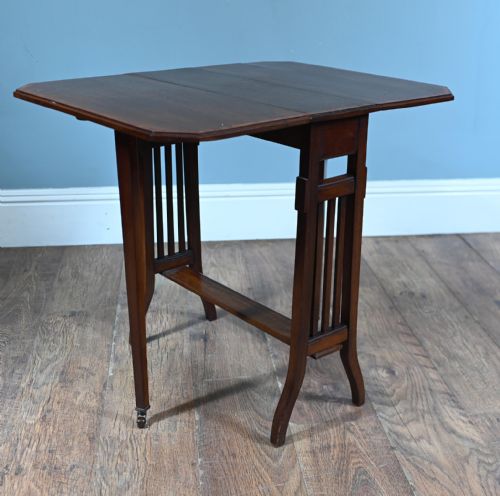
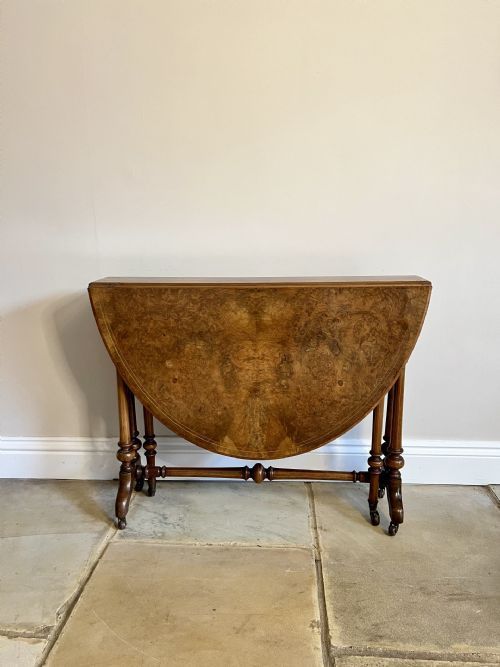
A small sutherland side table is a narrow drop-leaf table designed to occupy minimal floor space when closed and expand quickly for tea or reading. The examples seen here belong mainly to the Victorian and Edwardian eras, spanning the nineteenth century and the early twentieth century.
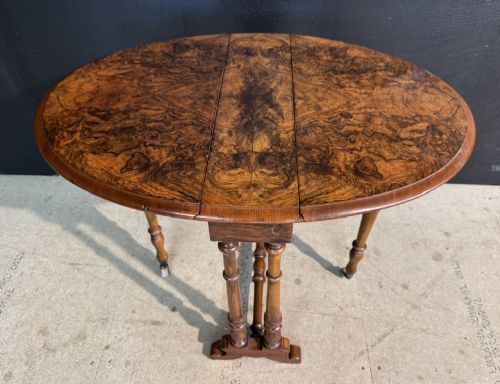
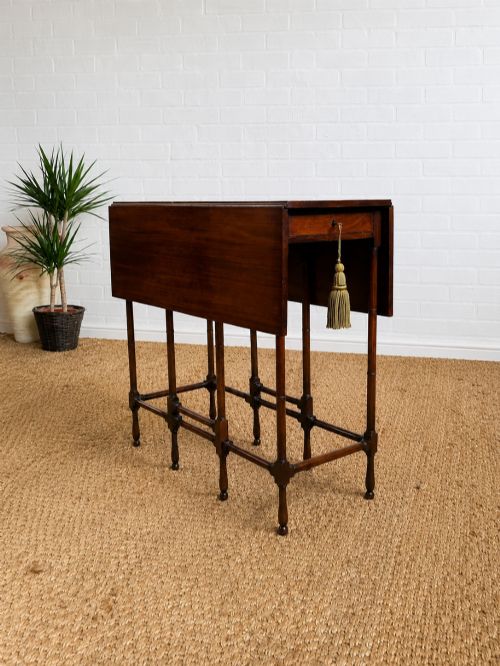
Most pieces appear in forms such as occasional tables, side tables, and coffee tables, often retaining the characteristic narrow gate legs that support the folding leaves. Walnut, burr walnut, and mahogany dominate the offerings, occasionally accompanied by satinwood inlay or ebonised finishes.
Makers from the archive and current listings range from standard domestic workshops to named firms, producing variations from plain solid timbers to marquetry-inlaid surfaces. Buyers encounter both full-height tea tables and low baby formats suited to modern coffee table use.
Materials and construction
Cabinet makers utilised dense hardwoods like mahogany and figured burr walnut veneers over secondary timbers, often framing the drop leaves with hinged rule joints. These joints allow the flaps to hang smoothly when lowered and lock level onto the gate legs when raised.
Turned wooden supports, bamboo-turned legs, and brass castors appear frequently on Victorian and Edwardian specimens, aiding mobility across carpets and floorboards. Inlaid versions incorporate satinwood banding or marquetry panels set directly into the table top.
Listings feature walnut, mahogany, and burr walnut across Victorian and Edwardian periods.
Distinctions in craftsmanship
Quality rests in the selection of timber, particularly the grain matching across burr walnut veneers and the crispness of inlaid satinwood stringing. Superior pieces display tight rule joints that leave minimal gap when the leaves are raised.
The rigidity of the gate-leg action and the weight of the timber frame indicate the standard of original manufacture. Finer examples maintain stability on their castors without wobble in the hinges.
Maple & Co·Jenks & Woods
The Small Sutherland Side Table Glossary
- Sutherland table
- A narrow drop-leaf table with hinged flaps supported by pivoting gate legs. Richard Sutcliffe designed the initial model in the nineteenth century.
- Rule joint
- A moulding profile connecting a table top to its drop leaf, hiding the hinge mechanism. It creates a neat line whether the leaf is raised or lowered.
- Burr walnut
- Timber cut from the irregular growths of a walnut tree, yielding complex swirling grain patterns. Cabinet makers prized it for decorative veneering.
- Marquetry
- The art of forming decorative patterns using fitted pieces of different wood veneers. It appears on several Victorian table tops in the collection.
Small Sutherland Side Table: Frequently Asked Questions
How do you fold a small sutherland side table?
Swing the narrow gate legs inward toward the centre stretcher to release the support beneath each leaf. Allow the hinged drop leaves to hang down vertically against the sides.
This action reduces the footprint to a narrow span, allowing the table to slide against a wall or beside a chair.
Were these tables used for dining?
Victorian and Edwardian households utilised them primarily as occasional tea tables or light reading desks rather than main dining furniture. The folding leaves provided extra surface area only when visitors called.
Today, the lower baby variants function well as compact coffee tables in smaller reception rooms.
How can I tell a Victorian table from an Edwardian one?
Victorian models often feature rich burr walnut veneers, heavy turned legs, and darker polished mahogany timbers dating from the mid to late nineteenth century. Edwardian versions frequently display lighter satinwood inlay, ebonised surfaces, or bamboo-turned supports from around 1900.
Construction details and secondary woods inside drawers also help confirm the approximate decade of manufacture.
Are the brass castors original?
Many nineteenth-century examples retain their original brass or ceramic castors, which assisted movement on heavy carpets. Replacements are common due to wear over decades of use.
Look for consistent patina and matching screw types when examining the fittings.