
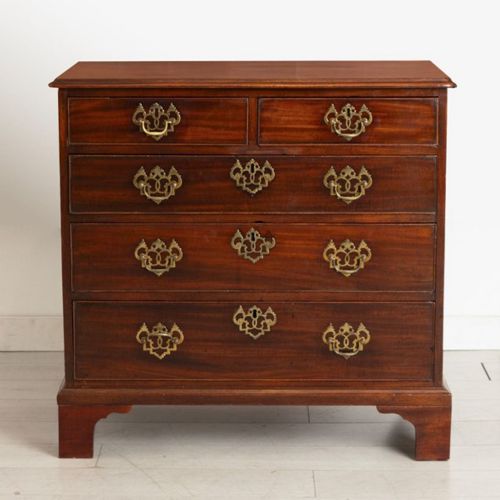


Small Period Mahogany Chest
A small period mahogany chest offers compact proportions and rich timber grain, bringing centuries of cabinet-making skill into a modern room.
Small Period Mahogany Chest
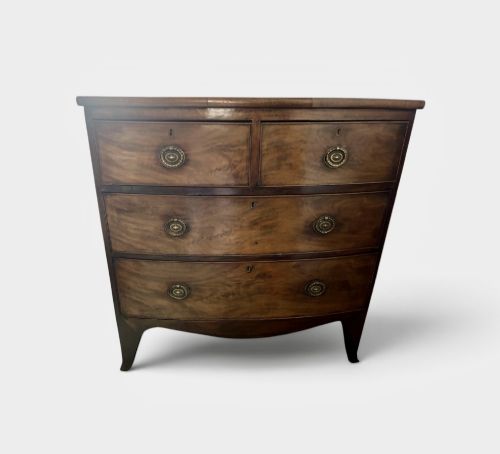
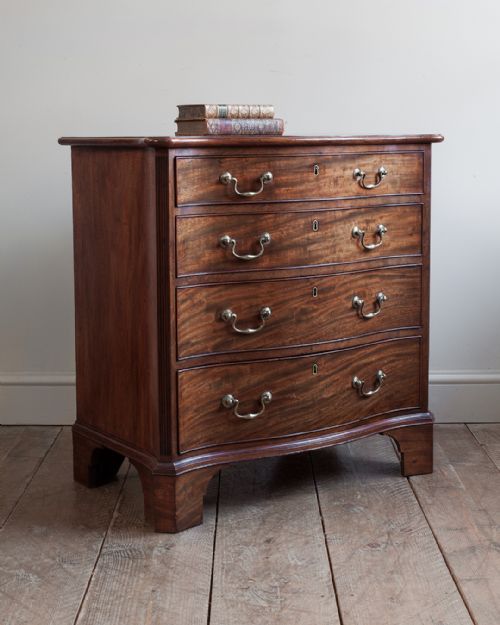
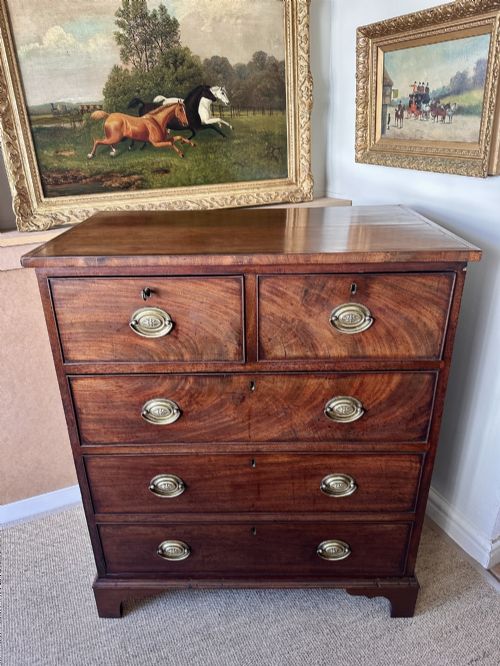
A small period mahogany chest represents a centuries-old tradition of compact case furniture designed for domestic storage. These pieces encompass standard chests of drawers, bow fronts, serpentine fronts, and specialised forms like bachelor chests with sliding shelves.
The pieces originating from the Georgian and Regency periods dominate the selections found here. Craftsmen built these items in reduced scales to fit intimate chambers, balancing utility with refined aesthetics.
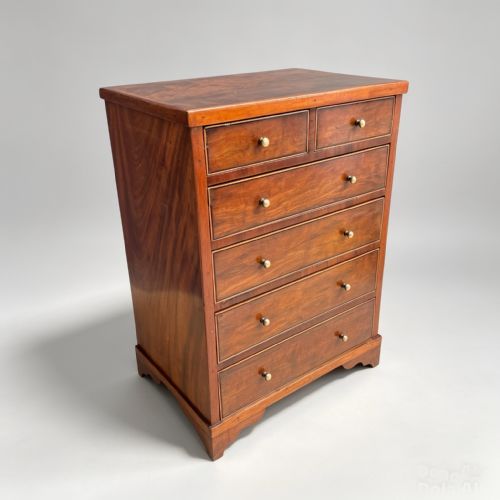
Miniature examples and bedside cabinets also appear alongside full-sized storage units scaled down for smaller rooms. Each form displays the characteristic warmth and depth of polished mahogany timber.
How they were made
Cabinet-makers relied primarily on solid mahogany and carefully cut wood veneers laid over secondary timbers such as oak and pine. Drawer linings frequently utilised oak or pine, revealing traditional hand-cut dovetail joints that secure the carcass and drawer frames.
Decorative elements involved brass hardware, ebony stringing, and cross-banding to frame the drawer fronts. Workshops shaped curved components by hand, resulting in smooth bow fronts and undulating serpentine profiles.
Listings feature Georgian, Regency, and Victorian periods alongside materials including mahogany, brass, oak, pine, and leather veneer.
What varies in quality
The choice of timber grain defines the visual appeal, with well-figured flame mahogany or consistent mahogany veneers commanding greater regard. The crispness of hand-carved bracket feet and the retention of original brass handles contribute significantly to the integrity of the piece.
Structural refinement shows in the precision of the drawer construction and the smoothness of the sliding action. Pieces possessing secondary woods like oak rather than pine within their internal framework often reflect a higher standard of original commission.
The Small Period Mahogany Chest Glossary
- Bow front
- A cabinet front that curves outward in a convex shape, common in Regency examples. This design softens the room's angles while increasing internal capacity.
- Serpentine chest
- A storage piece featuring a front that curves inward centrally and outward at the ends. This undulating contour requires advanced woodworking skill to execute properly.
- Bachelor's chest
- A small chest incorporating a pull-out brushing slide above the drawers. It served as a compact writing surface or dressing shelf in smaller chambers.
- Cross-banding
- A decorative border of veneer laid with the grain running perpendicular to the main panel. This technique frames the primary wood to create a finished visual boundary.
- Dovetail joint
- An interlocking wood joint formed by interlocking wedge-shaped fingers. It provides exceptional tensile strength for drawer construction without relying on metal fasteners.
Small Period Mahogany Chest: Frequently Asked Questions
How do I spot a genuine period chest?
Examine the timber underneath and inside the drawers for hand-cut dovetails and tool marks consistent with eighteenth or nineteenth-century workshops. Original backboards and secondary woods like oak offer strong indicators of age.
Check the uniformity of the mahogany and the wear patterns around the drawer pulls and feet. Machine-cut joints or modern adhesives reveal later reproductions rather than genuine antiques.
What is a brushing slide used for?
A brushing slide functions as a pull-out shelf positioned just below the top surface of a bachelor's chest. Eighteenth-century users pulled this out to write letters or sort garments without opening the main drawers.
These horizontal boards often feature green leather inserts or polished mahogany surfaces. They add both utility and architectural interest to smaller case furniture.
Where should I place a small chest?
The compact dimensions allow these chests to sit comfortably in hallways, bedrooms, or living spaces as accent storage. Their reduced depth makes them suitable for narrow corridors where standard furniture would obstruct movement.
Pairing a bow front or serpentine chest with a simple mirror creates a functional dressing area. Alternatively, bedside cabinets serve well beside taller sleeping berths.
How do I care for antique mahogany?
Maintain the finish by keeping the timber away from direct heat sources and strong sunlight that can fade the reddish-brown tone. Regular dusting with a soft, dry cloth prevents particulate build-up on the polished surface.
Apply a traditional beeswax polish sparingly when the wood appears dry, buffing it gently to preserve the natural lustre. Avoid modern silicone sprays, which can penetrate and damage historic finishes.