


Small Painted Hall Table
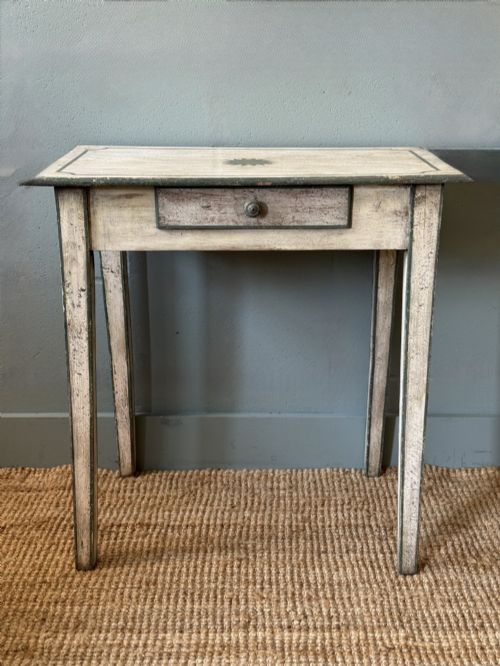
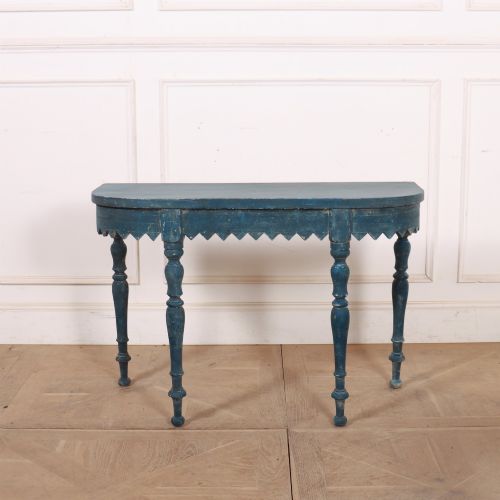
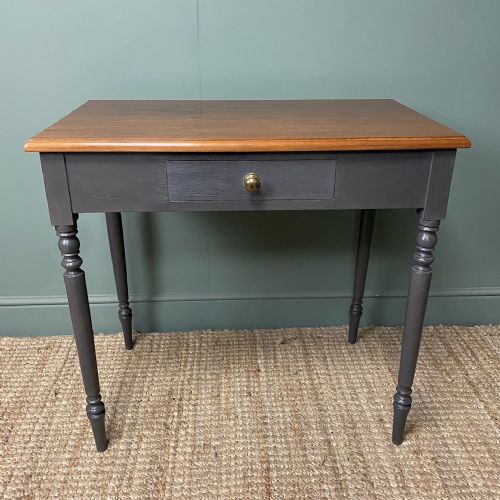
These small painted hall table examples bring compact character and practical surface space to narrow spaces without overwhelming the room.
Small Painted Hall Table
A small painted hall table serves as a functional and decorative surface in entryways, drawing on forms like side tables, console tables, and occasional tables. You will encounter pieces spanning the eighteenth century, nineteenth century, Edwardian period, and nineteen-twenty.
The selection ranges from English country and Georgian country pieces to French provincial, neoclassical, and Scandinavian pine designs. Many examples utilise compact shapes such as demi lune, bow end, and drop leaf pembroke configurations to fit narrow spaces.
How they were made
Construction relies heavily on traditional timber including pine, fruitwood, and mahogany, often paired with scrub top surfaces or painted finishes. Metal hardware such as brass details occasionally appears on specific forms.
Makers applied paint directly to wood and timber structures, sometimes combining inlaid mahogany work with painted top surfaces or bleached finishes to achieve distinct provincial and neoclassical aesthetics.
Swedish pine once crossed the sea just to hold your hallway keys.
What varies in quality
Quality differences lie in the fidelity of period construction and the integrity of the painted surface, distinguishing utilitarian items from finer neoclassical or provincial works. The harmony between the underlying timber frame and the decorative finish dictates the overall presence of the table.
Proportion and form play a major role, where balanced demi lune curves or well-executed bow ends elevate the piece beyond a simple utility table. The depth of the period character, whether English country or French provincial, separates standard items from more distinguished examples.
The Small Painted Hall Table Glossary
- Demi lune
- A half-moon shape popular for console tables designed to sit flush against a wall in narrow hallways.
- Bow end
- A convex curved front edge that softens the rectangular profile of a table.
- Pembroke table
- A table with hinged drop leaves on either side, allowing the surface area to expand when needed.
- Scrub top
- An unpainted, bare wooden table surface designed to be scrubbed clean, often seen on nineteenth-century pieces.
Small Painted Hall Table: Frequently Asked Questions
Where should a small painted hall table go?
These tables suit narrow entryways, landings, and compact hallways where floor space is limited. Their shallow depths allow them to sit against walls without obstructing pathways.
They also function effectively in living rooms as lamp or side tables, providing a surface for daily items while adding period character to the corner of a room.
How do I identify the period of a table?
Period identification relies on observing the timber species, construction methods, and stylistic cues such as neoclassical motifs or Edwardian inlay work. Comparing the leg turnings and edge profiles helps narrow down the era.
Paint application techniques and underlying wood types also offer clues, distinguishing eighteenth-century country pieces from nineteenth-century Victorian or later examples.
Can I use these tables for lamps?
Many of these pieces are specifically referenced as lamp tables, designed to support small lighting fixtures in hallways or sitting rooms. Their surface areas accommodate table lamps and small decorative objects.
When placing a lamp, consider the proportions of the tabletop, especially on compact forms like drop leaf or demi lune designs.