




English Country End Table
These English country end tables bring honest utility and historic timber into a room, offering sturdy surfaces shaped by generations of practical use.
English Country End Table
An English country end table represents the hardworking domestic furniture found in traditional rural homes, built to serve a daily domestic purpose without unnecessary ornament. When searching for an English country end table, buyers encounter functional forms such as lamp tables, side tables, and occasional nest sets rather than grand formal parlour furniture. The selection includes sturdy oak pieces alongside painted wood variations from various centuries.
The assortment on this page ranges from utilitarian 18th century oak designs to later revival interpretations and painted finishes. These low tables and side cabinets were designed to sit beside seating or against walls in modest spaces. Their forms remain unpretentious, prioritizing a flat surface and stable legs above elaborate decoration.
How they were made
Wood selection focuses primarily on oak and pine, timber historically sourced locally by rural carpenters and joiners. Many examples feature solid oak tops supported by straightforward turned or straight legs, sometimes joined by stretchers for added stability. Painted finishes appear frequently, often applied to softer woods to protect the surface and brighten dark rooms.
Construction methods rely on traditional joinery techniques appropriate for utilitarian furniture that needed to withstand heavy daily use. Metal fittings remain minimal, restricted mostly to brass handles or hinges where side cabinets or drawers are incorporated into the design.
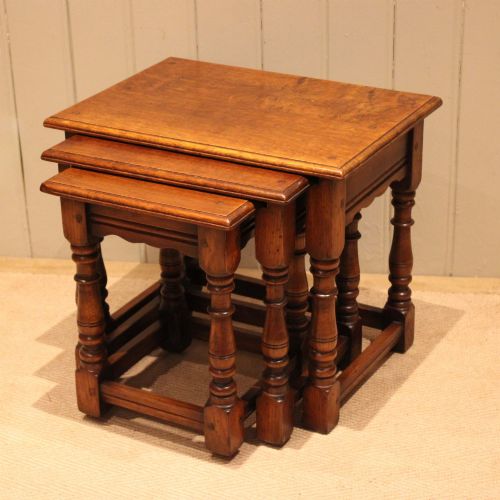
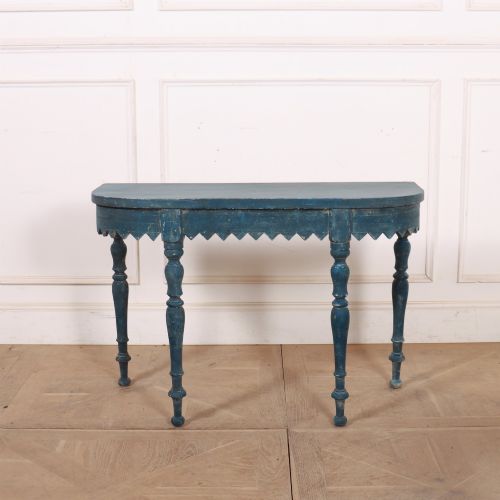
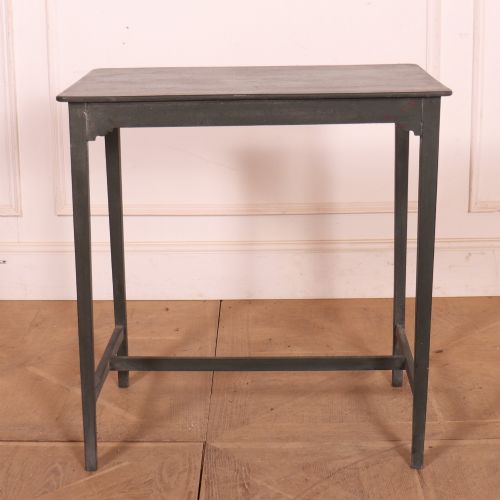
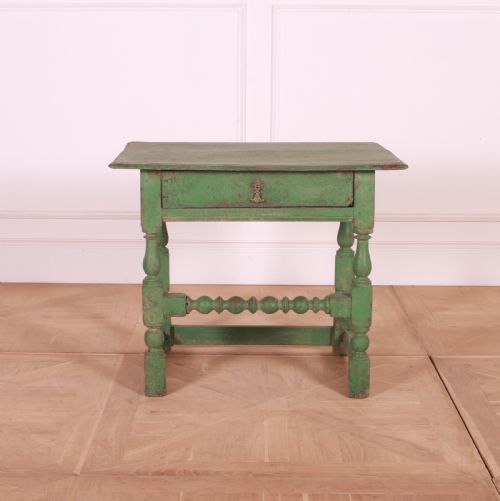
Object types on this page include side tables, nests of tables, console tables, and side cabinets.
What varies in quality
Quality in these tables rests upon the selection of timber and the integrity of the original construction rather than surface polish or delicate carving. Heavier oak timbers with distinct grain patterns and patination sit at the upper end of the scale, showing the natural wear of long service. Simpler pieces constructed from lesser woods or later painted variations display a more basic standard of rural carpentry.
The survival of original painted surfaces or untouched timber surfaces distinguishes superior examples from those altered by later stripping or repainting. Proportions also dictate value, with smaller bow ends or neat lamp tables commanding greater attention than heavier, clumsily proportioned forms.
The English Country End Table Glossary
- Oak
- A hard, heavy timber native to Britain, prized for its durability and strong grain pattern. It forms the primary structural material for much early English country furniture.
- Gate leg
- A table design featuring hinged legs that swing out to support drop leaves on either side. This mechanism allows the surface area to expand when needed.
- Chinoiserie
- European decorative style imitating Chinese artistic motifs, often applied in paint or lacquer on furniture. This style appears on select side cabinets within the current selection.
- Lamp table
- A small, low table specifically designed to hold lighting fixtures or small decorative objects next to seating. These form a large proportion of the available items.
English Country End Table: Frequently Asked Questions
What rooms suit an English country end table?
These compact tables fit easily beside sofas, armchairs, or beds in living spaces and studies. Their modest proportions ensure they do not overwhelm smaller rooms.
Their utilitarian origins mean they blend naturally with both traditional and contemporary interiors, providing a practical surface for everyday items.
How do I identify an 18th century piece?
Eighteenth century examples typically show the deep colour and rich patination acquired through centuries of polishing and handling. The construction methods rely on hand-cut joints rather than modern fixings.
Examining the underside and drawer linings often reveals the tool marks characteristic of period rural joinery.
Are painted tables original?
Many country tables received coats of paint during the nineteenth century or earlier to freshen dark timber or protect softer woods. Paint finish analysis reveals whether the pigment dates to the period of manufacture or represents a later decorative choice.
Original painted surfaces show uniform wear that matches the age of the underlying wood structure.
What is a nest of tables?
A nest consists of several graduated tables designed to slide neatly beneath one another to save floor space. This form became particularly popular in later revival periods.
They offer flexible surface space for entertaining while occupying the footprint of a single small table when stored.