
Small Oak Standing Shelves
Small oak standing shelves combine sturdy native timber with compact utility, offering collectors accessible display surfaces for modest spaces.
Small Oak Standing Shelves
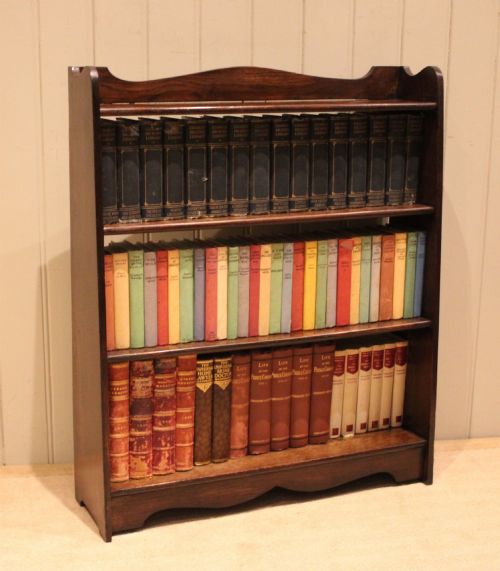
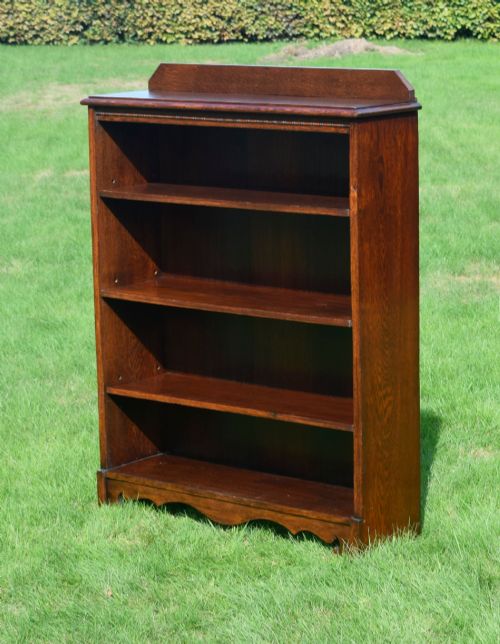
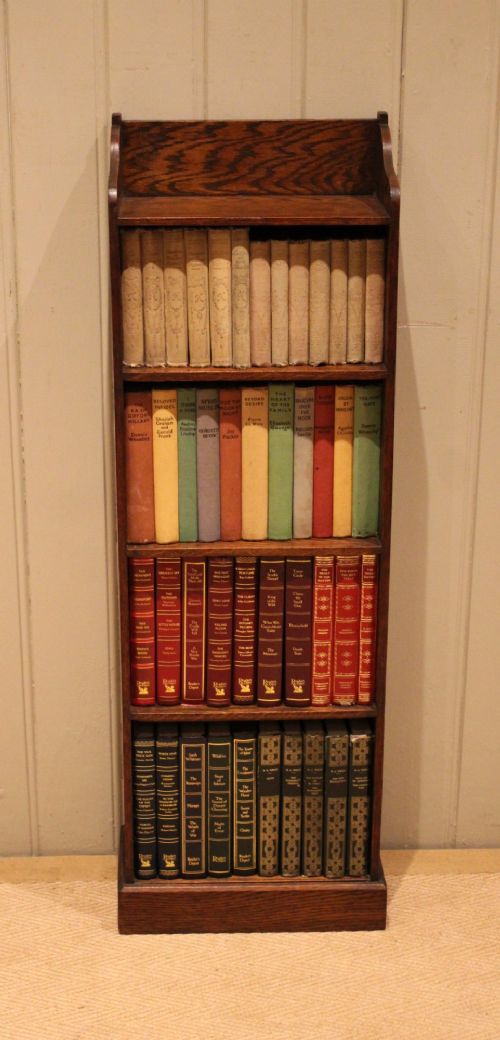
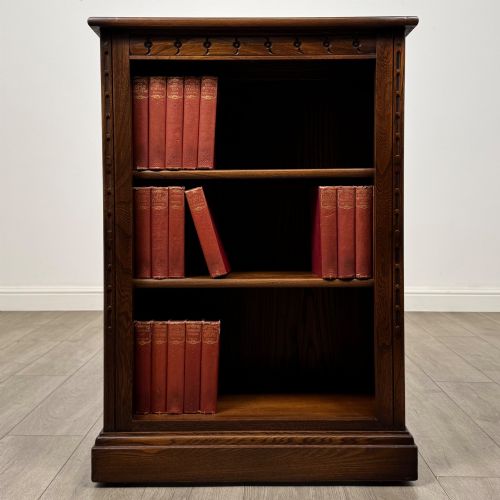
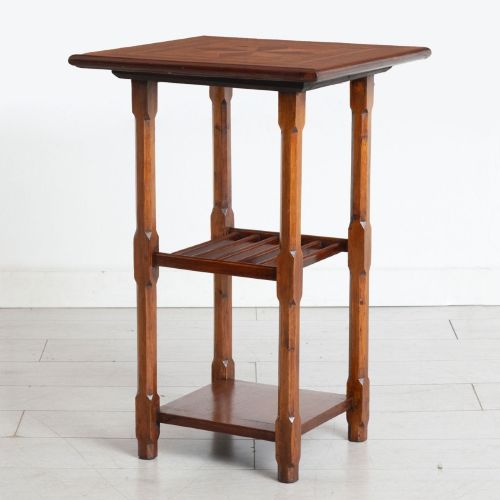
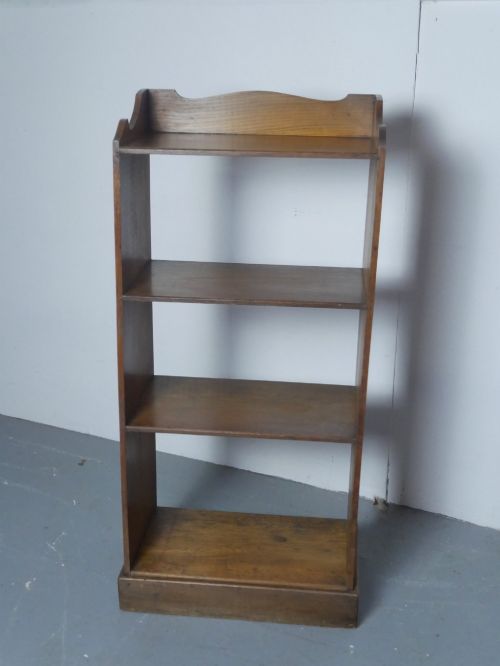
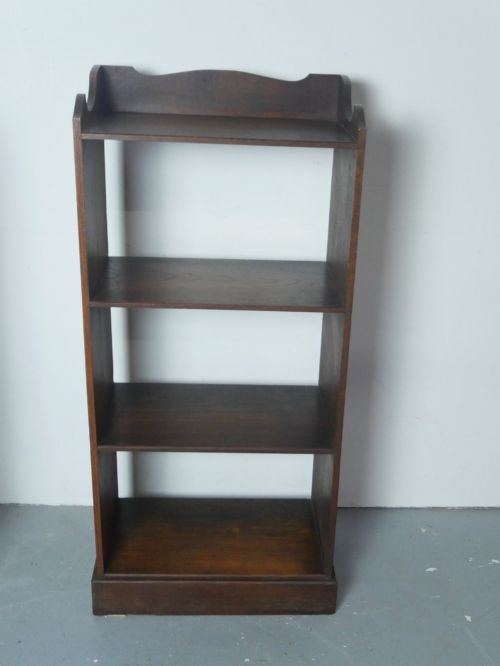
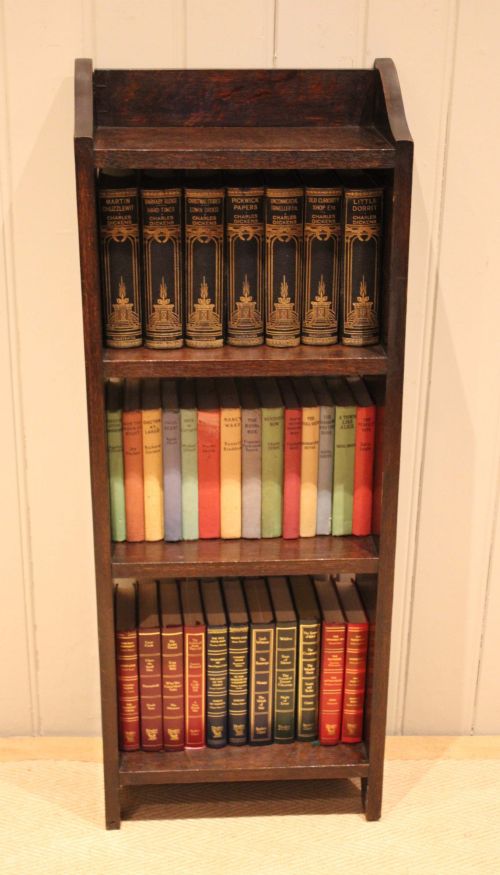
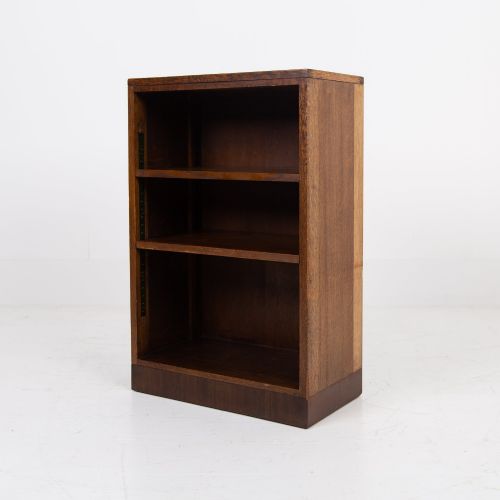
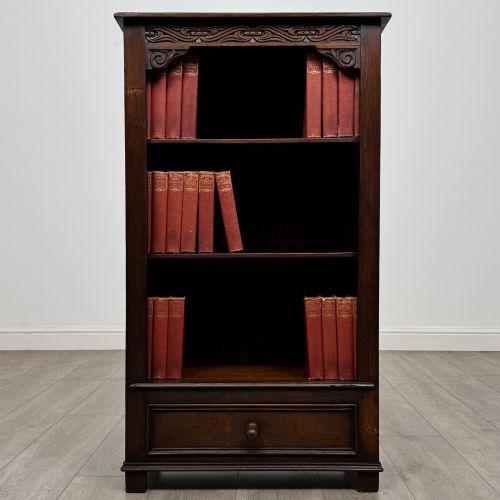
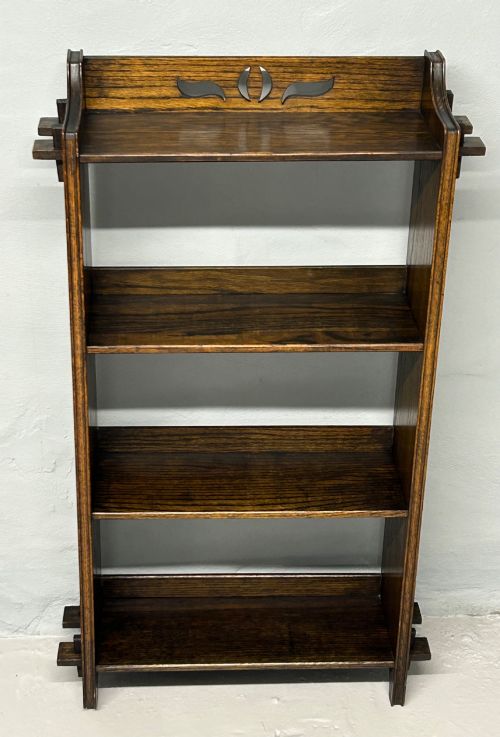
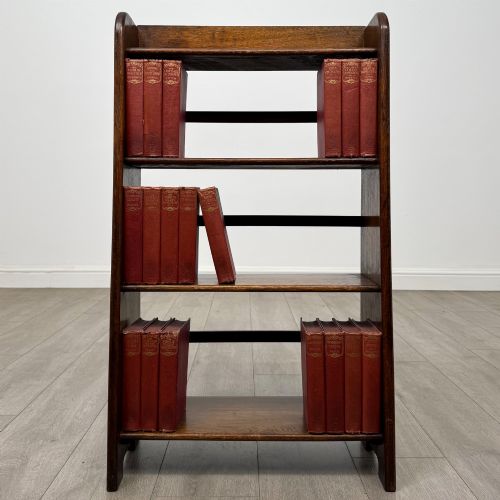
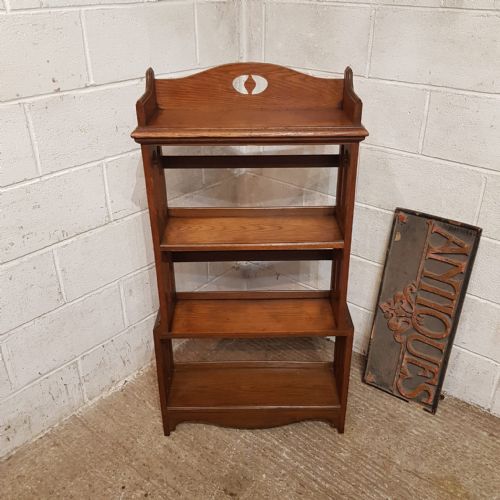
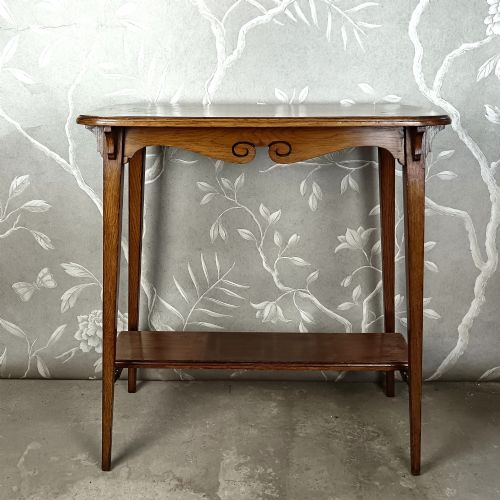
Small oak standing shelves encompass open bookcases, tiered tables, and miniature display pieces designed for floor placement. When searching for small oak standing shelves, buyers encounter compact bookcases and low stands from the late nineteenth century through the interwar decades.
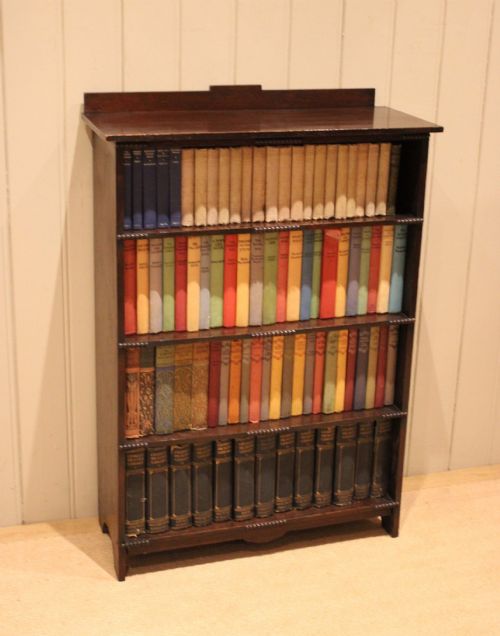
The surviving selection leans heavily toward early twentieth-century and Edwardian examples, alongside Arts and Crafts designs. These pieces range from simple open shelf units to more elaborate pieces featuring beaded edges or leather tops.
Makers and workshops of the period utilised the dense grain of oak to create functional domestic furniture of modest proportions. Most items serve as bookcases, occasional tables, or small cupboards suitable for restricted floor space.
Construction and Materials
Cabinet makers constructed these pieces primarily from solid oak, sometimes utilising dark oak finishes, golden tones, or specimen woods for decorative contrast. Structural elements occasionally incorporate metal and iron for brackets or hinges.
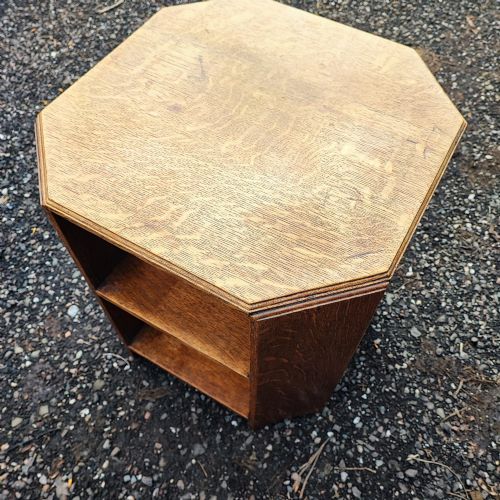
Surface details frequently include beaded edges, inlaid timber, and carved decorations that reflect the prevailing aesthetic movements of the era. Makers applied traditional joinery techniques to ensure stability in items of relatively small scale.
A miniature apprentice piece appears among the standard furniture, proving that great skill sometimes arrives in very small packages.
Assessing Quality and Execution
Quality in these standing pieces rests upon the selection of timber and the precision of the joinery rather than ornate decoration. Superior examples display thoughtful grain matching and careful execution of structural details like beaded edges.
Attribution to known designers or distinctive stylistic movements elevates certain pieces above standard utility furniture. The integrity of the original finish and the absence of clumsy alterations determine the standing of an item within its period.
Betty Joel·Heals
The Small Oak Standing Shelves Glossary
- Arts and Crafts
- A design movement prioritising traditional craftsmanship and simple forms over mass-produced ornamentation. It heavily influenced furniture makers working around nineteen hundred.
- Beaded edge
- A narrow, rounded moulding carved along the border of a shelf or panel. This detail adds subtle visual refinement to plain oak surfaces.
- Open bookcase
- A piece of standing furniture featuring horizontal shelves without glass or wooden doors. It provides immediate access to books and decorative objects.
- Apprentice piece
- A small-scale item created by a trainee craftsman to demonstrate mastery of joinery techniques. These objects often mirror full-sized furniture in exact detail.
- Occasional table
- A small movable table intended for specific, intermittent use within a room. Examples in oak range from two-tier stands to six-sided designs.
Small Oak Standing Shelves: Frequently Asked Questions
What periods do these shelves date from?
Most available examples date from the late nineteenth century through the nineteen-thirties. Edwardian and Arts and Crafts styles appear frequently.
Earlier nineteenth-century pieces and specific revival styles also emerge occasionally in the selection.
How were small oak shelves used?
Households placed these compact units in studies, living rooms, and hallways for holding books and small ornaments. Their limited footprint suited domestic spaces where large cabinetry proved impractical.
Certain variations combined open shelving with small cupboards or table surfaces for dual functionality.
What distinguishes Arts and Crafts oak pieces?
Arts and Crafts pieces emphasise visible construction methods and the natural grain of the timber. They avoid excessive machine carving in favour of honest structural forms.
Designers of this movement often incorporated simple geometric lines and subtle decorative elements like exposed tenons.
How do I care for antique oak furniture?
Protect the timber by keeping pieces away from direct heat sources and sudden humidity changes. Regular dusting with a dry, soft cloth maintains the surface.
Occasional application of appropriate wax preserves the finish without building up heavy residues.