




Small Oak Mule Chest
A small oak mule chest brings centuries of practical storage into a room with compact proportions and rich timber grain.
Small Oak Mule Chest
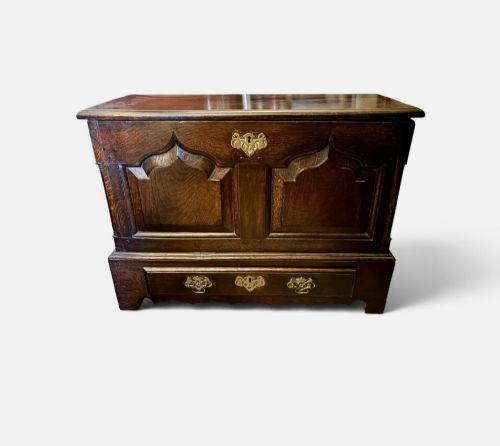
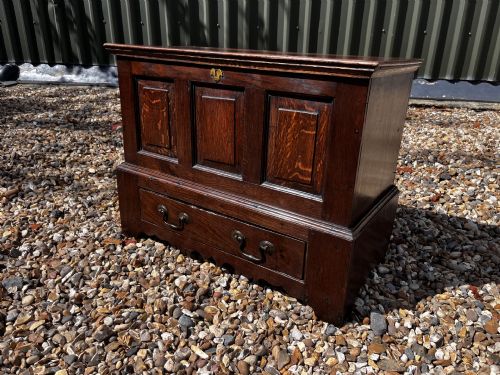
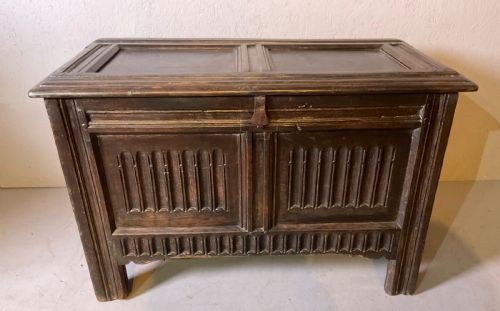
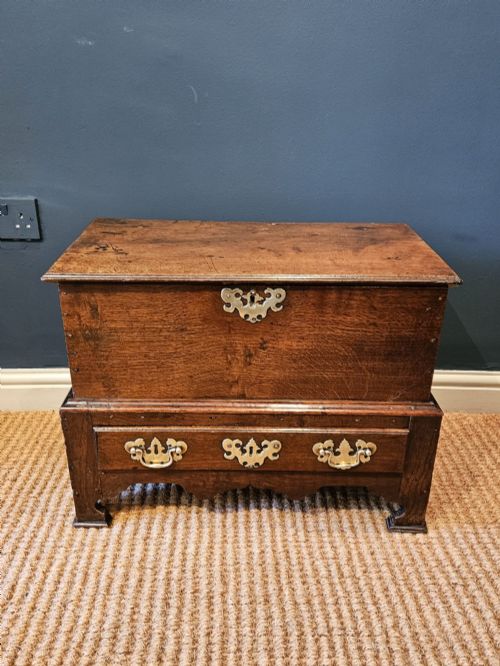
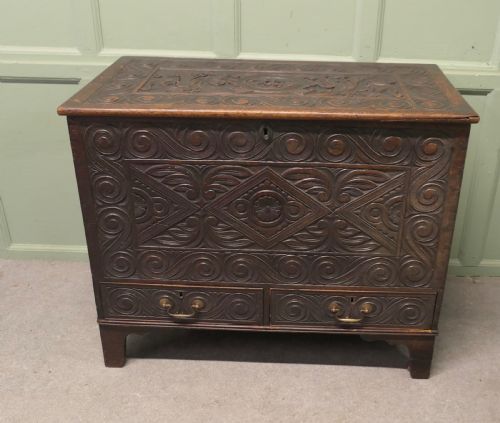
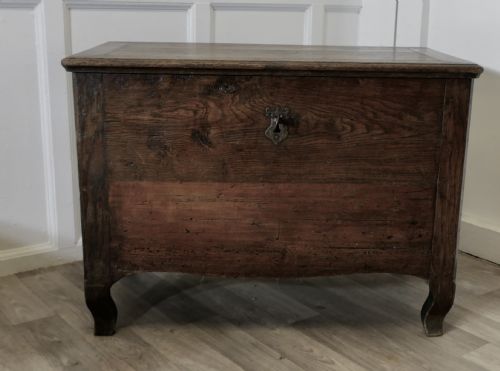
A small oak mule chest combines the lid-accessed storage of a traditional coffer with one or more drawers fitted beneath the main compartment. When buyers search for a small oak mule chest, they encounter compact blanket boxes, fireside bins, and diminutive Welsh coffer bach examples designed for domestic utility.
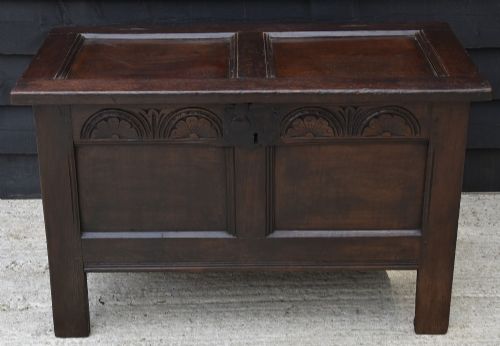
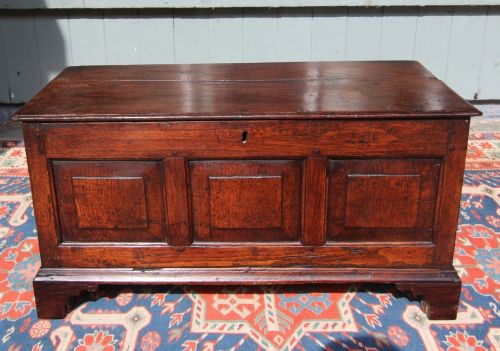
The pieces seen here span the seventeenth, eighteenth, and nineteenth centuries, taking forms such as Georgian vernacular chests, apprentice pieces, and panelled box coffers. Regional variations include Welsh country pieces and Lancashire designs featuring cross-banding.
Makers of these compact storage items utilised solid oak construction, often pairing the primary timber with brass and wrought iron hardware to secure the lids and drawer pulls.
Materials and Construction
These chests rely entirely on solid oak boards joined by traditional methods such as panel framing and dovetailing for the drawer boxes. The timber displays natural figuring and varied grain patterns developed over centuries of exposure and polishing.
Metalwork plays a functional and structural role, utilising brass key escutcheons and wrought iron hinges to secure the lids and lower drawers. Carved details like linen fold panels and green man motifs appear across seventeenth and eighteenth-century examples.
Some miniature coffers served as apprentice pieces, displaying a young woodworker's mastered skill in miniature joinery.
Distinctions in Quality
The standard of a small oak mule chest rests upon the crispness of its hand-carved panels, the integrity of its timber boards, and the retention of original brass and iron hardware. Finer examples display meticulous joinery in the drawer framing and subtle regional traits such as cross-banding.
Proportions dictate much of the desirability, with miniature coffer bach forms and cottage-size pieces commanding attention for their diminutive scale. The depth of the oak patina and the unaltered state of the wood surface separate everyday utility pieces from superior vernacular works.
The Small Oak Mule Chest Glossary
- Coffer bach
- A small Welsh chest or coffer, often featuring a single drawer beneath the main compartment, used traditionally for keeping valuables or linen.
- Mule chest
- A storage chest fitted with one or more drawers at the base, representing a transitional form between the simple coffer and the chest of drawers.
- Linen fold
- A carved wooden panel motif popular in the sixteenth and seventeenth centuries, resembling folded vertical cloth.
- Cross-banding
- A decorative border technique where veneer strips are laid perpendicular to the surrounding grain.
- Vernacular
- Regional furniture built by local cabinet makers using traditional local materials rather than following metropolitan academic designs.
Small Oak Mule Chest: Frequently Asked Questions
What is a small oak mule chest used for?
These chests provide compact storage for blankets, fireside accessories, or general household items while serving as decorative furniture.
Their small proportions allow them to fit easily into bedrooms, hallways, or beside a fireplace as functional accent pieces.
How do you tell a coffer bach from a mule chest?
A coffer bach is specifically a Welsh miniature chest or box, traditionally featuring a drawer beneath the primary storage space.
While structurally similar to a mule chest, the term coffer bach carries a distinct regional Welsh heritage and smaller domestic scale.
What period do most small oak mule chests date from?
The examples on this page primarily date from the seventeenth and eighteenth centuries, with some nineteenth-century vernacular and revival pieces.
Earlier pieces showcase seventeenth-century Jacobean panelling, while Georgian examples often incorporate cleaner lines or lower drawer sections.
How should I care for an antique oak chest?
Maintain the timber by keeping the chest away from direct heat sources and sudden temperature fluctuations that can dry out the oak.
Apply occasional traditional wax polish to nourish the surface and preserve the natural patina developed over the centuries.