









Small Oak Gate Leg Table
A small oak gate leg table provides clever folding utility and robust timber construction, spanning seventeenth-century origins through to twentieth-century revivals.
Small Oak Gate Leg Table
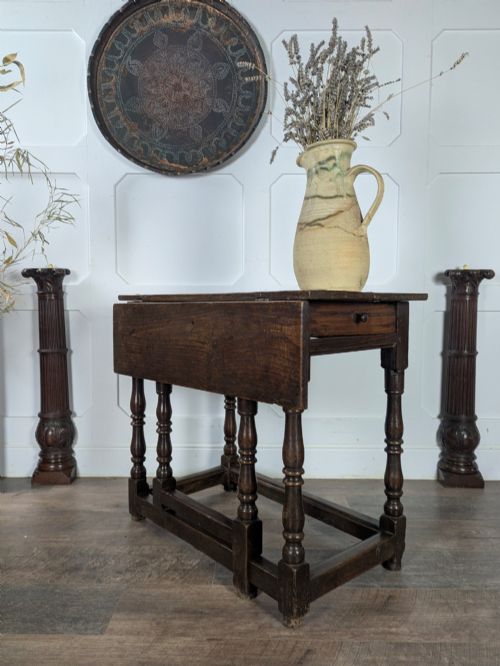
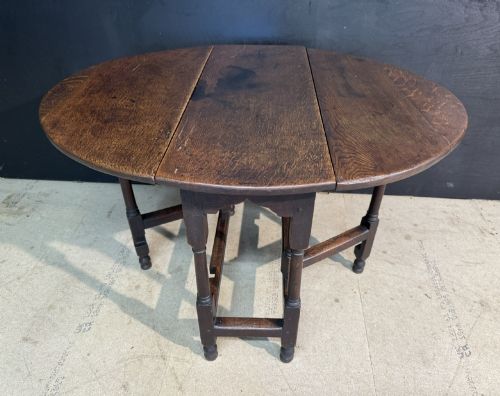
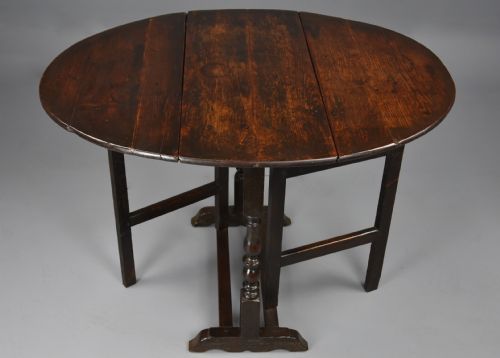
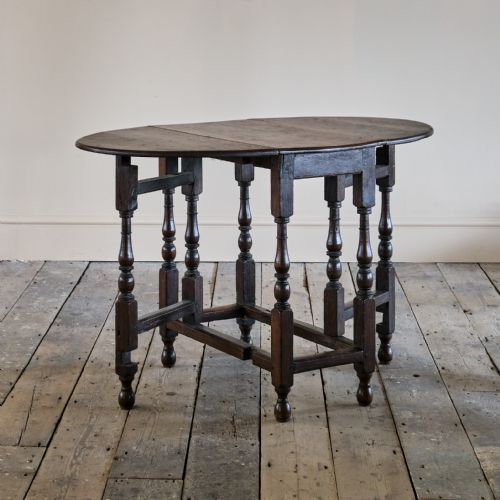
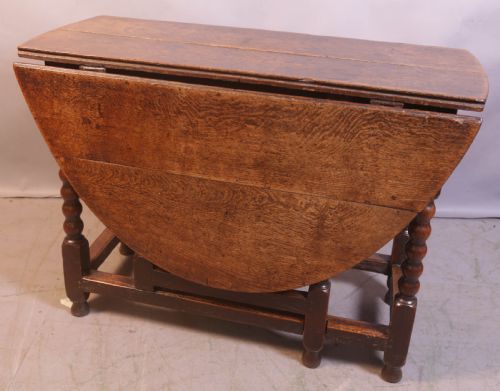
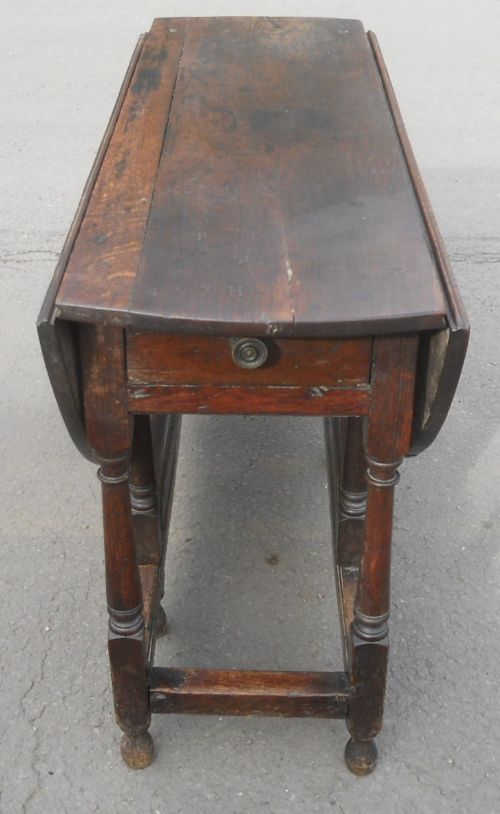
A small oak gate leg table is a folding furniture form designed to expand surface area through drop leaves supported by hinged legs. The pieces found here range from seventeenth-century originals to nineteenth-century interpretations and twentieth-century revivals, reflecting enduring utility in domestic spaces.
The most common formats meet the criteria of compact dining tables, occasional tables, and coffee tables. Early examples often exhibit joined construction and oval tops, whilst later iterations incorporate simpler framing and varied timber tones.
Materials and construction
Solid oak serves as the primary timber across the inventory, occasionally partnered with secondary woods like elm or supported by iron and brass hardware. Cabinetmakers constructed these frames using pegged tenons and hinged gate mechanisms to bear the weight of the drop leaves.
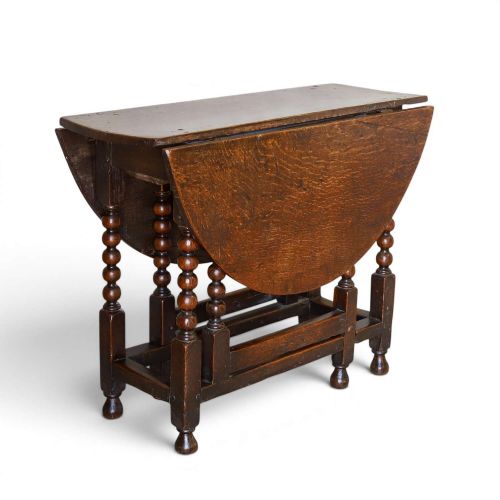
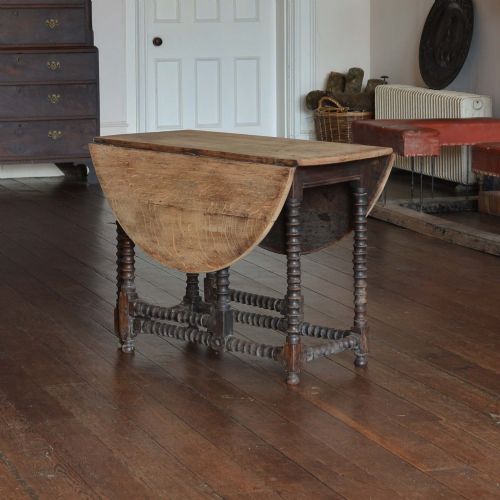
Turned components such as bobbin, barley twist, or baluster posts shape the structural legs and stretchers. Surface finishes rely on traditional waxing methods that highlight the grain and develop patination over decades of use.
Small Oak Gate Leg Table Retail Price Guide 2026
Typical asking prices for small oak gate leg table among the pieces listed under this phrase on Sellingantiques today, from the lower quarter to the upper quarter. They describe what is for sale here now, not the wider market.
Some seventeenth-century gate structures swing wide enough to make anyone wonder if the table was built to hide a small dog.
Evaluating distinction
Quality rests upon the crispness of the timber turning, the integrity of the original hinges, and the survival of an honest surface patina. Early seventeenth-century pieces display superior joinery and dense heartwood compared to later nineteenth-century adaptations.
Proportion dictates desirability, as smaller formats with slender gate movements command greater interest from collectors than heavier, later dining versions.
The Small Oak Gate Leg Table Glossary
- Gateleg table
- A drop-leaf table where one or more legs swing out on a hinged gate to support the raised leaves.
- Drop leaf
- A hinged section of a tabletop that folds down to reduce the footprint of the furniture when not in use.
- Bobbin turning
- A form of lathe work producing a series of rounded, spool-like shapes along the length of a leg or stretcher.
- Patina
- The surface sheen and colour acquired by wood through age, handling, and wax polishing.
- Joined construction
- Cabinetmaking that uses pegged mortise and tenon joints rather than modern adhesives or metal fasteners.
Small Oak Gate Leg Table: Frequently Asked Questions
How do I use a small oak gate leg table daily?
These tables function well in compact rooms by folding down flat against a wall when floor space is required. Raising one or both leaves creates an instant surface for dining, writing, or display.
Their sturdy oak construction handles everyday domestic use comfortably, though placing hot cups or wet glasses directly on antique surfaces requires protective coasters.
How do I distinguish seventeenth-century tables from later revivals?
Seventeenth-century examples typically feature hand-riven oak, pegged joints, and heavy baluster or bobbin turnings that show tool marks from manufacture. Their timber displays deep oxidation and natural surface wear accumulated over centuries.
Nineteenth and twentieth-century revival pieces often exhibit more uniform machine milling, standardised hardware, and lighter surface finishes without the accumulated depth of early patination.
Where should I place a gateleg table at home?
A drop-leaf table suits narrow hallways, living rooms as an occasional coffee table, or kitchens where space changes throughout the day. With both leaves dropped, it occupies minimal depth against a perimeter wall.
Pulling the piece into the centre of a room and opening both leaves transforms the furniture into a functional dining or workspace.
What is a gate mechanism?
The gate mechanism consists of a pivoted leg and stretcher assembly that swings outward like a gate to hold up the drop leaf. This hinged support transfers downward pressure safely to the floor.
In period pieces, these pivots rely on wooden pegs or iron pins integrated cleanly into the framing under the tabletop.