

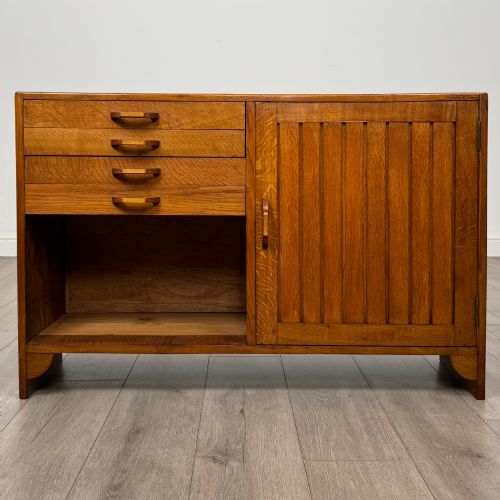
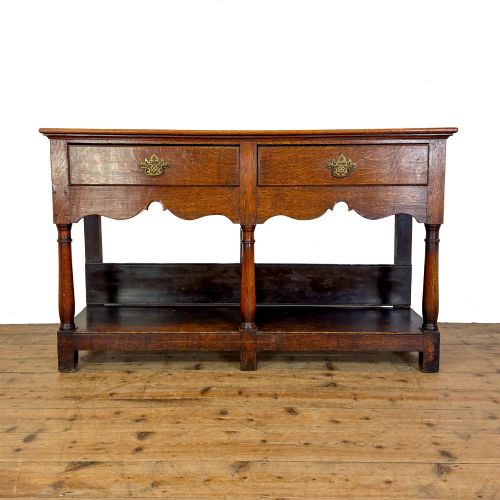
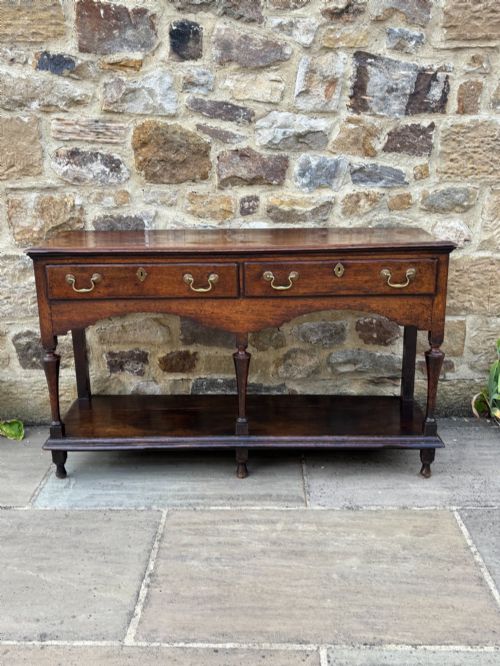


Small Oak Dresser Base
These small oak dresser base pieces are sturdy timber servers built for storage, combining practical surface space with drawers and cupboards.
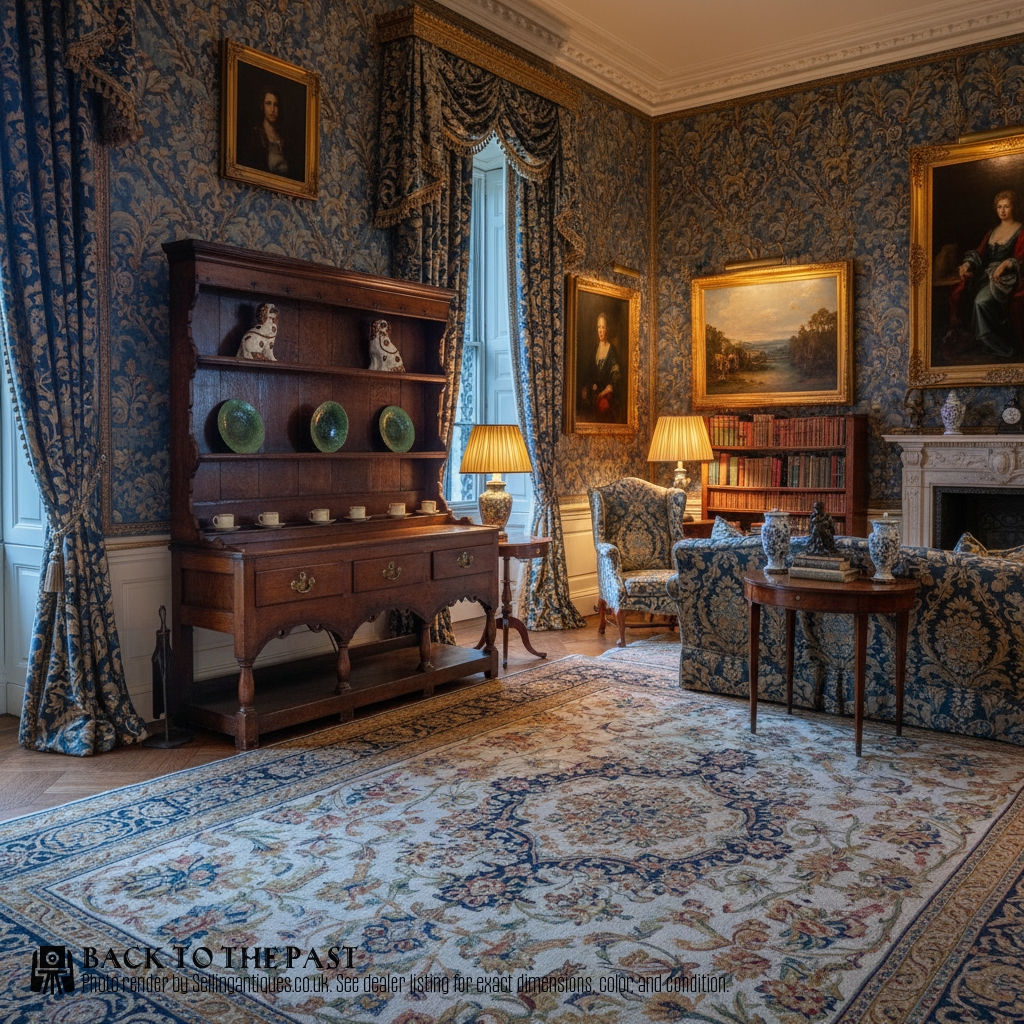
Small Oak Dresser Base
A small oak dresser base is a low wooden storage unit traditionally used in kitchens and dining areas for serving and organising provisions. When you search for this phrase, you encounter timber furniture spanning from the seventeenth century through to the twentieth century, with regional variations from Wales, England, and France.
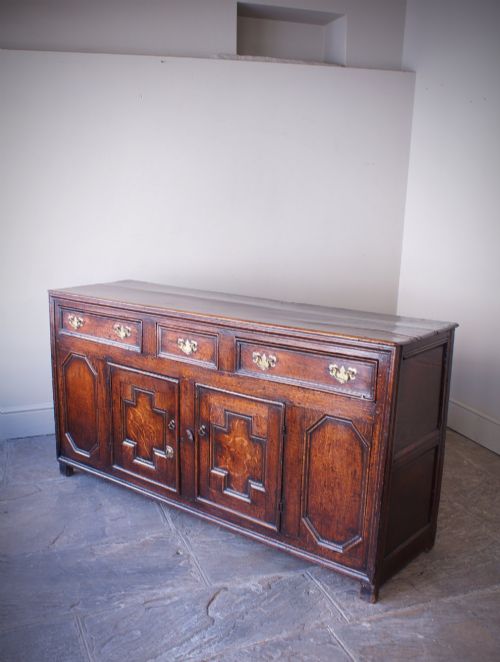
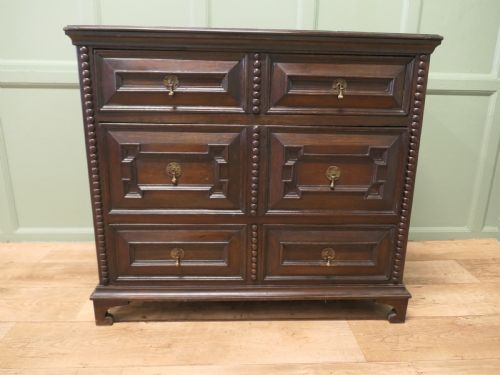
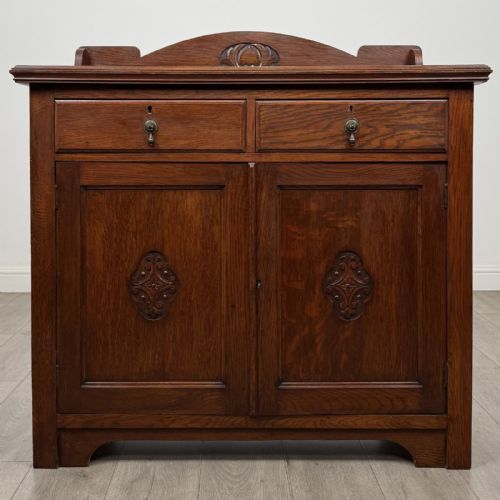
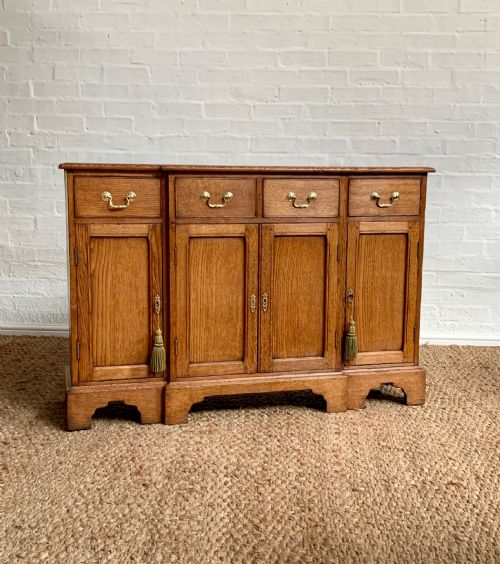
The pieces appearing on this page range from plain country servers to more formal Georgian and regional Welsh potboard designs. Many examples feature fitted drawers above open potboards or enclosed cupboards, providing compact proportions suited to modern rooms.
How They Were Made
Makers constructed these units primarily using solid oak timber, often complemented by brass hardware such as drop handles and key escutcheons. Joinery methods relied on traditional pegging, panel construction, and framed doors that allowed the timber to move naturally with changes in humidity.
Surfaces developed their character through decades of use and application of wax or oil finishes, highlighting the natural grain and figuring of the wood. Some twentieth-century examples also incorporate specialised finishes like golden oak tones or linenfold carving.
Small Oak Dresser Base Retail Price Guide 2026
Typical asking prices for small oak dresser base among the pieces listed under this phrase on Sellingantiques today, from the lower quarter to the upper quarter. They describe what is for sale here now, not the wider market.
Materials recorded across these items consist primarily of solid oak supplemented by brass drawer furniture and wooden peg construction.
What Varies in Quality
The standard of a small oak dresser base depends on the integrity of its construction, the retention of original hardware, and the depth of surface patination. Pieces retaining their original timber boards, period brasses, and untouched surfaces command greater interest from collectors.
Proportion and regional detailing also influence distinction, with well-balanced legs, crisp moulding profiles, and clean drawer linings setting finer examples apart from heavily altered or later utility pieces.
Peter Waals
The Small Oak Dresser Base Glossary
- Dresser base
- A low sideboard or cabinet with drawers, designed for storage and serving without the upper plate rack.
- Potboard
- An open lower shelf built between the legs of a dresser base, traditionally used for storing pots and pans.
- Padfoot
- A rounded foot shape found on certain Georgian furniture legs, resting flat on the floor.
- Linenfold
- A style of woodcarving that imitates folded linen cloth, frequently seen on panels of later cupboards.
- Patina
- The surface sheen and colour developed by wood and metal over years of handling, light exposure, and polishing.
Small Oak Dresser Base: Frequently Asked Questions
What is a small oak dresser base used for?
These low timber units function as sideboards or serving tables, providing surface display space combined with drawer and cupboard storage. They fit easily into dining rooms, hallways, or kitchens for everyday utility.
Historically, they stored tableware, linens, and provisions while keeping daily essentials close at hand.
How do I date an oak dresser base?
Dating relies on observing construction traits, drawer dovetails, handle styles, and the method of timber preparation. Earlier seventeenth and eighteenth-century pieces often display hand-split boards and pegged mortise and tenon joints.
Later nineteenth and twentieth-century examples show more uniform machine-sawn timber, different fastening methods, and revival stylistic cues.
Are these pieces suitable for modern homes?
Their modest proportions make them practical storage solutions for contemporary properties where floor space is limited. The sturdy oak construction withstands daily use as a sideboard or media console surface.
They blend easily into diverse interior schemes, adding warmth and traditional character to modern rooms.