



Small Mahogany Secretary Desk
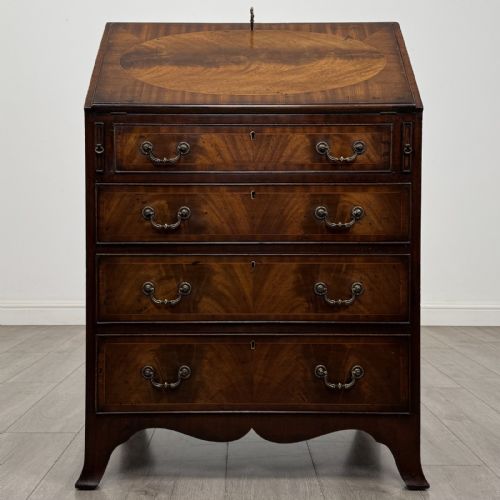
A small mahogany secretary desk offers neat proportions and concealed writing compartments, satisfying a practical need for compact workspace.
Small Mahogany Secretary Desk
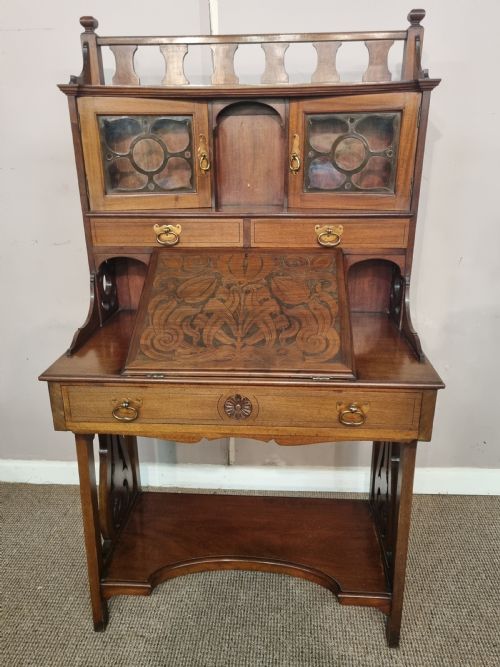
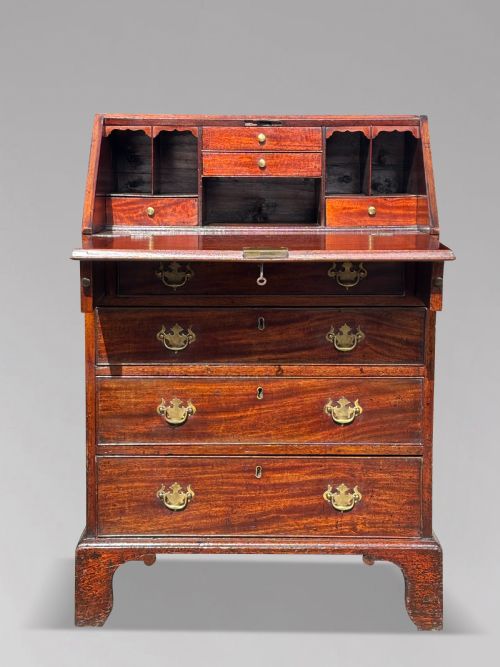
When you search for a small mahogany secretary desk, you encounter compact writing furniture designed to conceal papers and drawers behind a fall front or writing flap. These pieces span the eighteenth century, the Regency era, and later Victorian and twentieth-century revivals.
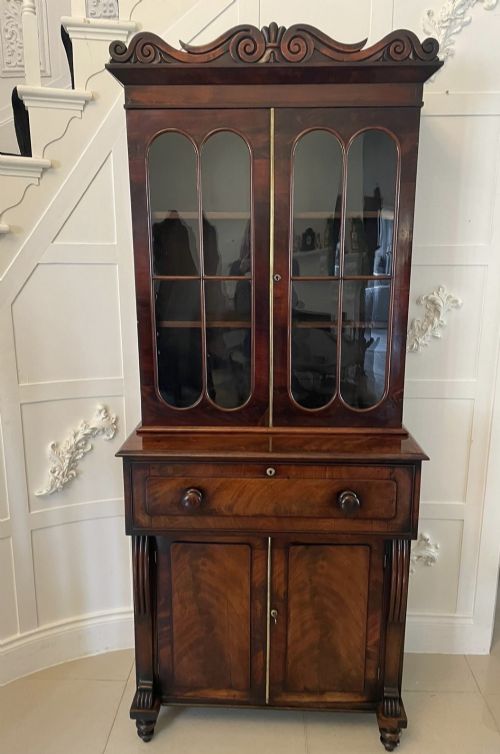
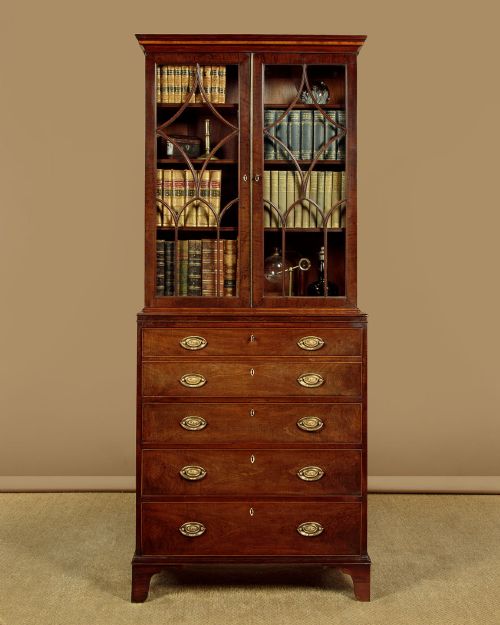
The selections on this page appear most frequently asbureaux, secretaire bookcases, and writing cabinets. They originate across Georgian, Regency, and Arts and Crafts styles, reflecting domestic workspace requirements of past centuries.
How they were made
Cabinet makers utilised solid mahogany alongside flame mahogany veneer to construct carcases, often incorporating oak linings within internal drawer structures. Timber selection prioritised rich grain figures and deep natural warmth.
Decorative detailing relied on satinwood inlay, brass hardware, and occasional glass panel doors for bookcase top sections. Construction techniques joined structural elements with precise dovetailing to ensure daily utility.
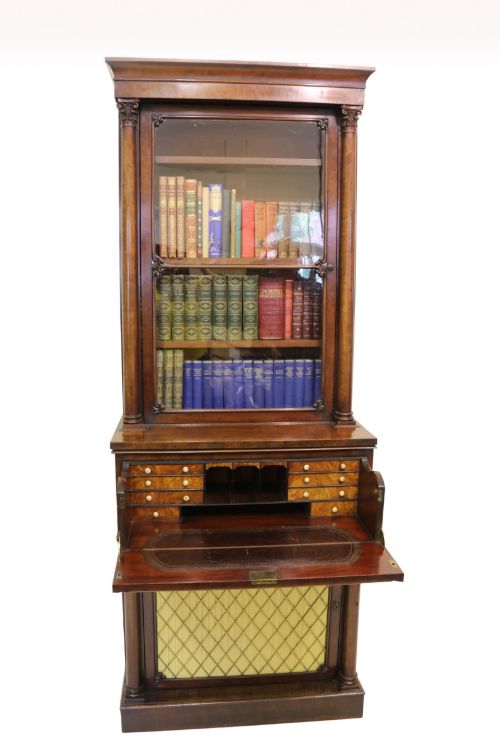
Secret compartments hidden behind sliding panels inside pigeonholes offered owners a private spot for keeping coinage and confidential letters secure.
What varies in quality
Quality rests in the choice of timber and the restraint of its decoration, where figured mahogany veneers and delicate satinwood stringing elevate a piece above standard workshop production. The crispness of internal pigeonholes and small drawers indicates the maker's hand.
Proportion and scale dictate the desirability of these items, with diminutive examples commanding attention for their balanced dimensions. Original brasses and clean, undisturbed internal surfaces separate superior examples from altered or heavily restored pieces.
Gillows of Lancaster
The Small Mahogany Secretary Desk Glossary
- Bureau
- A writing desk featuring a sloping hinged flap that opens to reveal a fitted interior of pigeonholes and small drawers. It often sits atop a chest of drawers.
- Secretaire
- A piece of furniture containing a drawer or compartment that pulls out or folds down to form a writing surface. It conceals fitted stationery compartments inside.
- Satinwood
- A durable, hard timber with a golden-yellow sheen used extensively for contrasting inlay work on mahogany furniture. It creates sharp visual borders.
- Tambour
- A sliding shutter formed of narrow strips of wood glued to canvas or leather backing, allowing a desktop or compartment to roll open smoothly.
- Bonheur du Jour
- A light lady's writing desk featuring a small cabinet or set of shelves upon the upper surface. It emerged during the eighteenth century for polite correspondence.
Small Mahogany Secretary Desk: Frequently Asked Questions
How do I use a secretary desk today?
A small mahogany secretary desk functions effectively as a compact laptop station or correspondence centre. The drop-down flap provides a concealed working surface that closes away clutter at the end of the day.
Internal compartments and small drawers organise modern stationery, keeping desktop areas tidy within domestic settings.
Where were these desks placed originally?
These compact writing pieces sat in private drawing rooms, libraries, or bedrooms where space remained at a premium. Their modest proportions allowed them to fit against walls or between windows without dominating the room.
Ladies and gentlemen utilised them for personal accounts, letter writing, and managing household affairs in private comfort.
How do I date a mahogany bureau?
Dating relies upon examining construction methods, timber choice, and hardware styles across different design periods. Early eighteenth-century examples display different drawer linings and carcass framing compared to Regency or later Victorian interpretations.
Secondary woods like oak, hand-cut dovetails, and the specific character of brasses provide reliable clues to the decade of manufacture.
What is the difference between a bureau and a secretaire bookcase?
A standard bureau comprises a sloped writing flap above a chest of drawers, whereas a secretaire bookcase incorporates an upper shelved cabinet for books. The upper section encloses the writing desk within a larger architectural bookcase structure.
Both forms utilise internal pigeonholes, but the bookcase variant offers display and storage capacity above the workspace.