



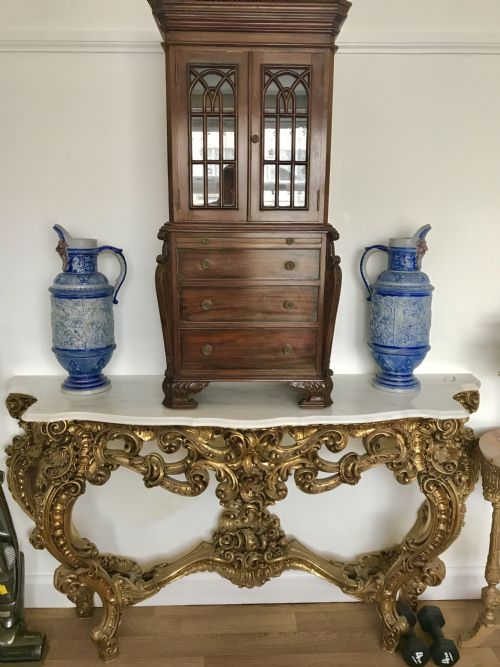
Small Mahogany Bureau Desk
A small mahogany bureau desk offers a drop-front writing surface and concealed compartments, bringing compact, traditional workspace into domestic rooms.
Small Mahogany Bureau Desk
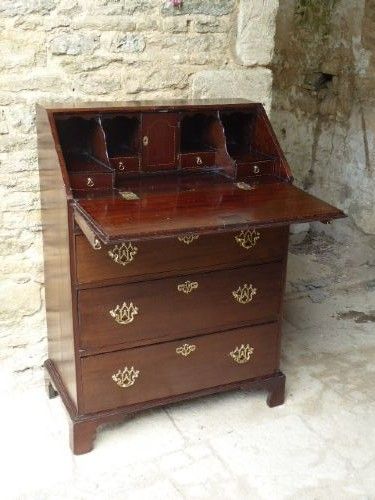
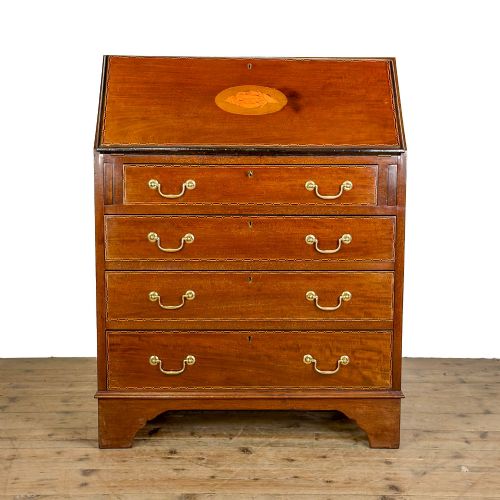
A small mahogany bureau desk is a compact writing cabinet featuring a sloping fall-front that opens to reveal pigeonholes and small drawers. Buyers searching for a small mahogany bureau desk encounter pieces spanning the eighteenth century through the Edwardian period, with Georgian and Regency examples appearing frequently.
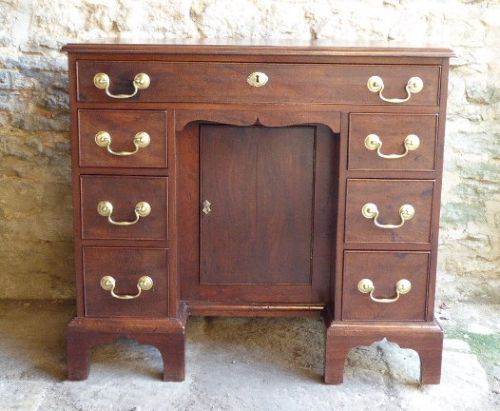
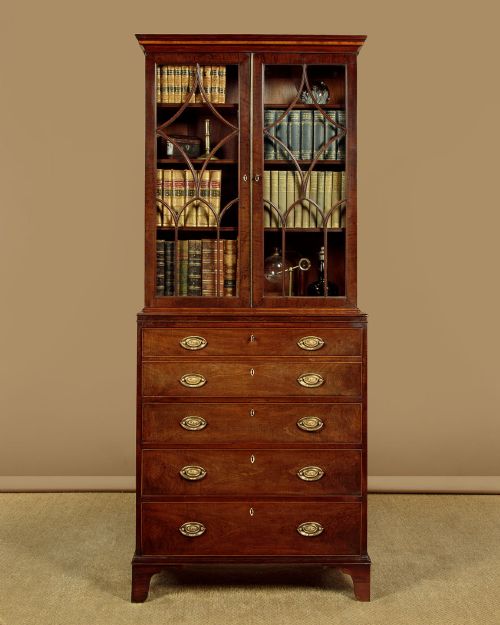
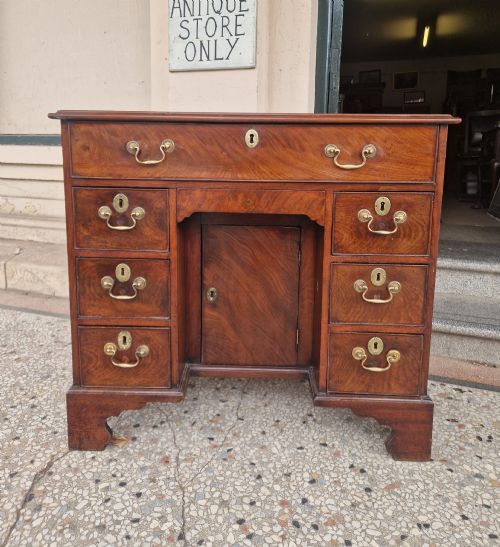
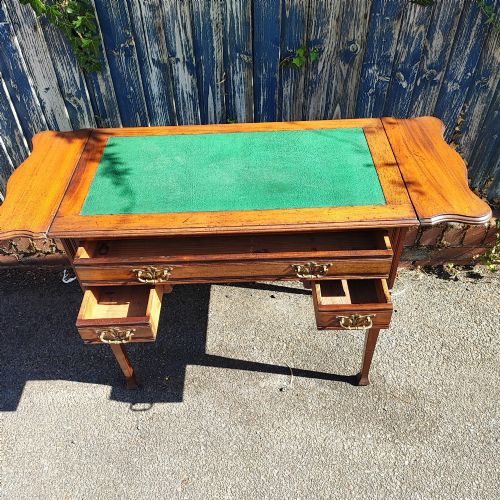
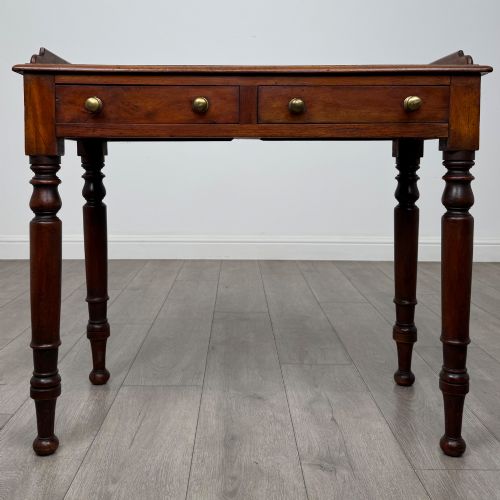
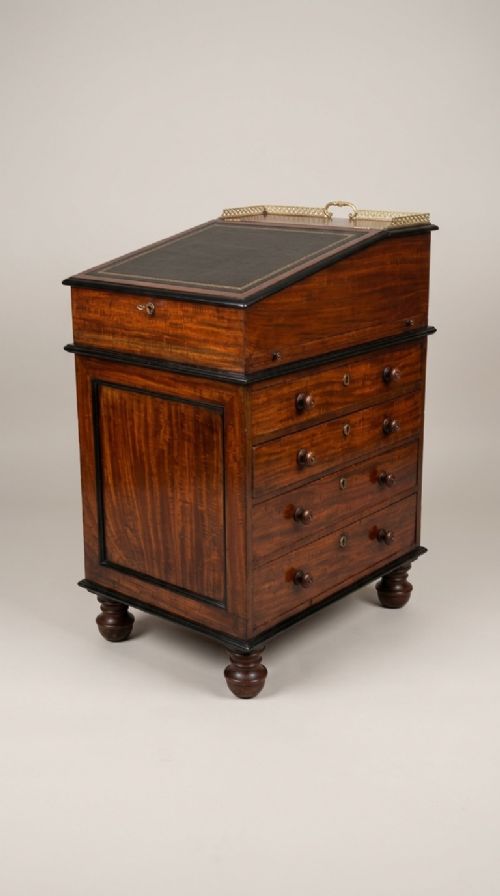
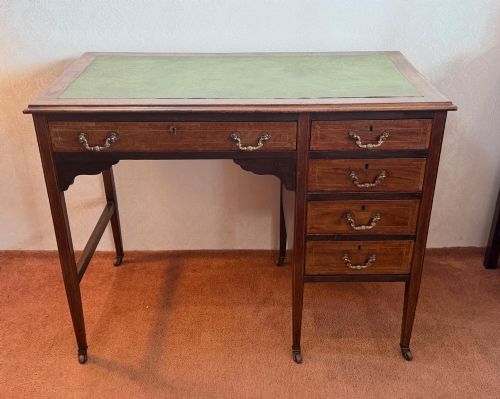
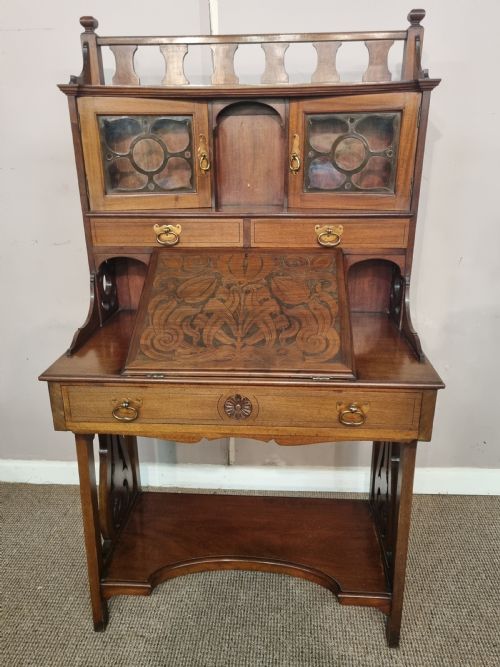
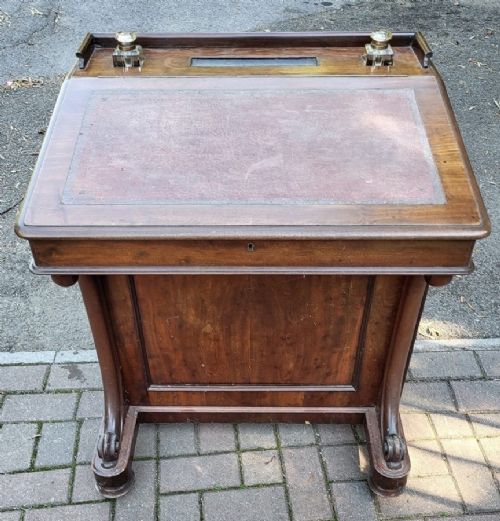
The selection includes fall-front bureaux, secretaire bookcases, kneehole desks, and Davenport forms. These items served domestic correspondence and record-keeping in modest or principal rooms.
Origins are predominantly English, though French styling and miniature apprentice samples also surface in the listings. The common thread is dense timber and functional workspace built to a reduced scale.
How they were made
Cabinet makers constructed these desks using solid mahogany and mahogany veneers applied to secondary timbers such as oak. Satinwood inlay, brass handles, and leather writing inserts frequently complement the primary wood.
Structural integrity relied on dovetail joints for drawer construction and precise framing for fall-front mechanisms and pigeonhole interiors. French polishing and wax finishes built up the surface sheen on the timber.
Apprentice makers demonstrated their skill by crafting miniature bureau bookcases at a quarter scale, complete with working drawers.
What varies in quality
Quality rests in the choice of timber figure, such as highly grained flame mahogany, and the crispness of internal cabinet work. Superior pieces exhibit fine dovetailing, original brass hardware, and restrained satinwood stringing rather than heavy secondary additions.
Proportion and execution distinguish the workshop output, with pieces by recorded makers demonstrating superior cabinet-making discipline in their internal drawer arrangements and secondary woods.
Gillows of Lancaster
The Small Mahogany Bureau Desk Glossary
- Bureau
- A desk featuring a hinged sloping flap that drops to form a writing surface above a set of drawers. It typically conceals a fitted interior of small compartments.
- Secretaire
- A piece of furniture incorporating a concealed writing drawer or drop-front desk compartment. It often forms part of a tall bookcase or chest.
- Davenport
- A compact pedestal desk with a sloping, sliding writing surface and drawers opening to one side. Originating in the nineteenth century, it maximises workspace in limited areas.
- Bonheur du Jour
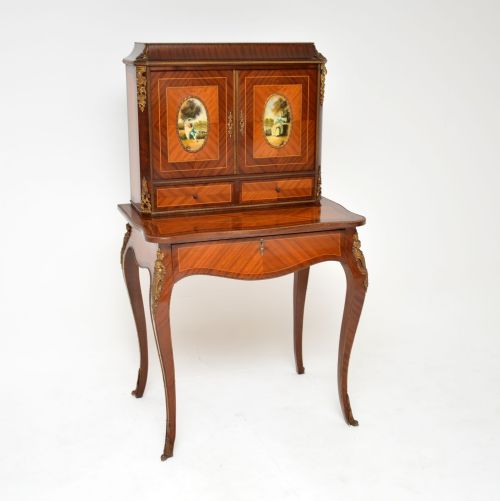
- A light lady's writing desk featuring a small cabinet or set of pigeonholes upon the upper surface. This French form gained popularity during revival periods.
- Kneehole desk
- A flat-topped desk featuring a central recess for the user's legs, flanked by pedestals of drawers. It provides a stable writing platform with storage.
Small Mahogany Bureau Desk: Frequently Asked Questions
Where did people use small mahogany bureau desks?
These desks served in private parlours, bedrooms, and drawing rooms for managing personal correspondence and household accounts. Their compact proportions suited domestic spaces where a full-sized library table proved too large.
Owners kept stationery, inkwells, and documents within the fitted interior behind the fall-front. When closed, the sloped lid kept private papers out of sight.
How do I tell an 18th century bureau from a Victorian one?
Eighteenth-century examples generally display solid oak drawer linings, hand-cut dovetails, and subtle bracket feet. The timber figure tends to be rich and deep, showing natural ageing.
Victorian and later pieces often incorporate machine-sawn elements, different secondary woods, and varying handle styles reflecting nineteenth-century revival tastes. Examining the internal construction and drawer joints reveals the period of manufacture.
Do the writing flaps need special care?
The sloping fall-front relies on wooden lopers or brass arms to support the weight when open. Users should avoid placing heavy ledgers on the extended flap to protect the hinges and support runners.
Leather writing inserts benefit from occasional wax conditioning rather than liquid cleaners. Keeping the mahogany away from direct heat sources prevents timber shrinkage and veneer lifting.