

Small Mahogany Bowfront
A small mahogany bowfront brings curved grace and compact storage to a room, uniting rich timber with a sweeping facade.
Small Mahogany Bowfront
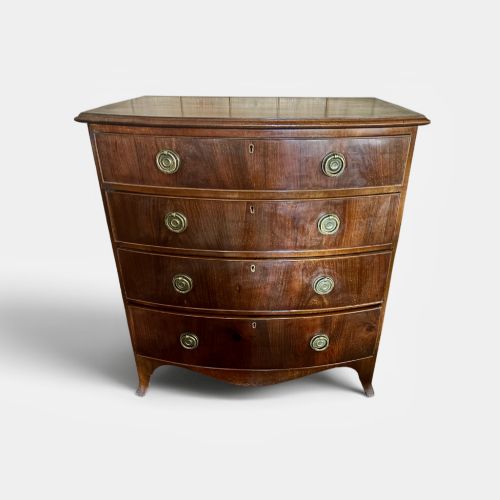
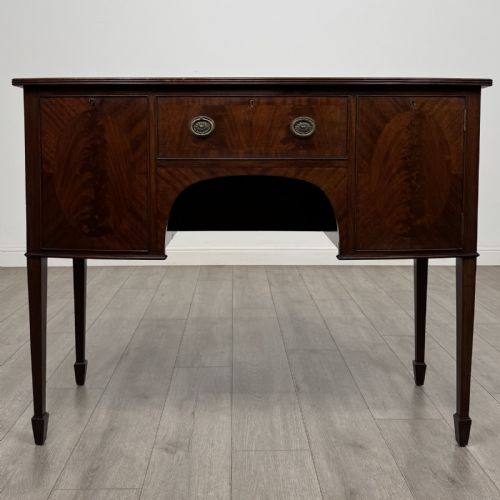
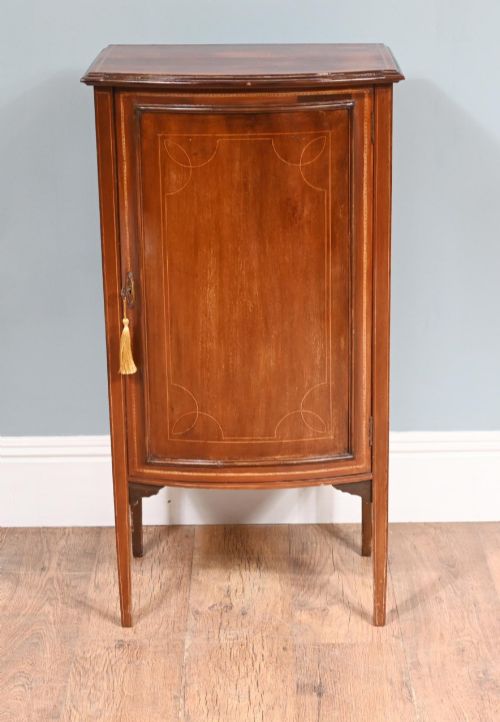
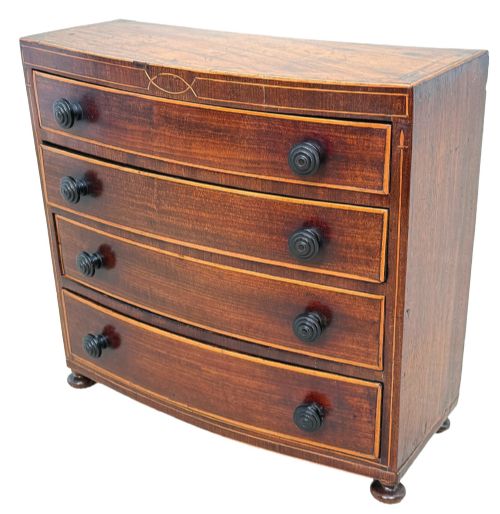
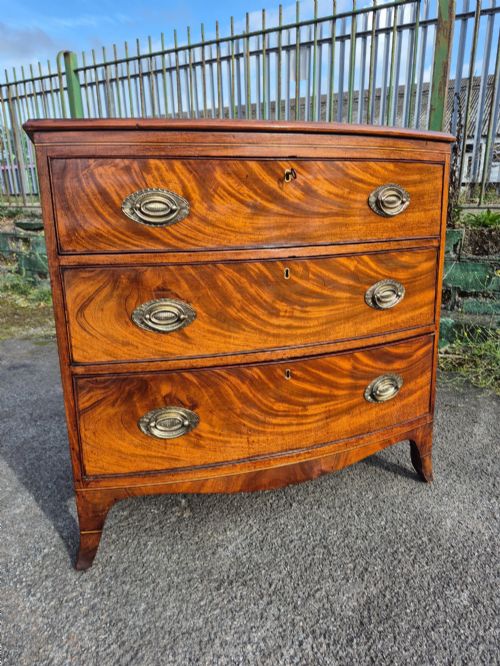
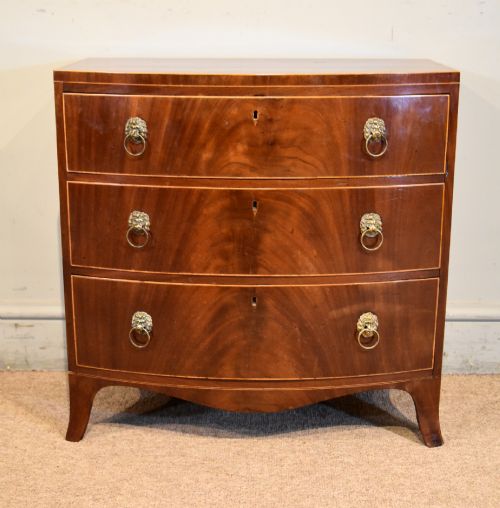
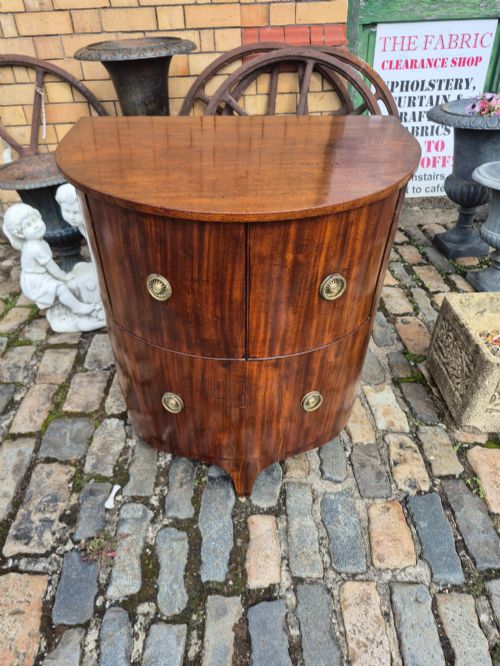
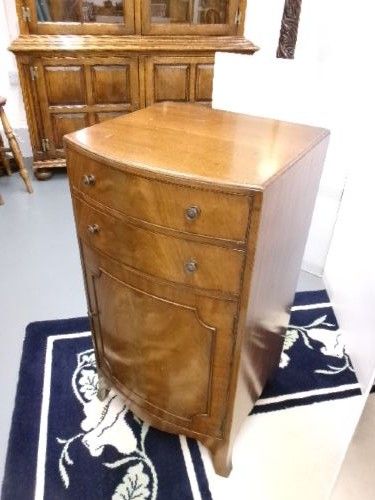
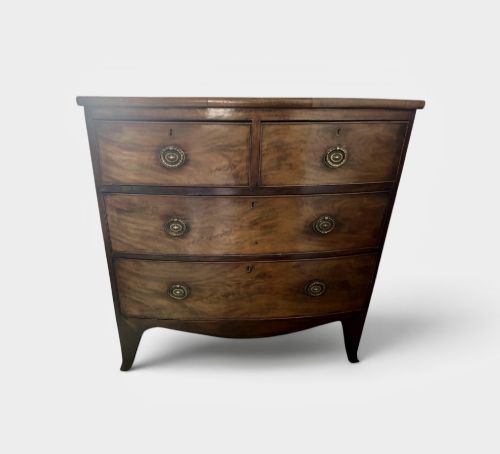
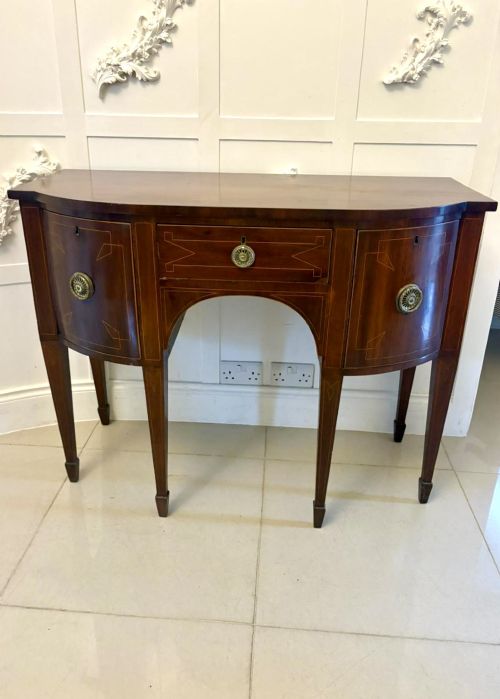
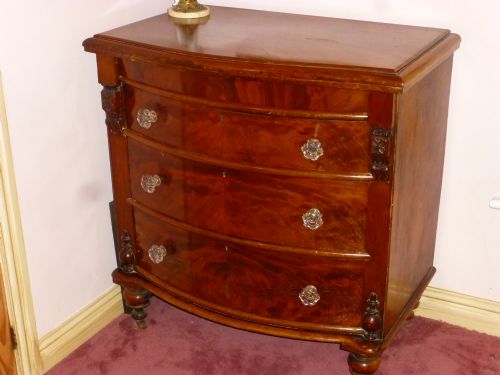
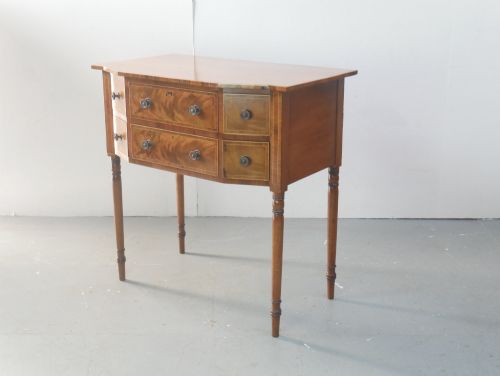
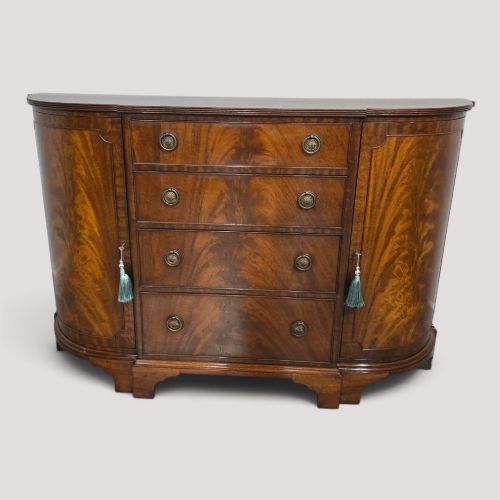
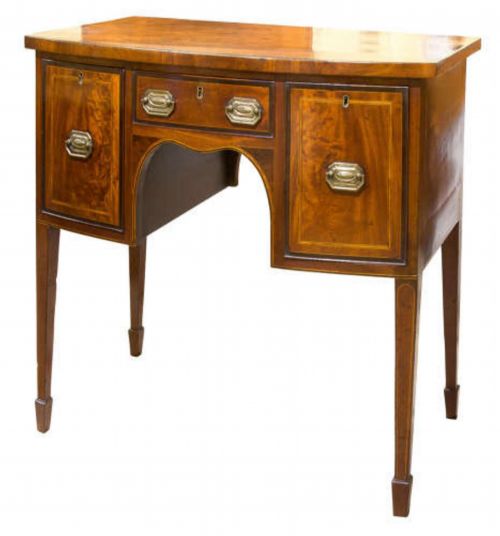
A small mahogany bowfront typically takes the form of a chest of drawers, a sideboard, or a compact cabinet designed with a convex, curved front. These pieces span the eighteenth, nineteenth, and early twentieth centuries, encompassing Georgian, Regency, Victorian, and Edwardian periods.
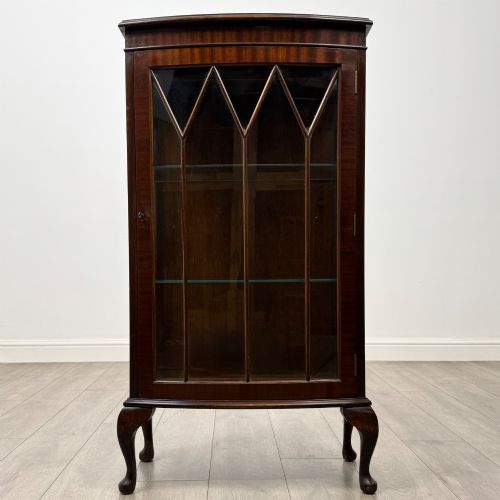
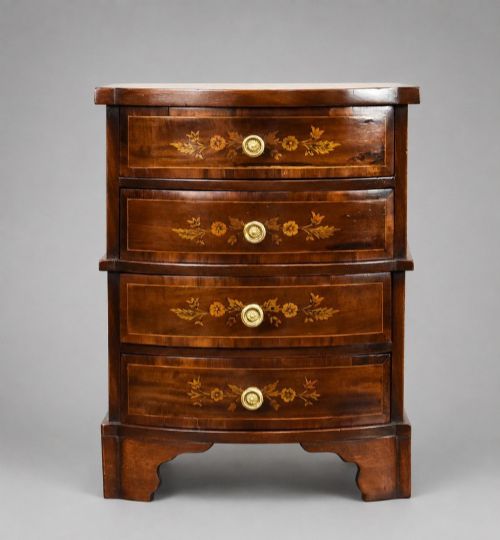
Chest of drawers variants dominate the selection, ranging from full-sized compact bedroom furniture down to miniature pieces and bedside cabinets. Sideboards and serving tables appear frequently in Georgian and Regency interpretations, alongside occasional glazed display cabinets and cocktail units.
Buyers encounter both authentic period pieces from the seventeen-hundreds and eighteen-hundreds alongside later Edwardian and nineteen-twenties revivals built in the Georgian and Regency styles.
Timber and Construction
Cabinet makers constructed these pieces primarily using solid and veneered mahogany, frequently selecting figured timber for the drawer fronts and top surfaces to display rich grain patterns. Secondary woods such as oak appear in drawer linings, while structural framing relies on sturdy mahogany or deal.
Decoration often involves contrasting stringing and banding in satinwood, boxwood, and ebony, alongside marquetry inlays on Edwardian examples. Brass hardware, including drop handles and escutcheons, complements the dark reddish-brown tones of the polished wood.
Small Mahogany Bowfront Retail Price Guide 2026
Typical asking prices for small mahogany bowfront among the pieces listed under this phrase on Sellingantiques today, from the lower quarter to the upper quarter. They describe what is for sale here now, not the wider market.
Materials paired with mahogany across these items include brass, satinwood, boxwood, oak, glass, and ebony.
Evaluating Craftsmanship
Quality rests in the precision of the curved drawer fronts and the tightness of the joinery where the bowed carcase meets the frame. Superior examples demonstrate careful timber selection, matching grain patterns symmetrically across multiple drawers.
Refined details such as delicate stringing, well-executed banding, and original brass fittings elevate a piece above simpler utilitarian versions. The integrity of the secondary woods inside the drawers and the crispness of the edge moulding further distinguish master cabinet work from standard production.
Edwards and Roberts
The Small Mahogany Bowfront Glossary
- Bowfront
- A furniture facade that curves outward in a convex arc. This shape softens the corners of a room and requires skilled joinery to fit drawers accurately.
- Caddy top
- A table or chest top with a moulded edge that rises in a profile resembling the lid of a tea caddy. This decorative shaping appears frequently on eighteenth and nineteenth-century case pieces.
- Stringing
- Thin inlay lines of a contrasting wood, such as boxwood or ebony, set flush into the surface of the mahogany. It outlines drawers and tabletops to add definition.
- Marquetry
- Decorative patterns formed by fitting together thin veneers of various coloured woods. Edwardian miniature chests often employ this technique on their curved fronts.
- Bandings
- Border strips of contrasting veneer, such as satinwood or purpleheart, applied around the edges of drawer fronts and tabletops. They frame the primary mahogany grain.
Small Mahogany Bowfront: Frequently Asked Questions
What is a small mahogany bowfront?
A small mahogany bowfront is a compact cabinet, chest of drawers, or sideboard featuring a rounded, convex front made from mahogany timber. These items were designed to provide storage while occupying a minimal footprint in smaller rooms.
They appear across various periods from the Georgian era through to the early twentieth century, incorporating styles ranging from plain classical designs to highly inlaid Edwardian pieces.
How do I date a bowfront chest?
Dating relies on examining construction methods, timber choice, hardware, and secondary woods like oak or deal used inside the drawers. Georgian and Regency pieces typically show hand-cut dovetails and solid mahogany linings.
Later Victorian and Edwardian examples often display machine-sawn elements, lighter internal woods, and distinct decorative banding styles like satinwood stringing or marquetry.
Where were these pieces used?
Compact bowfront chests and bedside cabinets served primarily in bedrooms for storing garments and personal items. Sideboards and servers were placed in dining rooms and halls to hold tableware and linen.
Due to their modest scale, buyers today easily integrate them into modern living spaces as hallway consoles or living room statement storage.
How should I care for mahogany?
Maintain mahogany furniture by keeping it away from direct sunlight and heat sources that can dry out the timber and crack the polish. Dust regularly with a soft cloth and apply quality beeswax periodically to nourish the grain.
Avoid using silicone-based sprays, which build up over time and dull the traditional wax or French polish finish.