
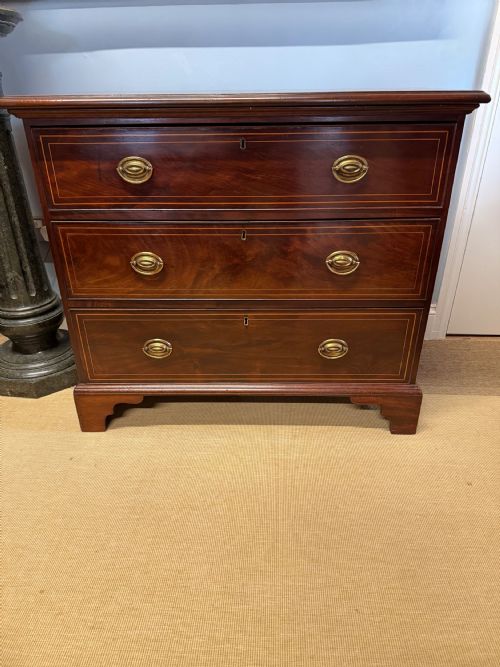


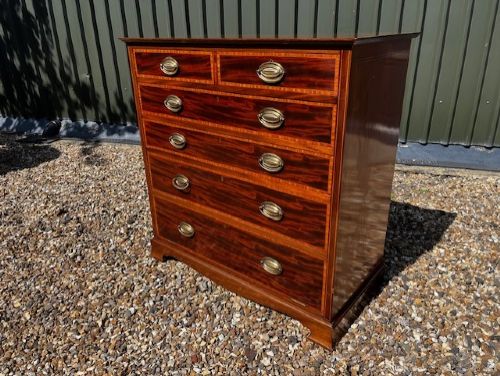
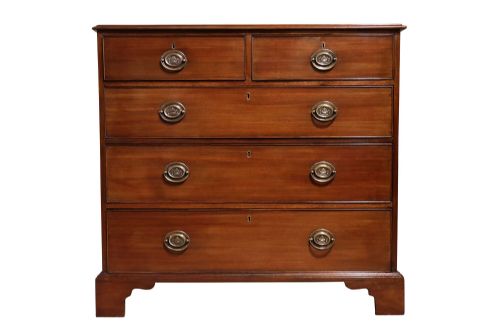


Oval Handle Chest
An oval handle chest is a practical storage piece defined by distinctive hardware, and buyers choose them for their classic proportions and warm timber tones.
Oval Handle Chest
An oval handle chest primarily appears as a chest of drawers, though the form extends to variations such as tallboys, bureaux, and cabinets. These pieces span periods from the eighteenth century through the Edwardian era, encompassing Georgian and Regency designs.
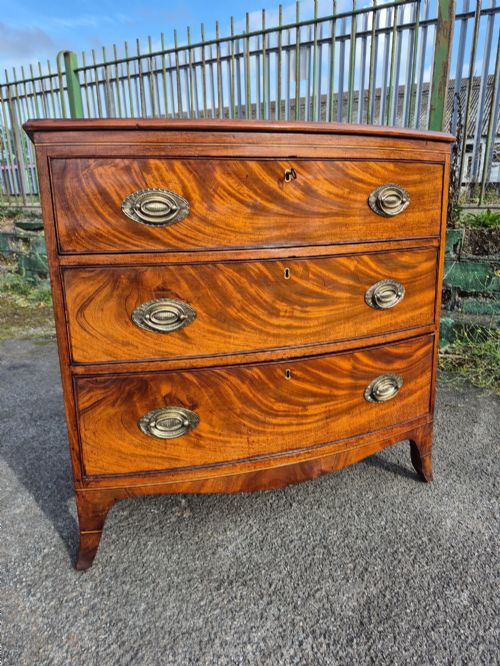
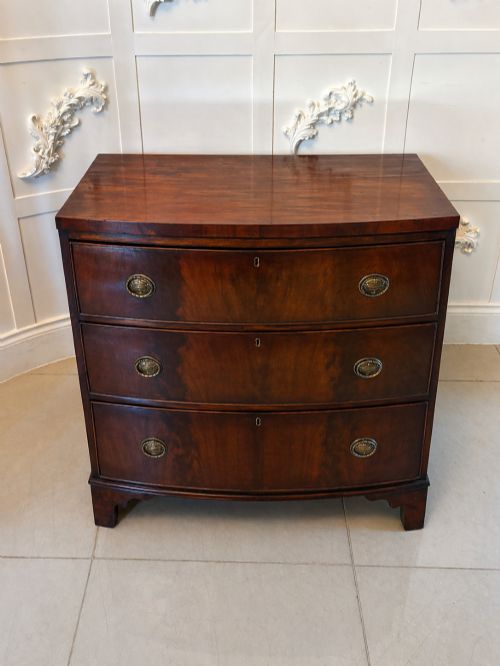
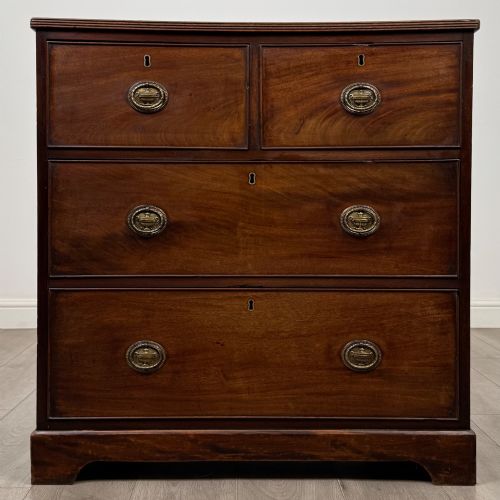
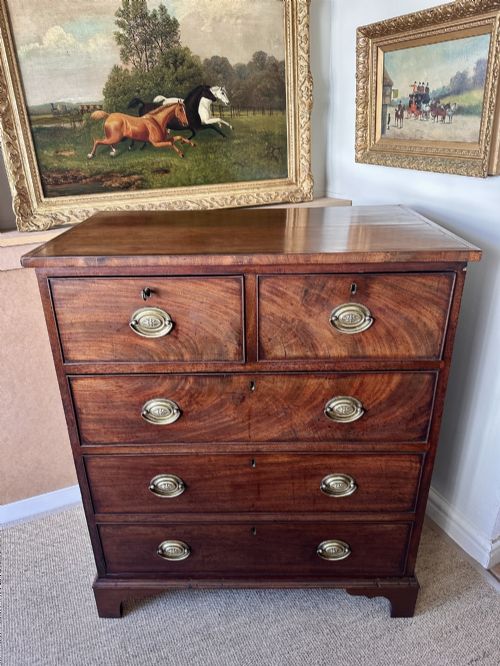
The most common form on this page is the mahogany chest of drawers, often featuring a bow front or straight profile. Oak lined interiors and brass plate hardware complete the standard construction seen across the listed items.
Makers and craftsmen of the Georgian and Regency periods favoured mahogany as the primary timber, sometimes embellished with satinwood or boxwood stringing. Collectors also encounter serpentine fronts and small proportions among these storage items.
How they were made
Cabinetmakers constructed these chests using solid timbers like mahogany and oak, often employing flame mahogany veneers to create figured grain patterns on drawer fronts. Secondary woods such as oak served for drawer linings to ensure structural durability.
Hardware consists of brass oval plate handles secured with pins or screws, paired with working locks set into the drawer rails. Inlaid details involving boxwood and satinwood provide linear contrast against the darker mahogany surfaces.
A working key accompanies the earliest small chest, ready to secure your most private correspondence.
What varies in quality
The degree of refinement in timber selection dictates the visual impact of each piece, distinguishing simple utility furniture from higher status items. Finely figured flame mahogany and crisp stringing inlay demonstrate greater workshop skill than plain stock.
Proportion and structural integrity separate standard examples from exceptional ones, particularly where serpentine or bow fronts demand complex joinery. Original brass hardware and clean oak drawer linings further elevate the standing of a chest.
The Oval Handle Chest Glossary
- Bow front
- A cabinet front that curves outward in a convex shape, common in Regency and Georgian pieces. This style softens the boxy silhouette of a standard chest.
- Flame mahogany
- A veneer cut from the fork of the mahogany tree where branches meet the trunk, producing a rippling flame effect. Cabinetmakers utilised this for prominent drawer faces.
- Serpentine front
- A front configuration featuring a convex centre flanked by concave curves, requiring advanced joinery skills. Scottish and English makers employed this shape on high status chests.
- Tallboy
- A tall chest of drawers consisting of one chest stacked upon another, providing substantial vertical storage. Eighteenth century examples often incorporate fine cornices and bracket feet.
- Stringing
- Thin inlay lines of contrasting wood, such as boxwood, set into the primary timber. This technique outlines drawers and top surfaces to define the geometric edges.
Oval Handle Chest: Frequently Asked Questions
What periods do these chests come from?
The listings span from the eighteenth century into the twentieth century, with strong representation from the Georgian and Regency eras around eighteen hundred. Edwardian interpretations also appear through Sheraton Revival pieces.
Buyers encounter various stylistic indicators, such as stringing inlay or bow fronts, which help anchor each piece within its specific period of manufacture.
Are the oval handles original?
Many pieces retain their brass oval plate handles or drop handles, which match the period aesthetic of the drawer configuration. Oak linings behind the brasswork provide stable mounting for the hardware.
Examining the backplate impressions and screw types helps determine whether the hardware has remained with the chest since its construction.
What timbers were used to build them?
Mahogany serves as the predominant timber across the selection, often complemented by flame mahogany veneers and secondary woods like oak. Boxwood and satinwood appear as decorative stringing elements.
Oak additionally forms the internal structure, particularly in drawer linings and secondary framing components found within Georgian and Regency pieces.
How do I fit one into a modern room?
These chests offer versatile storage through configurations ranging from low three drawer units to tallboys and compact bureaux. Their warm timber tones integrate naturally beside contemporary or traditional interiors.
Placing a chest in a hallway or bedroom provides functional surface space while displaying the figured grain of the mahogany exterior.