

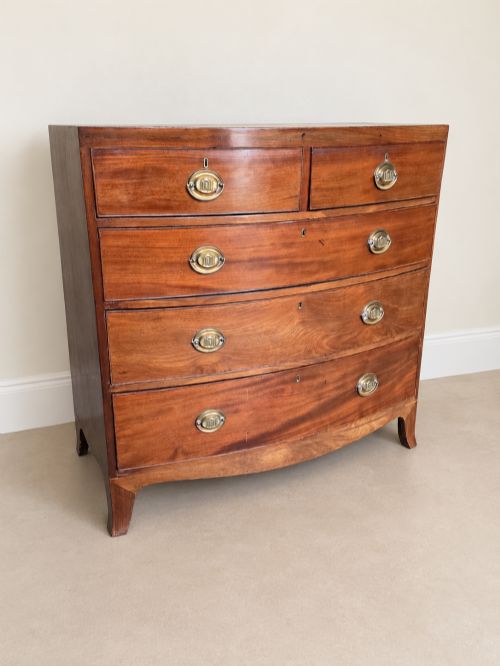
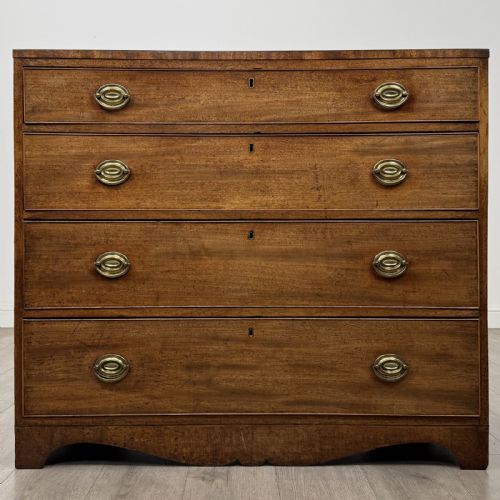
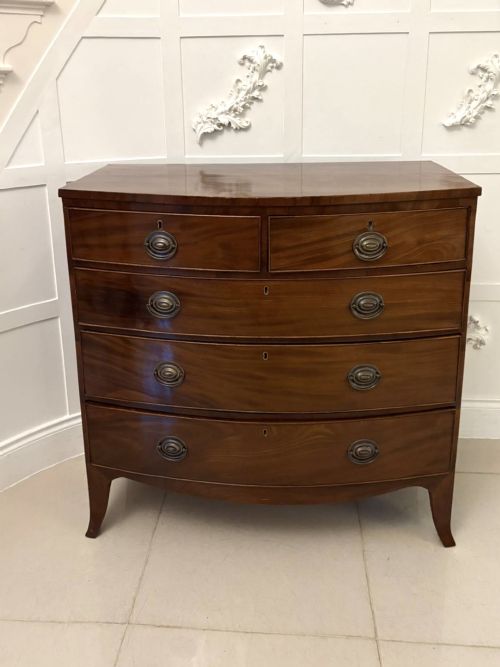
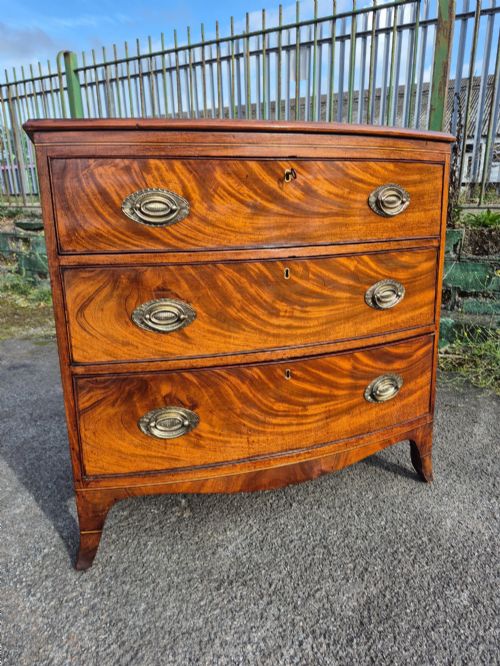
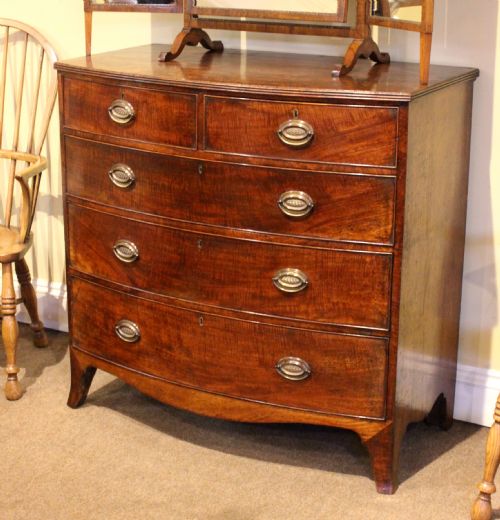


Splay Foot Chest
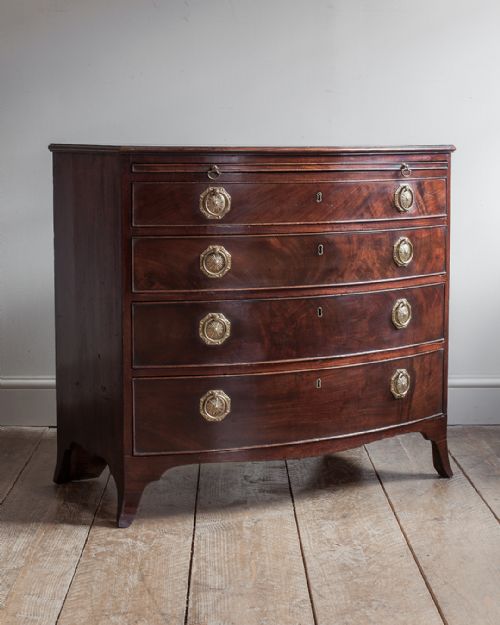
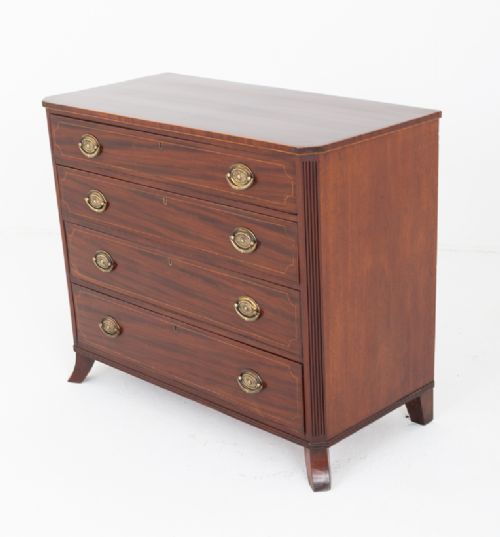
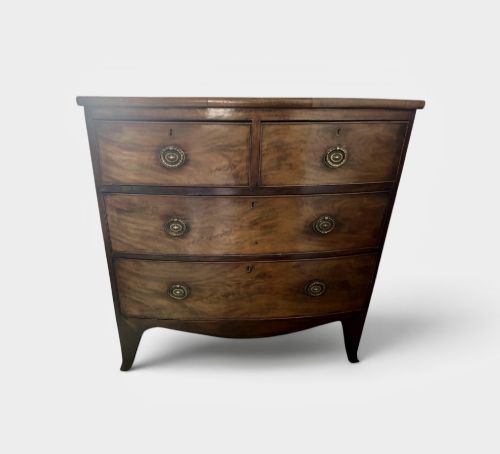
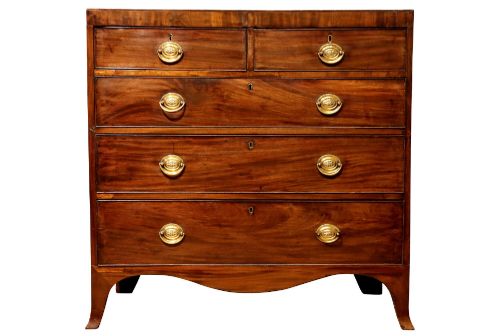
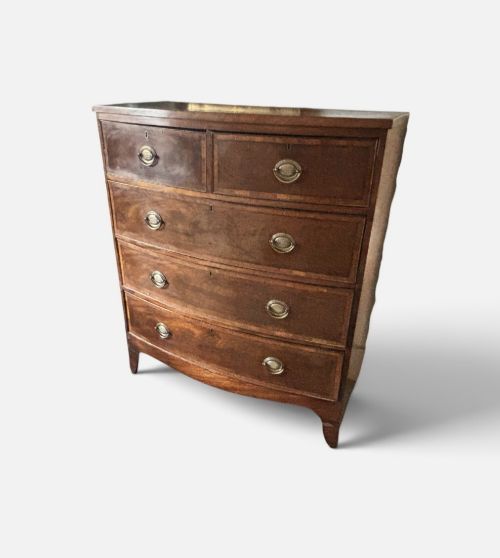
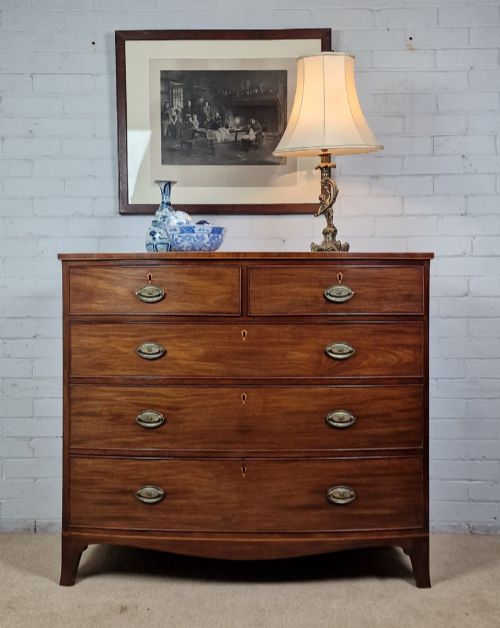
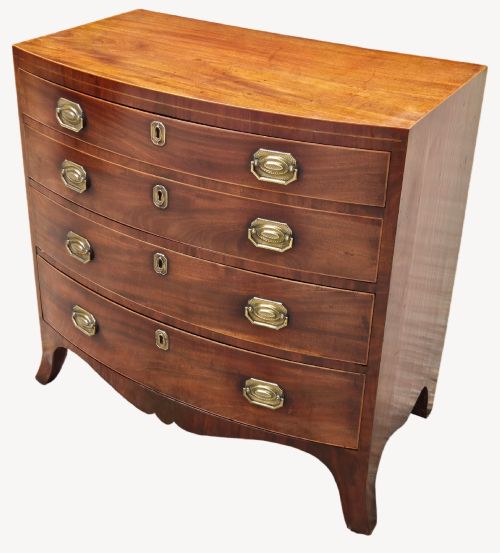
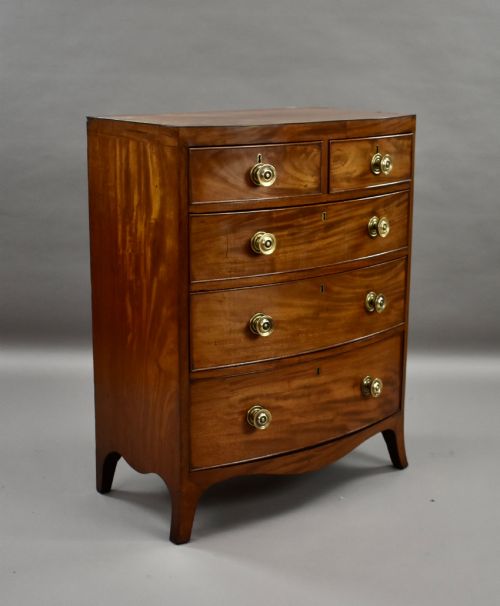
A splay foot chest delivers practical storage with distinct architectural stance, offering understated elegance through splayed feet and refined timber work.
Splay Foot Chest
A splay foot chest brings together classic cabinet making and elevated supports, most frequently appearing in mahogany across Georgian, Regency and 19th Century periods. These pieces serve as functional bedroom storage while demonstrating distinct regional and period characteristics through their bow front, serpentine or straight drawer configurations.
The selection on this page leans heavily toward mahogany and oak constructions, spanning compact proportions and taller formats like tallboys and chests on chests. Buyers encounter smaller scaled examples alongside larger multi drawer designs originating from the 18th Century through to the Edwardian era.
Materials and construction
Cabinet makers relied primarily on solid mahogany and oak for carcass and drawer construction, often introducing satinwood, boxwood inlay and bone details to accentuate the facade. Crossbanding and wood inlay provide surface definition on polished timbers.
Drawer fronts frequently curve in a bow front or serpentine shape, supported by bracket feet or splayed feet that elevate the base. Traditional joinery secures the internal drawers and frames without modern adhesives.
Splay Foot Chest Retail Price Guide 2026
Typical asking prices for splay foot chest among the pieces listed under this phrase on Sellingantiques today, from the lower quarter to the upper quarter. They describe what is for sale here now, not the wider market.
Some chests hide secret compartments within their caddy tops, giving sneaky buyers a private spot to stash midnight snacks or mysterious love letters.
Distinctions in quality
Quality rests upon the selection of figured timber veneers, crispness of boxwood inlay and the proportional harmony of the splayed feet to the main body. Superior examples maintain original brass hardware, smooth running drawers and tight mitres along the crossbanded edges.
Lesser pieces show crude timber selection or clumsy proportions where the splayed feet fail to balance the weight of the chest above. Intricate details such as precise stringing and balanced grain patterns separate standard utilitarian drawers from accomplished cabinet work.
The Splay Foot Chest Glossary
- Splay foot
- A foot that spreads outward at the base as it descends from the cabinet. This design lifts the chest off the floor with a clean, outward angle.
- Bow front
- A convex curved front facade on a chest of drawers. This styling softens the rectangular silhouette of traditional storage.
- Crossbanding
- A strip of veneer laid perpendicularly to the grain of the surface it borders. It creates a contrasting decorative frame around drawer fronts.
- Tallboy
- A tall chest of drawers made by stacking one chest atop another. These pieces maximise vertical storage capacity in period rooms.
- Serpentine
- A furniture front characterised by a wavy line featuring a convex centre flanked by concave curves. This sophisticated shaping requires advanced woodworking skill.
Splay Foot Chest: Frequently Asked Questions
Where should I place a splay foot chest?
A splay foot chest fits well in a bedroom, hallway or living space where its distinctive feet and compact proportions can be appreciated. The elevated base allows light to pass underneath, keeping the floor area visually open.
Ensure the placement accounts for the swing of the drawers and any protruding hardware, keeping the piece away from direct heat sources to protect the polished timber.
How do I care for mahogany surfaces?
Dust the timber regularly with a soft, dry cloth to prevent grit accumulation on the polished grain. Avoid silicone sprays and harsh chemical cleaners which can degrade the antique finish over time.
Apply a traditional beeswax polish sparingly when the wood appears dry, buffing it gently to maintain a natural lustre and protect the surface from moisture.
How can I date a Georgian splay foot chest?
Dating relies on examining the timber species, secondary woods inside the drawer linings, the style of the brass handles and the hand cut dovetails. Georgian pieces often display denser mahogany and distinct regional construction traits.
Later Edwardian or reproduction items utilise standardised machine cut elements and different internal framing methods that distinguish them from 18th Century originals.