
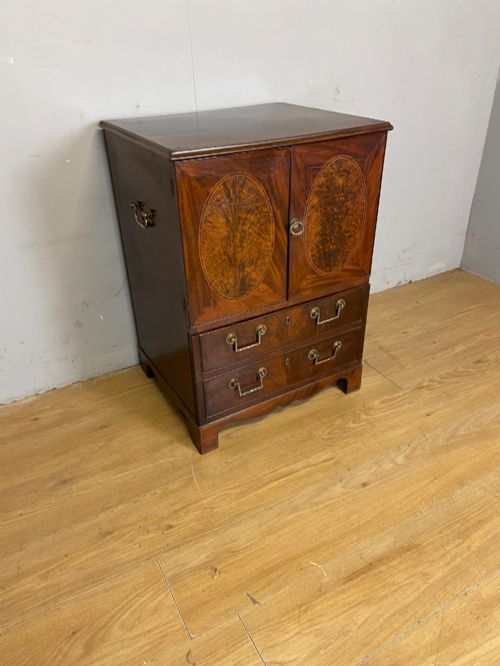

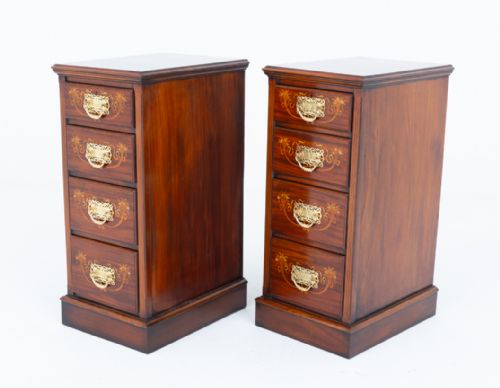

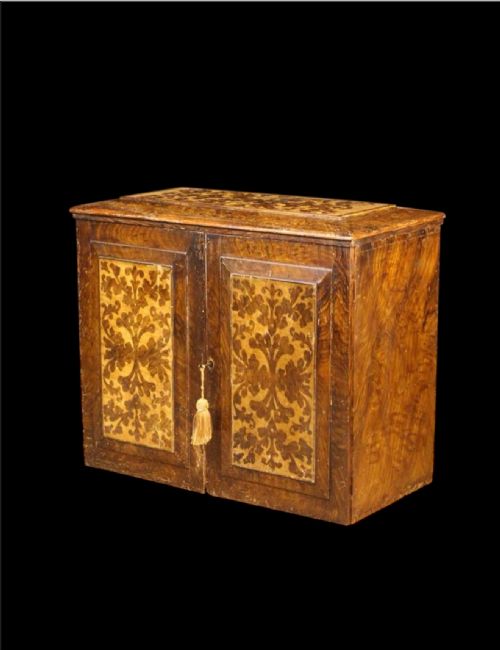


Small Inlaid Wooden Chest
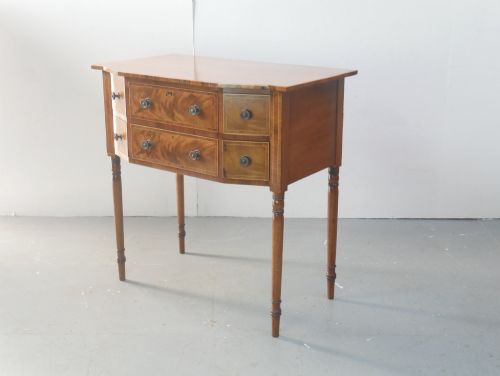
These small inlaid wooden chest pieces bring neat proportions and rich timber grain to a desk or side table.
Small Inlaid Wooden Chest
When you search for a small inlaid wooden chest, you are looking at miniature case furniture, tabletop cabinets, trinket boxes and diminutive drawers designed to hold valuables or documents. The selection ranges from Georgian and Victorian pieces to Edwardian items and early examples from the eighteenth century.
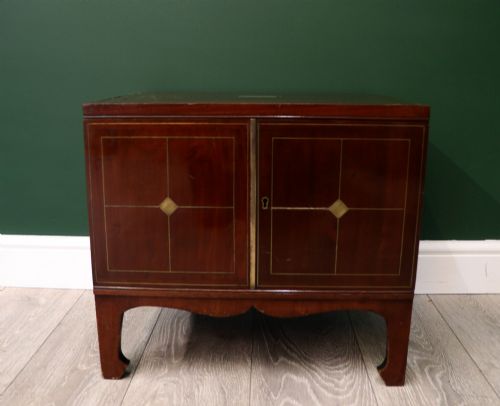
Mahogany and oak form the backbone of these pieces, alongside walnut, satinwood, and hardwood bodies embellished with boxwood inlay. Miniature chests of drawers and collector cabinets appear frequently alongside side cabinets and table boxes.
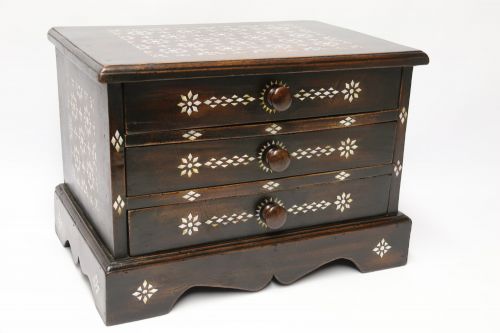
Origin and period dictate the character of each piece, spanning regional British boxes like Welsh coffers through to campaign style cabinets and French commodes. Buyers encounter formal Georgian items alongside decorative Edwardian music cabinets and Anglo-Indian collector pieces.
Materials and construction
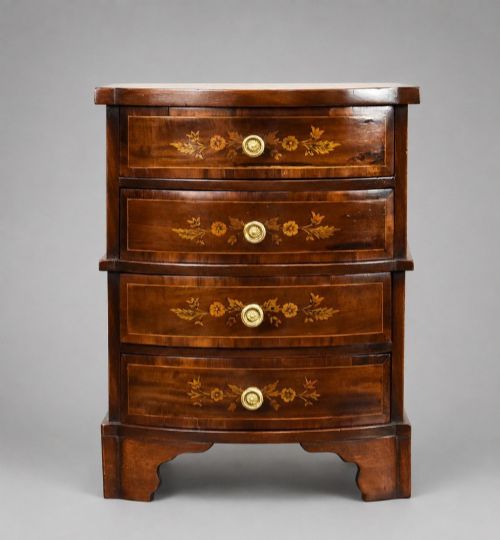
Cabinet makers constructed these small chests from dense hardwoods such as mahogany, oak, and walnut, often applying satinwood or boxwood inlay to contrast against the primary timber. Brass handles, escutcheons, and campaign mounts provide structural reinforcement and decorative detail.
Surface decoration relies on fine marquetry and contrasting stringing, set into solid timber bodies or flame mahogany veneers. Drawer interiors utilise secondary softwoods with hand-cut dovetail joints, reflecting traditional bench joinery.
Listings span the eighteenth, nineteenth, and early twentieth centuries, featuring periods from Georgian to Edwardian.
What separates the best examples
Quality rests in the precision of the inlay work and the choice of timber figure, such as richly marked flame mahogany or figured amboyna. Sharpness in the execution of boxwood stringing and crispness of brass mounts distinguish superior workshop production from standard output.
The integrity of the internal drawer construction and the retention of original hardware govern the desirability of a piece. Finer examples display meticulous attention to secondary timbers and seamless veneer matching across curved bow fronts.
Whytock and Reid
The Small Inlaid Wooden Chest Glossary
- Bow front
- A convex curved cabinet front popular in Georgian and Edwardian furniture. This shape softens the profile of a small chest.
- Caddy top
- A moulded lid profile with a stepped edge derived from tea caddy design. It appears on finer small chests and miniature cabinets.
- Marquetry
- Decorative veneer work arranged in pictorial or geometric patterns using various coloured woods. It creates contrast on the surface of drawers and lids.
- Campaign style
- Portable furniture made in sections with recessed brass fittings designed for travel. These pieces prioritise robust construction and metal reinforcement.
- Stringing
- Thin lines of contrasting wood inlaid into channels cut into the primary surface. Boxwood is frequently used for this linear detail on mahogany furniture.
Small Inlaid Wooden Chest: Frequently Asked Questions
What were small inlaid wooden chests used for?
These small chests served multiple domestic purposes, from storing jewellery and keepsakes to housing collections of coins, mineral specimens, or documents. Miniature drawers also functioned as apprentice pieces or desktop storage for valuable papers.
Their compact size allowed them to sit easily upon larger pieces of furniture or desks, keeping private items secure and close to hand within the home.
How do I date a small antique chest?
Dating relies on examining the timber species, construction methods, and decorative styles characteristic of periods like the Georgian, Victorian, or Edwardian eras. Secondary woods inside drawers and the style of dovetailing provide key evidence for age.
Inlay motifs and brass hardware styles also shift across decades, helping to distinguish an eighteenth century Welsh box from a later nineteenth century collector cabinet.
Where should I place a small chest at home?
These versatile pieces work well on top of sideboards, desks, or chest of drawers where their detailed woodwork can be appreciated at close range. Miniature chests and trinket boxes also sit comfortably on hallway tables or dressing chests.
Keep them away from direct sunlight and strong heat sources to protect polished timber surfaces and delicate boxwood stringing from drying out.
How do I care for antique wood and inlay?
Maintain the finish by dusting with a dry, soft cloth and occasionally applying a traditional beeswax polish to nourish the timber. Avoid liquid cleaners and modern silicone sprays which can damage older polish.
Stable room humidity prevents the wood from warping and keeps delicate boxwood inlay secure within its channels over time.