
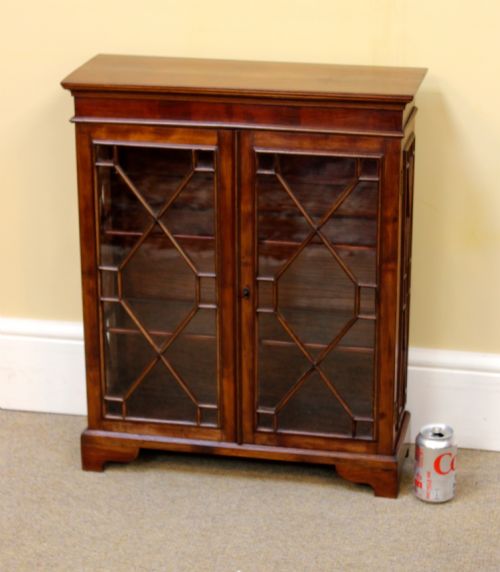
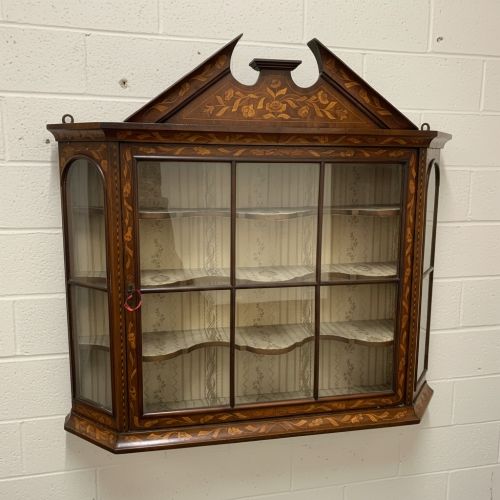
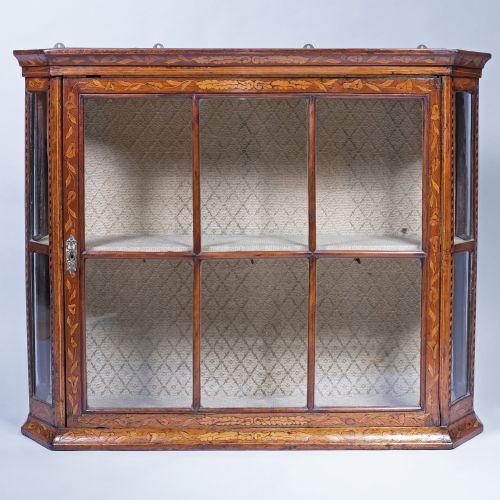
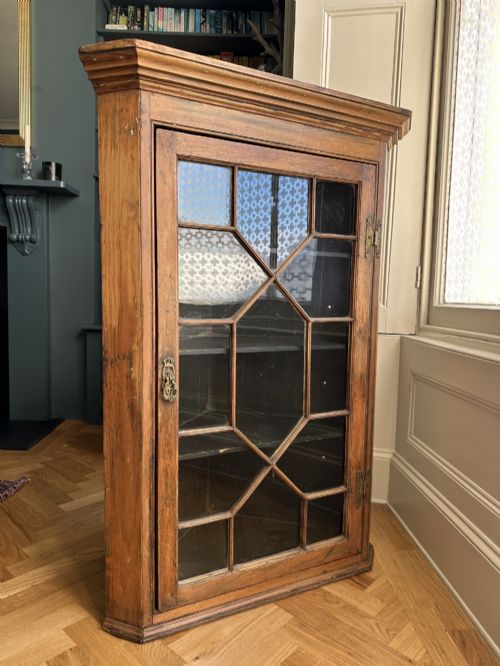


Small Glazed Wall Cabinet
A small glazed wall cabinet holds miniatures or treasures neatly off the floor, bringing timber and glass to eye level.
Small Glazed Wall Cabinet
A small glazed wall cabinet serves to display prized possessions while saving floor space in reception rooms and hallways. These pieces hang securely against plaster, featuring single or paired glass doors to protect contents from dust.
The selection here encompasses hanging corner cupboards, flat wall displays, and miniature cabinets spanning the eighteenth, nineteenth, and early twentieth centuries. Mahogany and oak dominate the timber choices, often complemented by marquetry inlay or brass hardware.
Materials and construction
Cabinet makers utilised dense hardwoods like mahogany and oak for structural integrity, frequently employing veneer and satinwood or marquetry inlay for decorative surface enrichment. Glass panes fit neatly within slender timber framing to maximise the viewing area for display.
Brass hinges and key escutcheons provide functional contrast against the dark timber grains. Painted interiors and fabric linings appear in specific examples, adding colour and texture behind the glazed doors.
The listings span the eighteenth to the twentieth centuries, featuring mahogany, oak, walnut, and satinwood alongside brass and glass.
Markers of quality
Quality rests upon the crispness of timber joinery, the selection of figured wood grains, and the intact survival of original glass panels. Superior examples display meticulous attention to detail in internal shelving and exterior mouldings.
The integration of decorative elements like marquetry inlay or carved hardwood distinguishes standard utility cupboards from finer reception room pieces. Original brassware and painted interiors further elevate the standing of a piece.
The Small Glazed Wall Cabinet Glossary
- Marquetry inlay
- Decorative patterns formed by fitting small pieces of veneer into a prepared timber surface. This technique creates intricate pictorial or geometric designs on cabinet doors.
- Corner cabinet
- A storage piece specifically constructed to fit neatly into the ninety-degree angle of a room. These utilise wall space that often remains empty.
- Satinwood
- A light-coloured timber used extensively for contrasting inlay work and banding on mahogany furniture. It brings a bright golden sheen to darker cabinet surfaces.
- Escutcheon
- A protective plate surrounding a keyhole, usually fashioned from brass. It guards the surrounding wood from wear caused by the key.
Small Glazed Wall Cabinet: Frequently Asked Questions
How do I hang a wall cabinet safely?
Wall cabinets require secure fixings into structural timber studs or solid masonry using appropriate wall anchors. The mounting brackets must bear the combined weight of the timber frame, glass, and displayed items.
Professional installation ensures the cabinet remains level and stable under daily use. Checking the fixings periodically maintains long-term security.
What items fit inside these cabinets?
Small glazed cabinets suit delicate ceramics, pocket watches, miniature portraits, and small glassware collections. The glass doors keep dust away while permitting clear visibility from across the room.
Depths vary, so measuring larger curiosities beforehand prevents clearance issues with interior shelving. Corner units accommodate wedge-shaped or triangular arrangements.
How do I identify an Edwardian cabinet?
Edwardian pieces often feature lighter mahogany frames, sometimes with subtle satinwood stringing or classical revival motifs. Proportions tend to be neat, reflecting domestic interiors of the early twentieth century.
Construction methods bridge traditional hand joinery with early machine assistance. Interiors frequently retain original fabric linings or simple timber shelves.
Are these cabinets suitable for corner spaces?
Corner cabinets make efficient use of room intersections, turning dead space into functional display areas. They project outwards into the room at a diagonal angle.
Measuring the wall space on both sides of the corner ensures the door swings open freely without hitting adjacent furniture or architraves.