


Small French Chest of Drawers
A small french chest of drawers brings continental elegance and practical bedside storage into compact spaces.
Small French Chest of Drawers
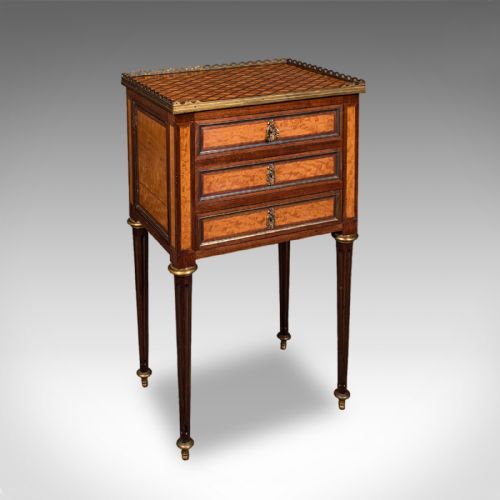
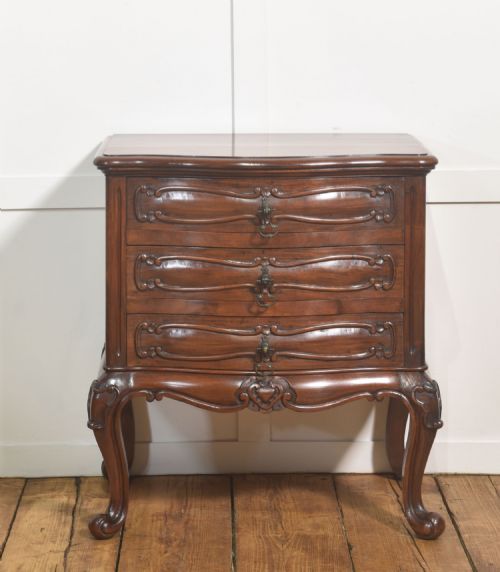
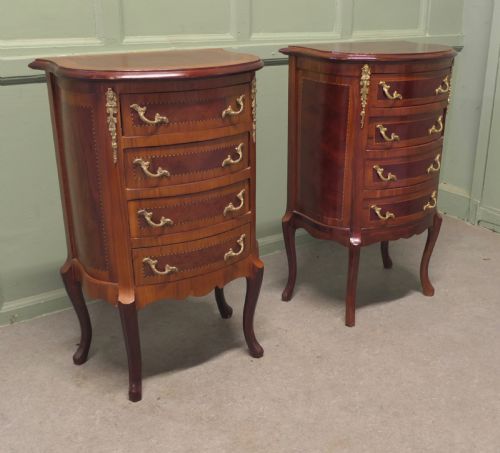
A small french chest of drawers encompasses authentic antique commodes, bedside cabinets, and miniature apprentice pieces originating from various continental periods. These compact forms serve as functional storage units for bedrooms and intimate living spaces alike.
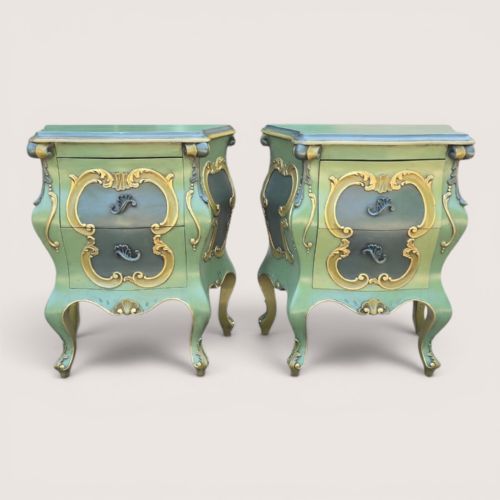
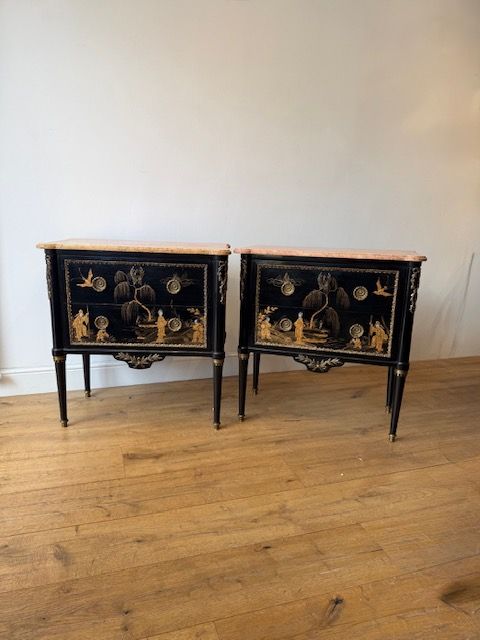
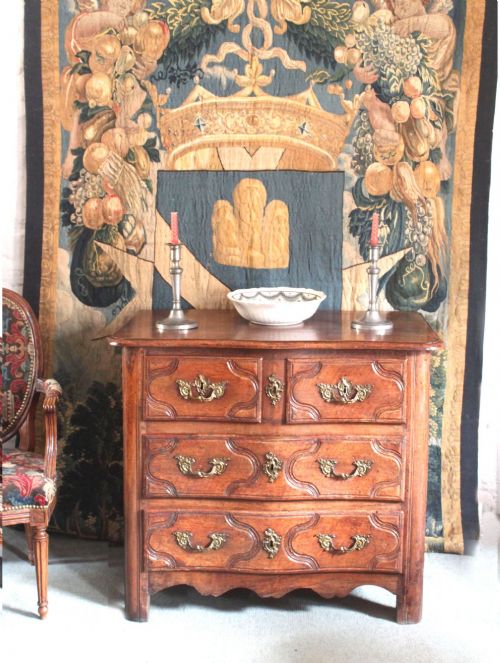
The pieces appearing on this page span from eighteenth-century provincial oak and walnut commodes to twentieth-century revival tables and bedside chests. Buyers frequently encounter marble-topped variations alongside painted wood and veneered models.
Alongside traditional commodes, the selection includes bedside tables, semanier chests, and miniature furniture designed with reduced proportions. Each piece reflects the decorative priorities of its specific period, ranging from rustic provincial simplicity to elaborate revival styles.
Materials and Technique
Cabinet makers utilised a variety of timbers including walnut, cherry, oak, and fruitwood, often applying intricate kingwood, tulipwood, and rosewood veneers to create decorative geometric patterns.
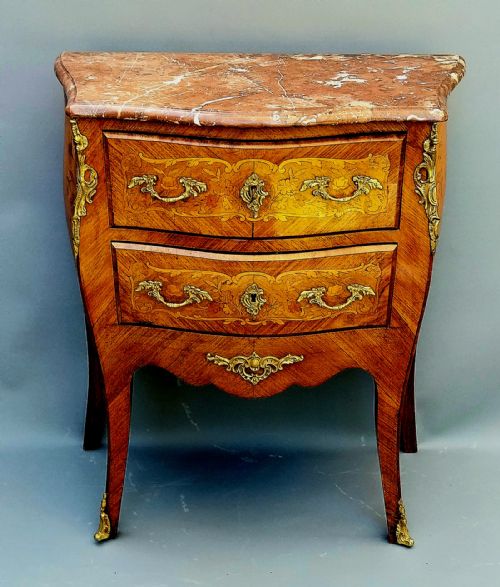
Surface ornamentation frequently incorporates polished marble tops, hand-painted details, and cast brass orormolu mounts that accent the structural lines of commodes and bedside cabinets.
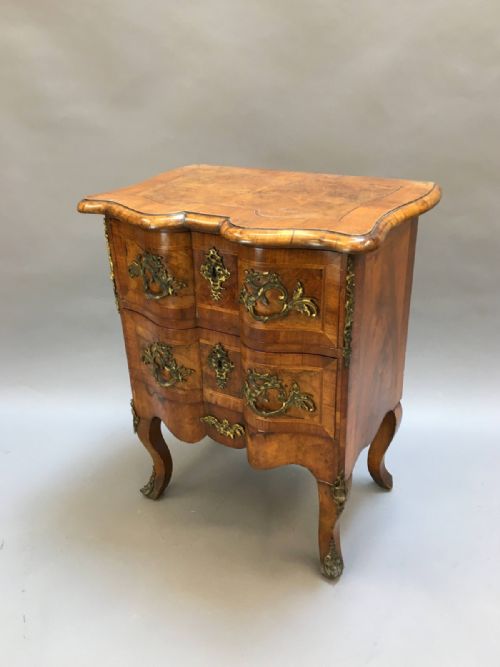
Bombe and serpentine shapes demand advanced joinery techniques to achieve curved drawer fronts and flowing carcases, whilst marquetry and parquetry demand precise cutting of contrasting timber veneers.
Craftsmanship and Proportion
Quality rests upon the precision of the veneer work, the fluidity of serpentine or bombe carcase curves, and the harmony of original brass mounts and handles.
Superior examples display crisp marquetry details, cleanly fitted marble slabs, and smooth drawer action built with traditional dovetail joinery.
The integrity of the surface finish and the preservation of original decorative paint or polished timber grain distinguish finer decorative items from standard utility pieces.
The Small French Chest of Drawers Glossary
- Commode
- A low chest of drawers or cabinet originating in France during the seventeenth century. These pieces typically feature multiple drawers and often stand on relatively short legs.
- Bombe
- A swelling, outward-curved contour found on the sides and fronts of advanced cabinet furniture. This undulating shape requires sophisticated woodwork techniques.
- Marquetry
- The art of applying decorative pieces of veneer to a structure to form intricate pictorial or geometric designs. Craftsmen select contrasting woods to achieve tonal depth.
- Ormolu
- Gilt bronze ornamentation mounted onto furniture pieces for decorative effect. This technique gained widespread popularity in luxury French cabinet making.
- Parquetry
- A geometric mosaic of wood pieces used for surface decoration on floors and furniture. It differs from marquetry through its strict reliance on angular, repeating patterns.
Small French Chest of Drawers: Frequently Asked Questions
Where should I place a small french chest of drawers?
These compact pieces fit easily beside a bed, within a hallway, or as an accent chest in a sitting room.
Their reduced proportions allow them to provide useful storage without overwhelming smaller interior spaces.
How do I care for a marble top?
Marble surfaces require gentle cleaning with mild, non-acidic soap and warm water to protect the polished stone.
Avoid placing acidic liquids directly onto the marble to prevent permanent surface etching.
Are these pieces suitable for daily use?
Most antique and vintage chests retain sturdy drawer construction suitable for everyday storage needs.
Careful handling of older timber runners and delicate veneer surfaces ensures longevity in a modern home.
How do I identify a revival piece?
Revival items often replicate eighteenth-century Louis styles using twentieth-century manufacturing techniques and standardised timber preparation.
Examining internal drawer construction and secondary woods helps clarify the actual period of manufacture.